
By Scott Gieseler · Published · Updated

A room can feel sticky even when the temperature seems comfortable. Condensation, musty smells, and damp spots are reasons to measure indoor humidity and look for water sources. They do not prove the air conditioner is at fault, and a higher electric bill or longer cooling cycle alone cannot diagnose excess humidity.
In Greater New Orleans, cooling equipment must handle both heat and moisture. Correct sizing, airflow, controls, and maintenance all matter. A dedicated dehumidifier may help when humidity remains high, but not every home needs one. Leaks and other sources of moisture should be addressed as part of the assessment.
This guide explains how a central air conditioner removes water, which symptoms to record, and when to arrange professional service. It also covers dehumidifier selection, safe maintenance habits, and the separate role of filtration, with published repair ranges to help you plan questions for a quote.
Understanding Humidity and Its Impact on Comfort
Relative humidity compares the water vapor present with the saturation level at the same temperature. In New Orleans, humid outdoor air entering a home can add moisture, but indoor readings depend on cooling, air leakage, ventilation, and indoor activities. The AC can remove water while cooling, yet it may not keep up with the moisture load in every condition.
High indoor humidity can make a room feel clammy and support mold growth on damp materials. Mold can affect indoor air quality and people sensitive to it, while persistent water exposure can damage finishes and woodwork. Track indoor readings and investigate the water source rather than assuming all condensation has the same cause.
Moisture removal is part of the cooling load. Extra runtime can use more electricity, but runtime is not the same as the number of start-stop cycles. Weather, settings, and variable-capacity operation also affect how long the system runs; humidity symptoms alone cannot predict component wear or remaining equipment life.
How Central AC Removes Moisture
Water condenses when the evaporator coil is colder than the passing air’s dew point. It collects in the drain pan and flows through the condensate line. Removal depends on the equipment, entering air conditions, airflow, runtime, and controls, not simply the size of the coil.
Airflow must stay within the equipment manufacturer’s specified range. Restriction can reduce performance and lead to icing; increasing or decreasing blower speed is not a universal humidity fix. Have a technician check the filter, ducts, coil, and settings together. Do not change blower wiring or close vents to try to force dehumidification.
An AC may handle humidity adequately when its cooling runtime matches the home’s moisture needs. During mild, damp weather, there may be too little demand for cooling to control humidity. A separate dehumidifier may help after moisture sources and equipment faults are checked; an air-handler upgrade is not automatically necessary.
When Your AC Needs Help: Signs of Humidity Problems
An hour-long cooling cycle does not by itself show a humidity fault. Compare the thermostat setting, indoor humidity, and outdoor conditions with the system’s usual performance. Water pooling around the indoor unit needs attention, but the amount of drain discharge varies with conditions and cannot reliably diagnose a blockage on its own.
Condensation, persistent clamminess, and new musty odors can reflect excess indoor moisture, cold surfaces, or a water leak. Refrigerant or airflow faults are other possibilities that need a technician’s measurements. If you see ice, turn cooling off at the thermostat and arrange service; do not chip it away, apply heat, or open the cabinet.
A professional diagnostic can include airflow measurements, a refrigerant-charge check, and inspection of the coil and condensate drainage. Ask what the findings support before approving a repair. The following are this article’s published planning ranges, not a quote for a specific system:
- Refrigerant leak repair: $400-$900 plus the cost of refrigerant ($125-$225 per pound)
- Capacitor or contactor replacement: $200-$450
- Fan/blower motor replacement: $450-$1,200
- Compressor replacement: $1,800-$2,900
- Dispatch fee in Greater New Orleans: $109. Repairs are quoted after diagnosis.
These published ranges depend on the part, equipment, warranty coverage, access, refrigerant quantity, and work required. Confirm all included charges after diagnosis and before authorizing repair work. A replacement comparison should use a separate equipment and installation quote.
Adding a Whole-Home Dehumidifier
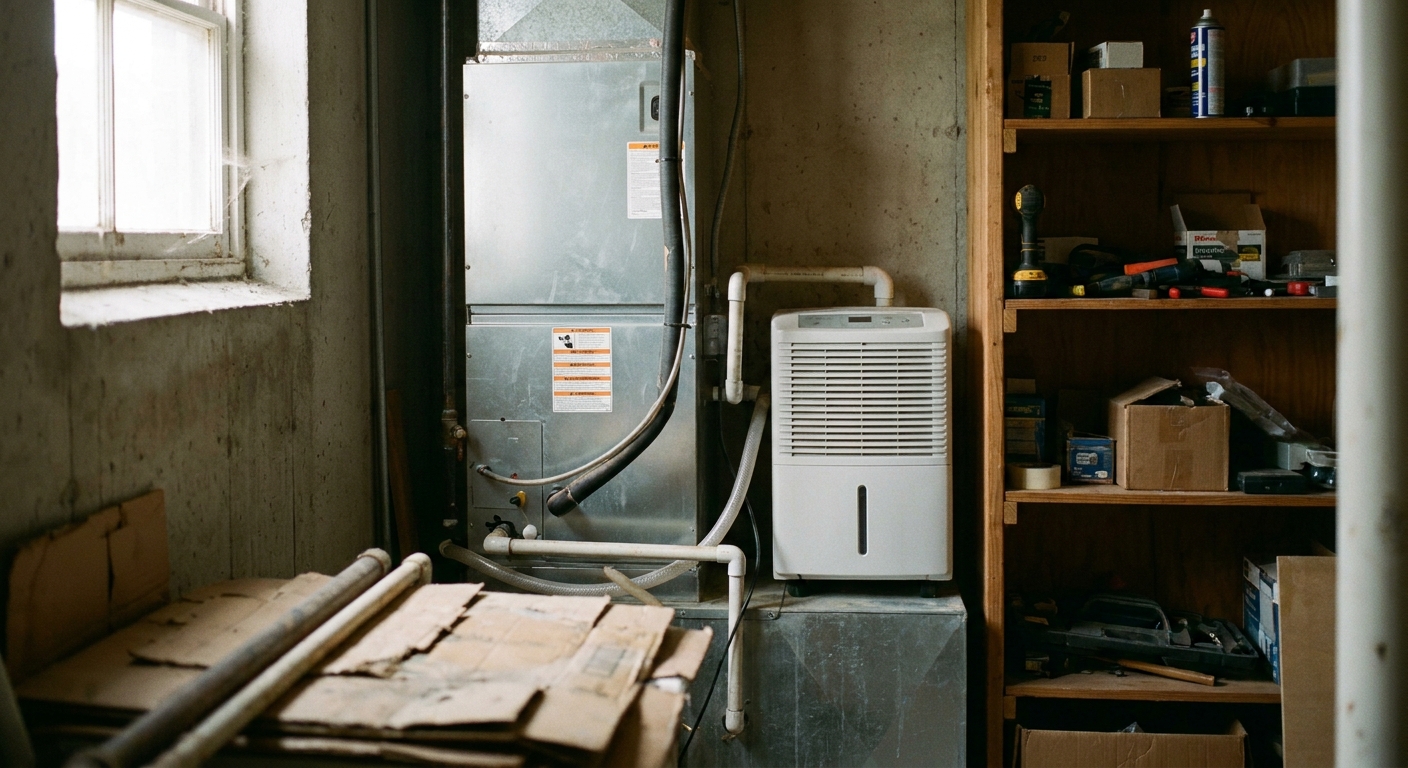
A ducted whole-home dehumidifier can remove moisture even when the AC is not calling for cooling, subject to its installed controls. It condenses water and releases drier, warmer air. Choose a humidity target with the installer and verify room readings rather than assuming a single setting prevents every mold problem.
For a home in Metairie, capacity selection should account for the moisture load, air leakage, operating conditions, and intended coverage. Rated capacity is measured in pints per day. A 2,500-square-foot home does not automatically require 70-80 pints per day; the selected model and site assessment must support the recommendation.
A qualified installer should follow the selected unit’s manual for duct connections, drainage, electrical supply, clearances, and controls. Some designs use dedicated ducting, while others connect to approved points in the HVAC system. There is no universal return-duct connection that works for every installation.
A dehumidifier adds electricity use and heat while removing moisture. Drying time and the net effect on cooling costs vary with the home’s conditions and controls. Ask about expected operation, maintenance, and control compatibility; neither a smart thermostat nor a dehumidifier guarantees savings.
Air Purification and Indoor Air Quality
Filtration can help reduce airborne particles such as dust and pollen. It does not remove water vapor or repair damp materials. Treat pollutant sources, moisture problems, and airflow as separate parts of the assessment rather than using an air purifier as a substitute for humidity control.
For a home in Kenner, choose the highest-efficiency filter the system can accommodate with appropriate airflow. A higher MERV rating does not mean no pressure drop. UV and electronic cleaners do not guarantee allergy relief or neutralize every pollutant; some can emit ozone. Ask a qualified installer to assess the specific product and safety requirements.
Check accessible filters monthly and replace or clean them according to the filter and equipment instructions. Use the correct fit and follow safe access instructions. If mold or debris is suspected in ducts, have the cause evaluated; duct cleaning is not a routine cure for high humidity, and its scope and price need a separate quote.
Maintenance Practices to Keep Humidity in Check
A professional pre-season service can check coil condition, refrigerant charge, blower operation, and condensate drainage. Dirt and airflow faults can affect cooling and moisture removal, but their effect on coil temperature varies. Internal cleaning and refrigerant work should follow the manufacturer’s procedures and measured findings.
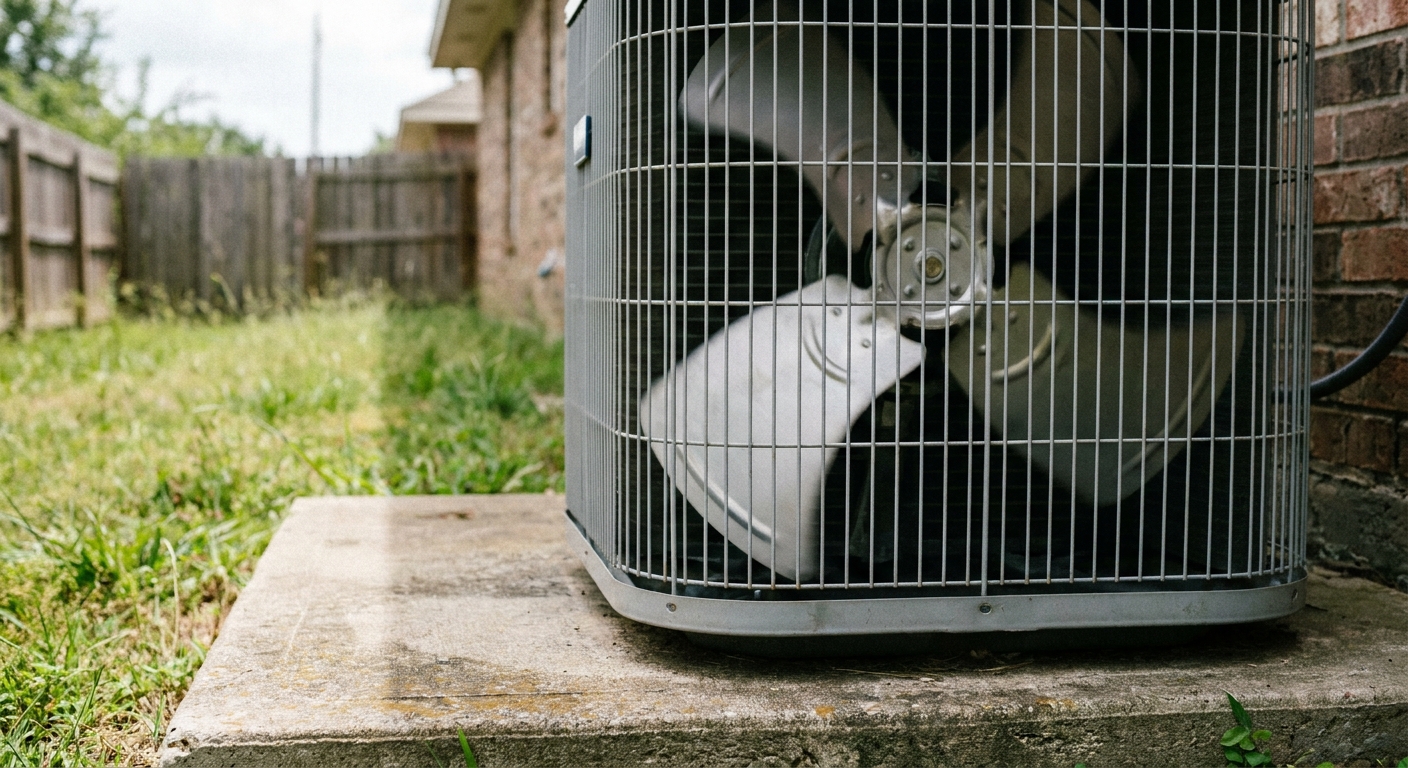
Keep leaves and vegetation away from the outdoor unit without removing guards or reaching near the fan. Follow its manufacturer’s clearance requirements rather than relying on one distance for every model. Report standing water or drainage problems; leave internal coil and fan cleaning to a qualified technician.
Use a hygrometer to track humidity in occupied rooms. EPA recommends below 60%, ideally 30-50% where possible. Repeated high readings call for checking moisture sources and system performance, not continually lowering the temperature. Ask whether the fan’s AUTO setting is appropriate for your system; continuous fan operation can re-evaporate moisture from a wet coil.
- Schedule professional cooling-system maintenance before the cooling season.
- Check accessible filters monthly; clean or replace them as the manufacturer directs.
- Watch for condensate leaks and have a technician inspect or clear the drain as needed.
- Keep vegetation and debris clear of the outdoor unit according to its manual.
These habits support reliable operation and help you notice changes early, but they cannot guarantee equipment life or repair costs. If dampness, water pooling, or a new musty smell persists, arrange a diagnostic and share the humidity readings and symptoms you recorded.
Choosing the Right System for Your Home
Free replacement estimates are separate from repair diagnostic visits. For planning information, see our 2026 Kenner AC replacement cost guide. Your final quote depends on the equipment and installation scope.
When comparing systems, ask for the exact matched equipment, SEER2 rating, humidity-control features, refrigerant type, and installation scope. A variable-capacity compressor and compatible blower may help match changing loads, but performance depends on setup. Refrigerants are specific to the approved equipment; a newer refrigerant is not a drop-in substitute for the existing system.
Supplemental whole-home dehumidification can be useful if moisture stays high when there is little cooling demand. First address leaks and use outdoor-vented exhaust for moisture-producing activities. If a dehumidifier is appropriate, ask how its controls will operate alongside the AC during milder weather.
Ask a contractor to base equipment selection on a load calculation and assessment of insulation, windows, occupancy, and air leakage. Correct sizing helps avoid short cycling, but thermostat, airflow, and equipment faults can also cause it. Floor area alone is not a sufficient basis for replacement capacity.
Final Thoughts
Excess indoor humidity is something you can measure. Start with readings, water-source checks, and an assessment of AC operation, then compare repairs or supplemental dehumidification as needed. A high-efficiency filter can help with particles, but it is not a moisture-removal upgrade.
For homes in Kenner, Metairie, and the surrounding area, useful next steps are an equipment-specific maintenance plan and a quote based on diagnosed findings. Ask for a clear explanation of the recommended work and expected results, then compare what each repair or replacement option includes.
Need HVAC help in Kenner, Metairie, or the Greater New Orleans area? Call Tegridy Air at 504-414-8655 or request a free replacement estimate online. Repair diagnostic visits have a published $109 dispatch fee; repairs are quoted after diagnosis and before work proceeds.
Related Reading
- Beating Louisiana Humidity: How the Right AC Setup Keeps Your Home Dry
- Beating Louisiana Humidity: How the Right AC Setup Keeps Your Home Dry
- Beating Louisiana Humidity: How the Right AC Setup Keeps Your Home Dry
Frequently Asked Questions
How often should I have my AC serviced to keep humidity under control?
Arrange professional cooling-system maintenance before the cooling season and follow the manufacturer’s schedule. Additional visits depend on usage, equipment condition, and symptoms. Have the technician check coils, airflow, refrigerant charge, and drainage; no visit schedule guarantees humidity control.
Can I use a portable dehumidifier instead of a whole-home unit?
A portable dehumidifier can help with a room or defined area when sized and used according to its manual. A ducted whole-home unit may suit persistent moisture across several rooms. The right choice depends on the moisture source, required capacity, airflow between rooms, drainage, and operating conditions.
What indoor humidity level is considered comfortable?
EPA recommends keeping indoor relative humidity below 60%, ideally 30-50% where possible. Measure it with a hygrometer and investigate condensation or damp surfaces even when the room reading appears acceptable.
Does a higher SEER rating improve dehumidification?
SEER and SEER2 describe seasonal cooling energy efficiency, not moisture-removal performance. A higher rating does not guarantee colder coils or longer cycles. Correct sizing, airflow, controls, runtime, and the home’s moisture load also determine humidity performance.