
By Scott Gieseler · Published · Updated

If the living room feels clammy after you turn the thermostat down, start by measuring indoor humidity. Swelling wood, condensation, and musty smells deserve attention, but they do not rule out thermostat issues, water leaks, or other causes. Record the humidity and temperature before deciding the AC needs replacement.
In Greater New Orleans, especially Kenner and Metairie, humid outdoor conditions can add to the home’s moisture load. Condensation and higher electric bills are useful clues, not a diagnosis. A correctly sized and maintained AC, moisture-source repairs, and supplemental equipment when needed can help improve comfort.
This guide explains how a central air system removes moisture, what you can safely observe, and what a technician should check. It also separates whole-home dehumidification from air filtration so you can compare the right options for your home and budget.
Understanding Humidity and Its Impact on Comfort
Relative humidity compares the water vapor present with the saturation level at the same temperature. It changes when temperature changes, even without adding water. Humid air can slow sweat evaporation and make a room feel clammy; a particular outdoor heat-index example cannot diagnose an indoor humidity problem.
Persistent moisture supports mold and dust mites, which can affect people sensitive to those allergens. EPA recommends keeping indoor relative humidity below 60%, ideally 30-50% where possible. Use indoor readings and inspect for moisture sources instead of assuming a typical humidity level for every New Orleans home.
Removing moisture is part of the AC’s cooling load, but a temperature-only thermostat does not directly respond to humidity. Runtime and electric bills also depend on weather, insulation, settings, and equipment condition. A home can reach the temperature setting while still needing better moisture control.
How Central AC Removes Moisture
When the evaporator coil is colder than the passing air’s dew point, water vapor can condense on it. The water collects in the drain pan and leaves through the condensate drain. Moisture removal occurs during suitable cooling operation; there is no separate stage an undersized unit must reach before condensation can begin.
Moisture removal depends on equipment capacity, coil conditions, airflow, runtime, and controls. An oversized system may stop too soon after satisfying the thermostat. An undersized system can still condense moisture but may not meet the home’s cooling load. Neither floor area nor coil size alone establishes the right equipment choice.
For a home in Kenner or Metairie, ask for a load calculation that considers insulation, windows, air leakage, occupancy, and local design conditions. A 2,000-square-foot home does not automatically require three tons. SEER and SEER2 are cooling-efficiency ratings, not a moisture-control specification; ask about humidity performance separately.
- Have a technician inspect the evaporator coil and clean it as needed; do not open the cabinet to check it yourself.
- Look for water around the indoor unit from a safe location and report leaks; have a technician check the condensate drain.
- Have a technician measure airflow and verify blower settings against the equipment requirements.
When Your AC Needs Help: Signs of Inefficiency
Persistent dampness, new water pooling, unusual odors, or a change in cooling performance are reasons to arrange an assessment. Longer runtime by itself does not prove a fault, especially in hot weather or with variable-capacity equipment. Note changes from the system’s usual behavior and bring your humidity readings to the visit.
A technician can check refrigerant charge, coil condition, airflow, and the drain or condensate pump if fitted. Low charge and restricted airflow can impair cooling and may cause icing; the cause requires measurements. If ice appears, switch cooling off at the thermostat and call for service. Do not chip the ice, apply heat, or add refrigerant yourself.
The following are this article’s published planning ranges for repairs that may affect cooling or moisture control. They are not a quote, and included labor, parts, fees, and warranty coverage should be confirmed for the specific job before work is authorized.
- Refrigerant: published planning range $125-$225 per pound; confirm handling and other charges in the quote
- Fan/blower motor replacement: $450-$1,200
- Compressor replacement: $1,800-$2,900
- Capacitor or contactor replacement: $200-$450
- Refrigerant leak repair: $400-$900 plus the refrigerant itself
- Dispatch fee in Greater New Orleans: $109. Repairs are quoted after diagnosis.
Tegridy Air’s repair price is quoted after diagnosis and before repair work proceeds. Ask what the quote includes when more than one item needs attention, such as leak repair and refrigerant. Free replacement estimates are separate from the $109 repair dispatch fee.
Adding a Whole-Home Dehumidifier
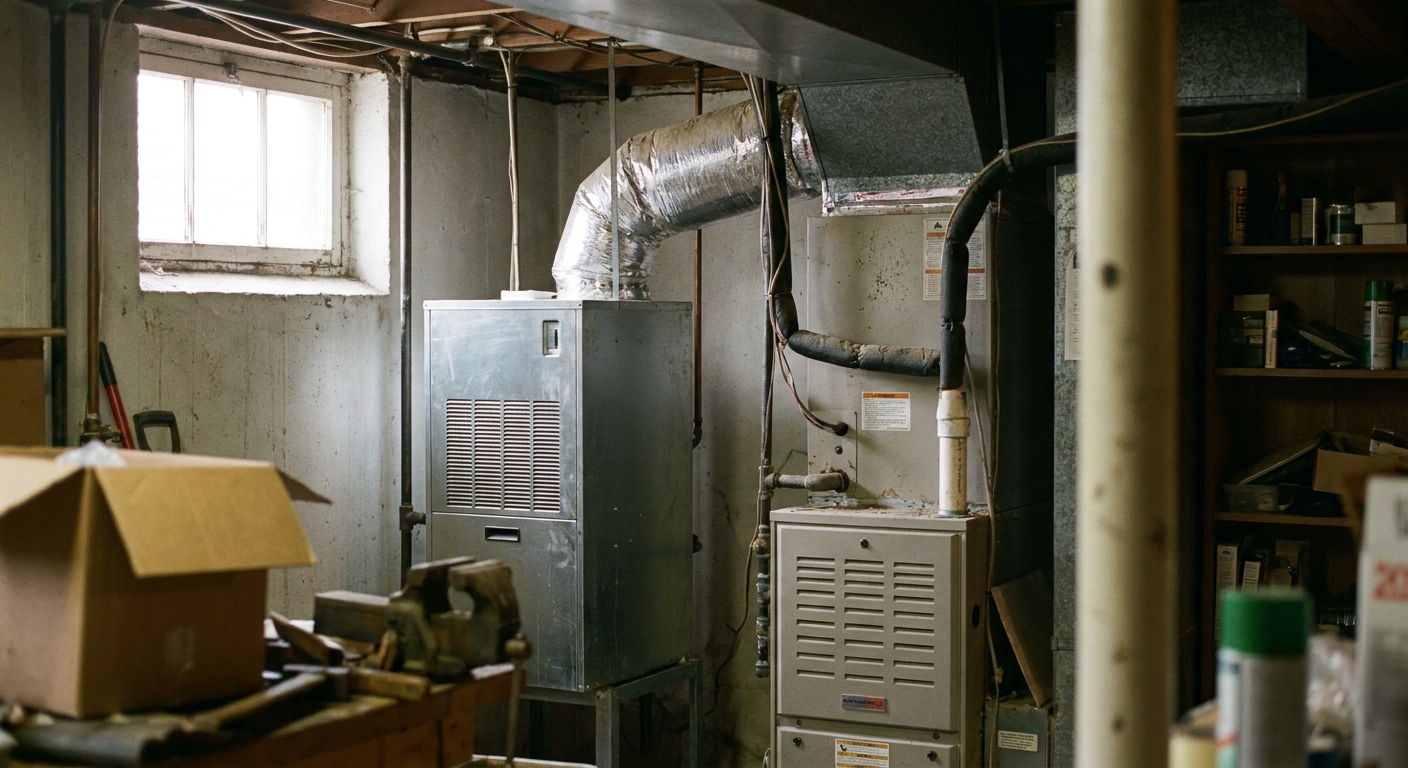
A whole-home dehumidifier can remove moisture independently of the AC’s need to cool. It condenses water and returns drier, warmer air to the space or duct system. The airflow route depends on the model and installation design; it does not always connect upstream of the AC coil. A damp attic or basement also needs its own moisture-source assessment.
Dehumidifier capacity is rated in pints per day under specified test conditions. A 2,500-square-foot house does not automatically need a 70-pint unit. Ask a qualified installer to evaluate the actual moisture load, air leakage, operating temperatures, duct design, drainage, and electrical requirements using the selected model’s manual.
A whole-home dehumidifier uses electricity and adds heat as it removes moisture. Its effect on the total bill depends on the model, runtime, humidity setting, and interaction with the AC. There is no reliable universal 5-10% increase or guaranteed cooling-cost reduction for every home.
Air Purification and Indoor Air Quality
Humidity control and indoor air quality are related, but an air purifier does not remove water vapor. Filtration can reduce some airborne particles while moisture-source repairs and dehumidification address dampness. Existing mold needs appropriate cleanup and correction of the water problem; filtration alone cannot resolve it.
Mechanical filters, UV devices, and electronic air cleaners work differently. Filters capture particles; UV performance depends on exposure and installation and does not remove particles. Some electronic and UV products can produce ozone, a lung irritant. Review the specific technology and emissions rather than choosing an air cleaner from a broad health claim.
- Ask whether a MERV 13 filter fits the system’s filter slot and airflow limits before upgrading.
- Discuss coil-surface UV only as a possible supplement to moisture control, cleaning, and filtration.
- Do not assume electronic air cleaners are best for severe allergies; assess emissions, upkeep, and the pollutants of concern.
Installation scope and cost depend on the product and existing system. No air-cleaner upgrade guarantees health improvements or pays for itself through fewer filter changes. Compare the installation quote and ongoing replacement or cleaning requirements before choosing an accessory.
Maintenance Practices That Keep Humidity in Check
A professional pre-season tune-up can check coils, refrigerant charge, blower operation, and condensate drainage. A clogged drain can cause water damage and affect humidity. Follow the equipment’s maintenance schedule and ask which checks and cleaning tasks are included rather than assuming every visit covers the same work.
Between visits, maintain accessible filters as directed and use kitchen and bathroom exhaust fans that vent outdoors. Report leaks promptly and keep a record of damp areas. If a source such as wet soil or indoor clothes drying is adding moisture, address that source instead of relying only on more cooling.
A humidity-sensing thermostat can be useful, but displaying a reading does not mean it can control a dehumidifier or blower speed. Verify compatibility and available alerts with the equipment manuals. Set the control with the installer and check actual room humidity; a maintenance plan does not automatically add monitoring features.
Final Thoughts
For a humid New Orleans home, start by measuring humidity and checking for leaks or other moisture sources. Have the AC’s sizing, condition, airflow, and controls assessed before choosing supplemental dehumidification. Filtration can address some airborne particles but should be evaluated separately from moisture removal.
Persistent water pooling, condensation, or a new musty smell deserves prompt attention. Longer runtime alone is not enough to diagnose the problem. A technician’s findings can help you compare a repair with other options without relying on a promised reduction in your electricity bill.
Need HVAC help in Kenner, Metairie, or the Greater New Orleans area? Call Tegridy Air at 504-414-8655 or request a free replacement estimate online. Repair diagnostic visits have a published $109 dispatch fee; repairs are quoted after diagnosis and before work proceeds.
Related Reading
- Beating Louisiana Humidity: How the Right AC Setup Keeps Your Home Dry
- Beating Louisiana Humidity: How the Right AC Setup Keeps Your Home Dry
- Picking the Right-Size AC for Your Metairie Home – Bigger Isn’t Better
Frequently Asked Questions
How do I know if my AC is removing enough humidity?
Measure indoor relative humidity over time. Repeated high readings, condensation, or musty smells warrant checking moisture sources and AC performance. EPA recommends staying below 60%, ideally 30-50% where possible. A single reading above 55% does not by itself prove the AC is faulty.
Can I install a dehumidifier myself?
Ducted whole-home units need a qualified installer to assess airflow, drainage, controls, electrical requirements, and applicable installation rules. Follow the selected model’s manual. A portable plug-in unit has different setup requirements; professional installation is not a blanket guarantee of warranty coverage.
How often should I replace my air filter?
Check an accessible filter monthly and follow the filter and equipment manufacturers’ replacement or cleaning instructions. Dust, pets, and usage can shorten the interval. Use the correct size and an approved filter type, and switch the system off before routine filter access as the manual directs.
Does a higher SEER rating help with humidity control?
SEER and SEER2 describe seasonal cooling energy efficiency, not a separate dehumidification rating. Humidity performance also depends on sizing, airflow, controls, runtime, and the moisture load. Ask how the proposed system will manage moisture under your home’s actual conditions.