

When you turn the thermostat up a few degrees and the air coming from the vents feels warm, the first reaction is usually frustration. You’ve paid for a system that should keep the house comfortable, yet it’s delivering hot air instead of cool. In many cases the culprit is a frozen evaporator coil, a condition that can turn a perfectly good system into an inefficient, noisy, and potentially expensive repair job.
In the Greater New Orleans area—especially in neighborhoods like Kenner and Metairie—our homes run AC almost daily during the summer months. The combination of high heat and humidity puts a lot of stress on the cooling cycle. When the coil that absorbs heat from your indoor air freezes, the system can’t move heat out of the house, and the result is the warm air you’re feeling.
This article walks through how the evaporator coil works, why it freezes, what you can do when you notice the problem, and how to keep it from happening again. It’s written from the perspective of a local technician who’s seen the issue many times, so you’ll get practical advice you can act on right away.
Recognizing the Symptom: AC Blowing Warm Air
When the air handler starts delivering air that feels warm or only slightly cooler than the room temperature, the first thing to check is the thermostat setting. Make sure it’s set to “cool” and that the temperature is lower than the current room temperature. If the settings are correct and the system still blows warm air, the problem is likely deeper in the cooling cycle.
Another sign that the coil may be frozen is a noticeable reduction in airflow. The vents might feel weaker, and you may hear a faint hissing or gurgling sound as the refrigerant struggles to circulate. In some cases the indoor unit will make a clicking noise as the safety thermostat shuts the compressor off to protect the system.
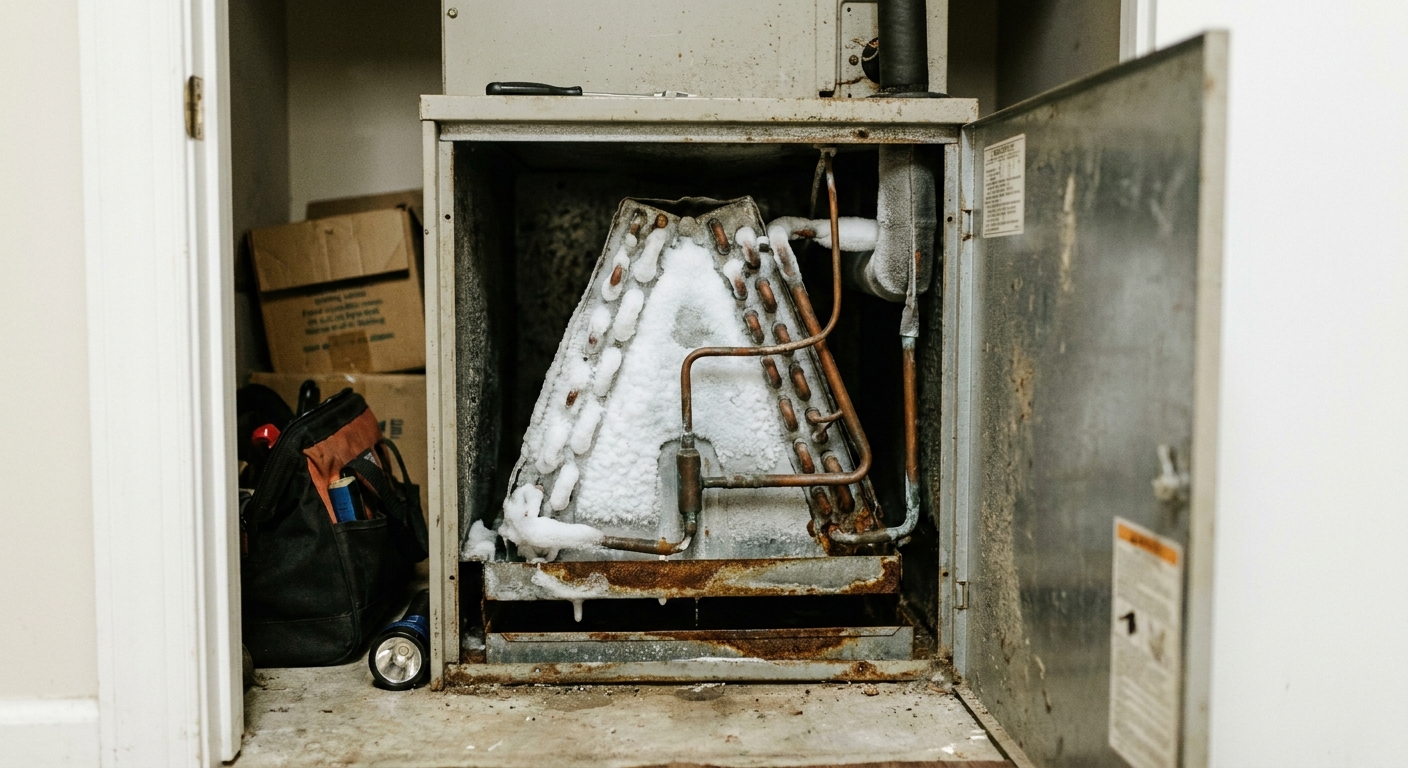
Finally, you might see ice buildup on the indoor unit itself. The evaporator coil can develop a layer of frost or clear ice that you can see when you open the service panel. If you notice any of these indicators, it’s time to investigate the frozen coil scenario before the compressor overheats or the motor burns out.
How the Evaporator Coil Works and Why It Freezes
The evaporator coil sits inside the air handler and is the heart of the cooling process. Warm indoor air is drawn across the coil by the blower fan. As the air passes, the refrigerant inside the coil absorbs heat, turning from a low-pressure liquid into a low-pressure vapor. This heat-absorption cools the air, and the blower pushes the now-cool air back into the living space.
For the coil to stay ice-free, two conditions must be met: sufficient airflow across the coil and the right amount of refrigerant pressure. If airflow is restricted, the coil can get too cold, allowing moisture in the air to freeze onto the coil surface. Likewise, if the refrigerant charge is low, the pressure drops, causing the coil temperature to fall below the freezing point of water.
When the coil freezes, the refrigerant can’t absorb heat effectively, so the system stops delivering cool air. The compressor, which is designed to run with a steady refrigerant flow, may overheat and shut down. This chain reaction is why a frozen coil often results in the AC blowing warm air.
Common Causes of a Frozen Coil
There are a handful of reasons why the evaporator coil can develop ice. The most frequent cause is reduced airflow, which can stem from clogged air filters, blocked return registers, or ductwork that’s full of dust and debris. Even a partially closed damper can create enough restriction to cause the coil temperature to drop.
Another common cause is low refrigerant levels. A leak in the refrigerant line reduces the amount of refrigerant circulating, which lowers the pressure in the evaporator. Low pressure means the coil temperature falls below freezing, and ice begins to form. Leaks can be tiny and hard to see, but they have a big impact on performance.
Improper thermostat settings can also contribute. If the thermostat is set to a temperature that’s too low relative to the outdoor heat, the system runs continuously, pulling more heat than the coil can handle. A malfunctioning fan motor or a failed capacitor can also reduce airflow, leading to the same freezing effect.
- Clogged air filter or dirty return grille
- Blocked or undersized ductwork
- Low refrigerant charge due to a leak
- Faulty blower motor, capacitor, or fan relay
- Thermostat set too low for the current outdoor temperature
What to Do When You Notice a Frozen Coil
The first step is to turn off the system. Switch the thermostat to “off” and shut off the breaker that powers the air handler. This stops the compressor from running while the coil thaws, preventing further damage to the motor or the refrigerant lines.
Next, locate the source of the ice. Open the service panel on the indoor unit and look for frost or clear ice on the coil. If the ice is thick, you can speed up the thawing process by gently directing warm room air onto the coil with a hair dryer set on low. Do not use high heat or direct flames, as that could damage the coil fins.
After the coil has thawed, turn the system back on for a short test run. If the air is still warm or the coil refreezes quickly, you’ll need professional assistance. Continuing to run the system with a frozen coil can cause the compressor to overheat, leading to a costly replacement.
While you’re waiting for a technician, check the most accessible items yourself: replace the air filter if it’s dirty, clear any visible debris from the return grilles, and make sure all supply vents are open. These simple steps can sometimes restore enough airflow to prevent a repeat freeze.
Repair Options and Typical Costs
When a frozen coil is diagnosed, the repair path depends on the underlying cause. If the issue is a clogged filter or a dirty blower wheel, the fix is straightforward and inexpensive. However, more serious problems like a refrigerant leak or a failing blower motor require professional service.
For a refrigerant leak, a technician will locate the leak, repair or replace the affected section of tubing, and then recharge the system. The labor for leak repair typically runs between $400 and $900, plus the cost of the refrigerant itself, which is $125-$225 per pound. The exact amount of refrigerant needed varies with the size of the system and the type of refrigerant used.
If the blower motor or fan assembly is the culprit, replacement is often necessary. A fan or blower motor can cost between $450 and $1,200 installed, depending on whether the unit uses a standard motor or a variable-speed ECM motor. A faulty capacitor or contactor is another common failure point; those parts generally run $200-$450 installed.
In the worst-case scenario—such as a failed compressor—the repair can be expensive. Compressor replacement typically ranges from $1,800 to $2,900 for parts and labor. Because the compressor is the most critical component, a technician will verify that the rest of the system is in good shape before proceeding.
All of these repairs begin with a service call and diagnostic visit. In the New Orleans metro area, a diagnostic fee is usually $90-$150, and hourly labor is around $200. The technician will provide a written estimate before any work begins, so you know exactly what to expect.
Preventive Maintenance to Keep the Coil From Freezing
Regular maintenance is the most reliable way to avoid a frozen coil. A qualified HVAC professional should inspect the system at least twice a year—once before the summer heat peaks and once before the cooler months. During these visits, the technician will check refrigerant pressure, clean the evaporator and condenser coils, and verify that the blower motor and capacitor are operating correctly.
Homeowners can also take simple steps to reduce the risk of freezing. Changing the air filter every 30-60 days, especially during high-use periods, keeps airflow steady. Keeping return grilles and supply vents unobstructed allows the system to move the proper volume of air across the coil.
- Schedule bi-annual professional maintenance
- Replace or clean the air filter regularly
- Keep vents and registers clear of furniture and curtains
- Inspect ductwork for leaks or blockages
- Consider a smart thermostat to avoid overly low temperature settings
Investing in a maintenance plan can also spread the cost of routine service over the year and often includes priority scheduling for emergency repairs. If you’re in Kenner or Metairie, a local plan means the technician knows the typical house layouts and can spot issues that are common in the area, such as high humidity-related coil frosting.
When to Call a Professional
If you’ve turned off the system, cleared obvious airflow blockages, and the coil still refreezes within a short time, it’s time to call a professional. Continuing to run the AC under those conditions can damage the compressor, which is the most expensive part to replace.
A qualified technician will perform a comprehensive diagnostic that includes checking refrigerant pressures, testing the thermostat, and using specialized tools to locate hidden leaks. They will also verify that the blower motor, capacitor, and contactor are functioning within specification.
When you contact us, we’ll start with a service call and diagnostic visit. After the assessment, we’ll explain the exact cause of the frozen coil, outline the repair options, and give you a clear estimate. Our goal is to get your system back to normal operation quickly and affordably, without unnecessary upsells.
Because the climate in South Louisiana can push systems hard, we recommend a maintenance plan that includes regular coil cleaning, refrigerant checks, and fan motor inspections. This proactive approach reduces the likelihood of a frozen coil and helps keep your electric bill from spiking during the peak summer months.
Final Thoughts
A frozen evaporator coil is a common but preventable problem that turns a comfortable home into a hot, humid space. Understanding how the coil works, recognizing the early signs, and taking quick action can save you time, money, and the hassle of a major repair.
By keeping filters clean, ensuring proper airflow, and scheduling regular professional maintenance, you give your AC the best chance to run efficiently throughout the hot season. If you ever suspect a frozen coil, turn the system off, let it thaw, and call a trusted local technician for a thorough diagnosis and repair.
Need honest HVAC help in Kenner, Metairie, or anywhere across the Greater New Orleans area? Call Tegridy Air at 504-414-8655 or request a free quote online – we’ll get you comfortable fast.
Related Reading
- Repair or Replace Your AC? Honest Cost Breakdown for New Orleans Homeowners
- AC Repair Explained: 10 Most Common Air Conditioner Problems and Solutions
- Honest Ways to Lower Your Entergy Bill Without Sweating Through Summer
Frequently Asked Questions
Why does my AC blow warm air even though the thermostat is set to cool?
Warm air usually means the evaporator coil is frozen, airflow is restricted, or the refrigerant charge is low. Any of these conditions prevent the coil from absorbing heat, so the air that returns to the house stays warm.
Can I thaw a frozen coil myself?
You can turn off the system and let the coil melt naturally, or use a low-heat hair dryer to speed up the process. However, you should still call a professional to find and fix the underlying cause, such as a leak or airflow problem.
How much does it cost to fix a frozen coil?
Repair costs depend on the cause. A refrigerant leak repair is typically $400-$900 plus $125-$225 per pound of refrigerant. A blower motor replacement runs $450-$1,200 installed, and a capacitor or contactor is $200-$450. A diagnostic visit is $90-$150.
How often should I have my AC serviced to avoid a frozen coil?
At least twice a year—once before the summer heat and once before the cooler months. Regular service includes cleaning the coils, checking refrigerant pressure, and testing the blower motor and electrical components.