
To safely restart your AC after a storm, turn off power, inspect the unit for damage, clear debris, and call a professional if anything looks wrong.
If a thunderstorm or heavy rain has passed over your home, the first thing you notice is often a wet or cluttered outdoor unit. The condenser sits exposed to wind, rain, and falling branches, so it can pick up water, dirt, and even broken parts. Most homeowners want to get cooling back quickly, but a rushed restart can damage the compressor or cause a short circuit.
This guide walks you through the exact steps you should take before you flip the thermostat back on. We cover safety checks, visual inspections, cleaning tips, electrical checks, and how to test the system before full operation. We also list the typical costs for common post-storm repairs so you know what to expect if you need a professional.
Turn Off Power and Verify Safety
The first rule after any storm is to cut electricity to the outdoor unit. Locate the breaker labeled “AC” or “compressor” in your main panel and switch it to the off position. This prevents accidental energizing while you work around the unit, which could cause shock or further damage.
After the breaker is off, double-check that the disconnect box near the condenser is also switched off. The disconnect is a safety device that isolates the unit from the house wiring. If you’re not comfortable confirming the disconnect is open, leave it to a certified and insured technician.
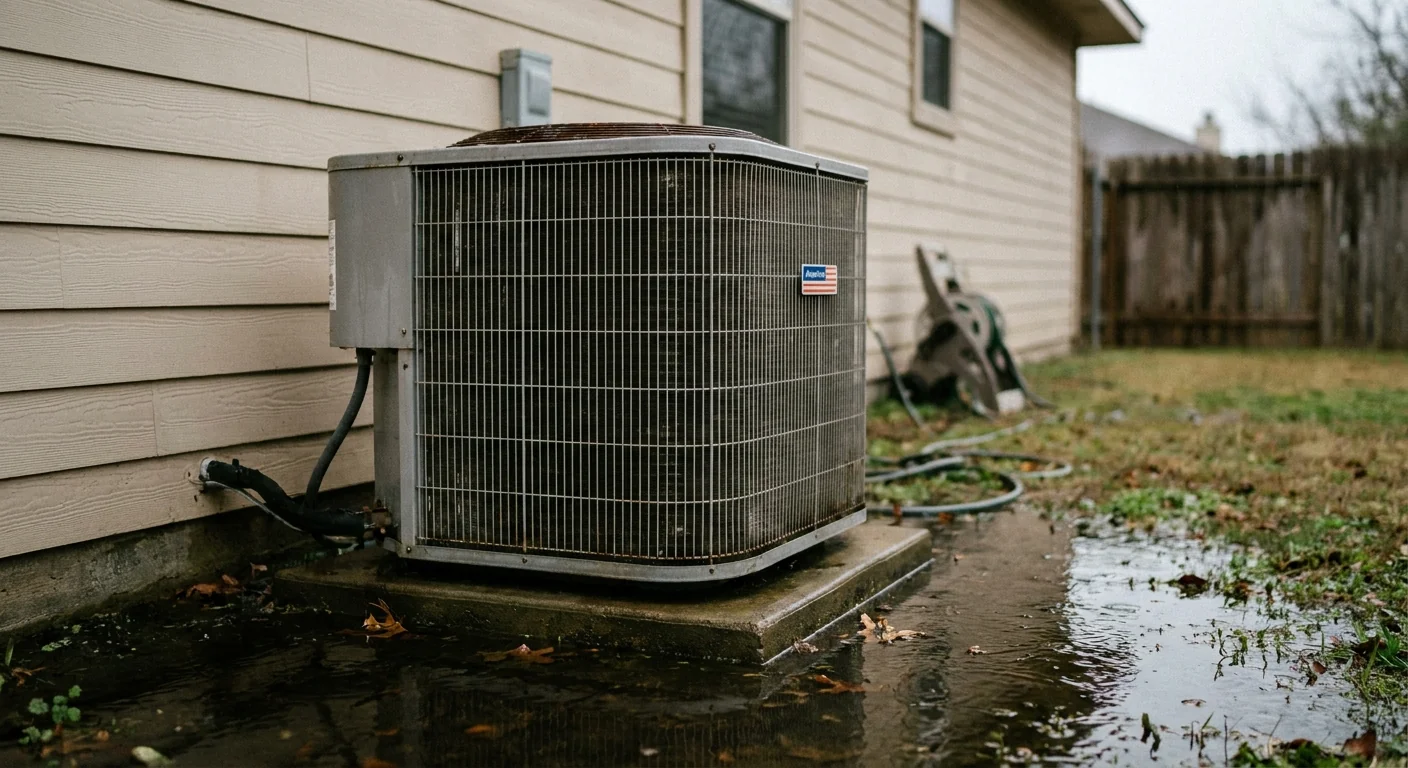
While the power is off, look for standing water around the base of the unit. A few inches of water is common after heavy rain, but deeper pools can indicate a drainage problem or a cracked pan. If water is deeper than an inch, wait for it to dry or gently pump it out before proceeding.
Inspect the Condenser for Water Damage
Begin with a visual walk-around of the condenser. Check the copper lines for signs of corrosion, rust, or visible cracks. Any damaged line can leak refrigerant, which will require professional repair.
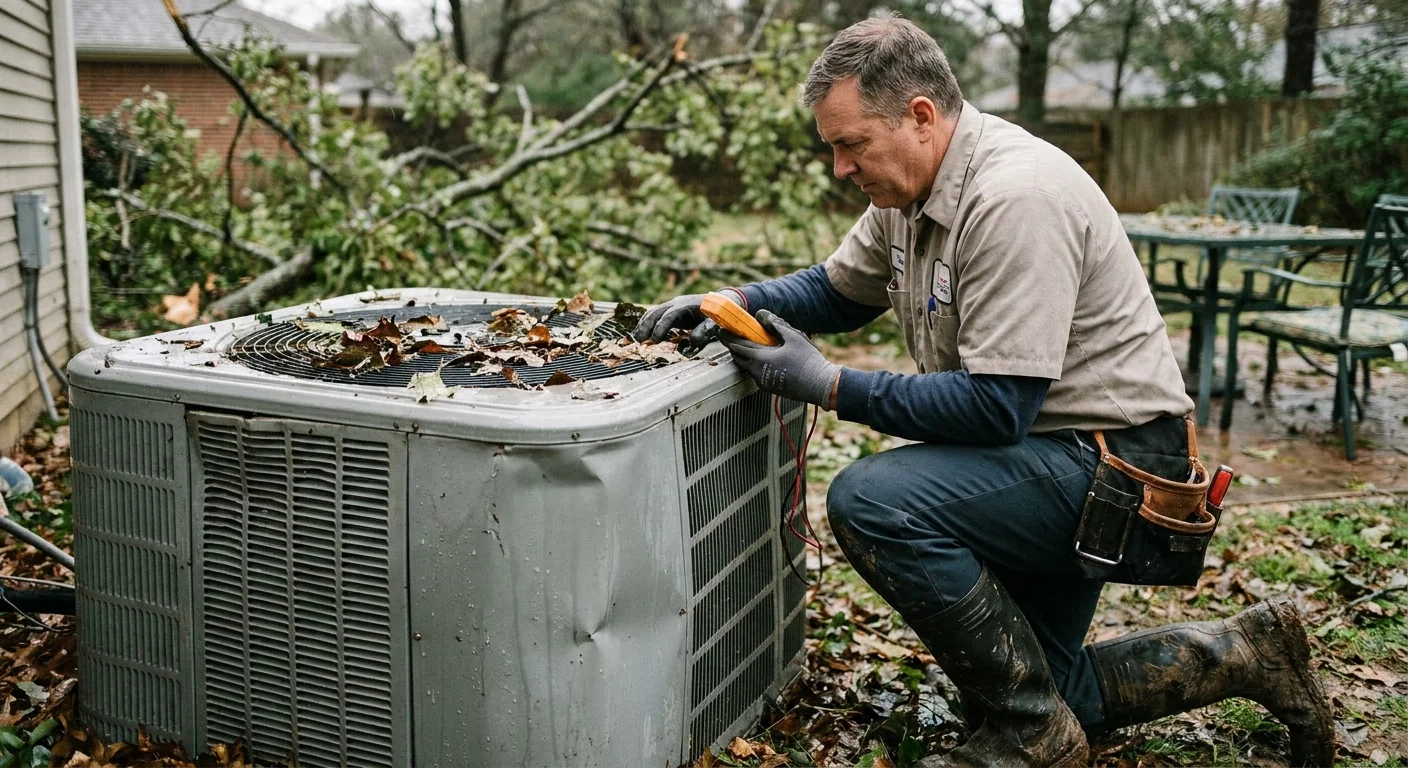
Next, examine the fan blades and motor housing. Look for bent blades, dents, or debris lodged in the fan guard. A bent blade can cause imbalance, leading to premature motor wear.
Finally, assess the electrical components for moisture. Look at the wiring terminals, contactor, and capacitor for water droplets or signs of rust. Moisture on live parts is a red flag; you should not attempt to dry them yourself.
- Corroded copper lines – may need leak repair or line replacement.
- Cracked or rusted coil – could require coil cleaning or replacement.
- Water in the disconnect box – indicates a need for professional drying and inspection.
Clear Debris and Clean the Unit
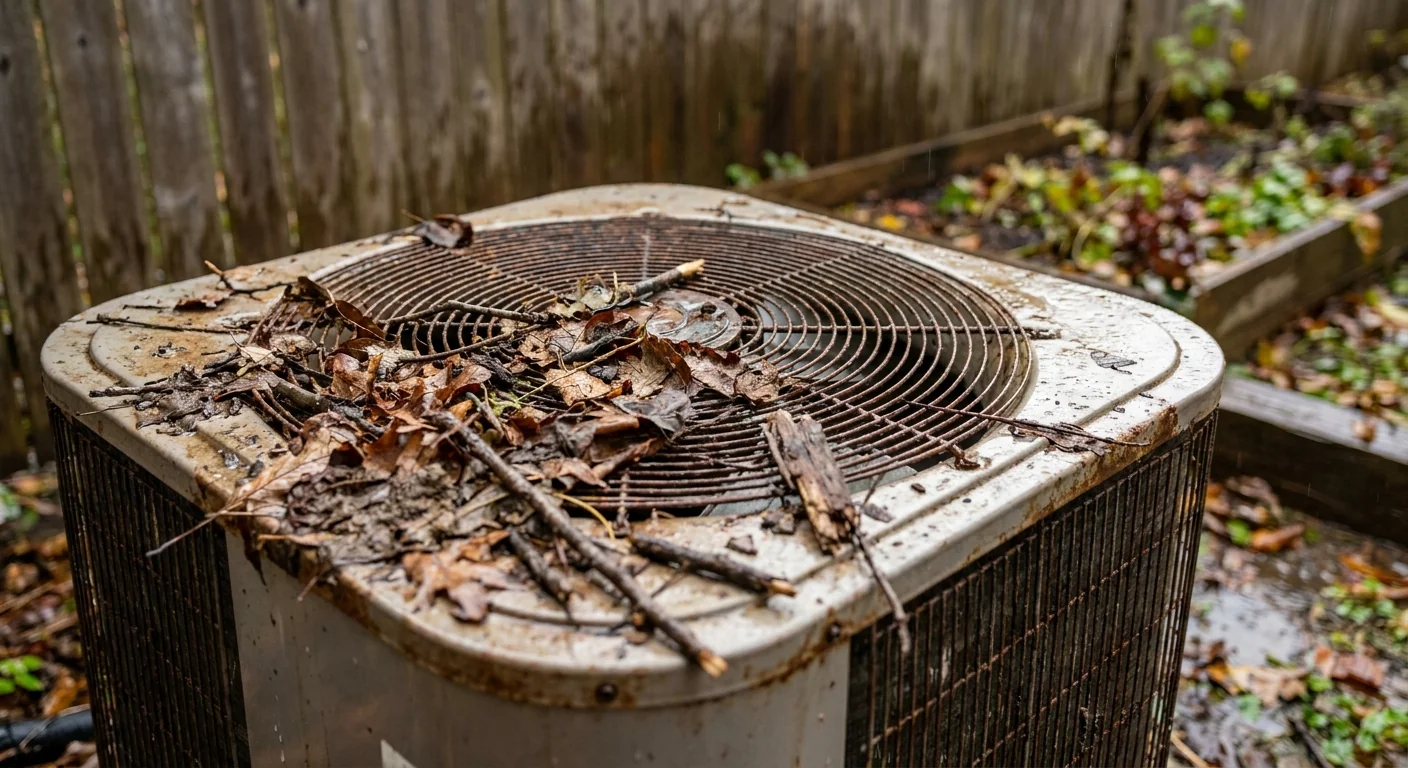
Storms often leave leaves, twigs, and mud on top of the condenser. Use a garden rake or gloved hands to remove large debris, being careful not to bend the fan blades.
After the big pieces are gone, spray the coils with a gentle garden hose. Do not use a pressure washer; the high pressure can bend fins and damage the coil. Aim the spray from the outside in, letting water flow through the fins to flush out dust and pollen.
Let the unit dry completely before moving on. A wet coil can trap moisture inside the cabinet, leading to shorted electrical components when power is restored.
Check Electrical Connections and Capacitors
With the power still off, open the disconnect box and inspect the wiring. Make sure all connections are tight and that no wires are frayed or corroded. Loose or corroded wires can cause overheating when the system starts.
Look at the capacitor, a small cylindrical part that helps the fan and compressor start. A swollen or leaking capacitor is a common storm-related failure. If you see bulging, leaking oil, or a cracked case, the capacitor should be replaced.
The contactor, which switches the high-current flow to the compressor, also deserves a look. A scorched or pitted contactor may need replacement. If you notice any of these issues, schedule an AC repair instead of attempting a DIY fix.
- Tighten any loose terminal screws.
- Replace swollen or leaking capacitors.
- Swap out scorched contactors.
Test the System Before Full Restart
After cleaning and inspecting, you can do a brief power-on test. Turn the breaker back on, set the thermostat to “cool,” and listen for the fan to start. The fan should spin smoothly without rattling, and you should hear a low hum from the compressor after a few seconds.
If the fan runs but the compressor does not engage, the issue is likely electrical or a refrigerant problem. Do not force the system to run longer than a minute; shut it off and call a professional.
When everything sounds normal, let the system run for about five minutes while you monitor for any leaks or unusual noises. Watch the outdoor unit for any signs of water re-accumulating or excessive frost on the coil, which can indicate a refrigerant leak.
Cost of Common Post-Storm Repairs
Storm damage can lead to a range of repair needs. Below are typical price ranges for the most common services in the Greater New Orleans area. These figures include parts and labor, but exact costs depend on the specific unit and extent of damage.
Refrigerant: $125-$225 per pound. Newer R-454B refrigerant sits at the higher end.
Fan/blower motor replacement: $450-$1,200. Variable-speed ECM motors are at the top of the range.
Compressor replacement: $1,800-$2,900. This is often the most expensive single-part repair.
Capacitor or contactor replacement: $200-$450. A quick swap can restore proper start-up.
Refrigerant leak repair: $400-$900 plus the cost of the refrigerant itself.
Service call / diagnostic: $90-$150. Labor runs about $200 per hour after the call fee.
For larger projects like a full system replacement, installed costs run $5,500-$11,000 depending on size and SEER rating. We always provide an upfront quote after a diagnostic, so you know the exact amount before work begins.
When to Call a Professional
If you find any of the following, it’s time to contact a certified and insured technician:
- Corroded copper lines or visible refrigerant leaks.
- Cracked or severely dented coil.
- Swollen, leaking, or bulging capacitors.
- Burnt or pitted contactors.
- Motor that does not start or makes grinding noises.
Even if the unit looks fine, a professional can perform a pressure test, verify refrigerant charge, and ensure the system runs efficiently. Regular maintenance plans can catch small issues before they become costly repairs, especially in humid climates like Kenner and Metairie.
Adding a smart thermostat or air-purification system during a service visit can improve comfort and indoor air quality without major upgrades. These options are often included in our maintenance agreements, which give you a set schedule for inspections and tune-ups.
Prevent Future Storm Damage
One of the best ways to avoid post-storm headaches is to protect the condenser before the next big rain. Install a simple metal or mesh cover that still allows airflow but keeps large debris out.
Trim trees and shrubs around the unit so that branches don’t fall onto the condenser during high winds. Keep the area around the unit clear of mulch or soil that can retain water against the base.
Schedule a seasonal tune-up in the spring. A technician can tighten connections, clean coils, and check the refrigerant level, making the system more resilient when the next storm hits.
Final Thoughts
Restarting your AC after a storm is not just about flipping a switch. It requires a careful safety shutdown, a thorough visual inspection, cleaning, and a brief test before you rely on the system for cooling. If you spot any damage, water intrusion, or electrical issues, let a certified and insured professional handle the repair.
Tegridy Air serves Kenner, Metairie, and the surrounding South Louisiana communities with honest, straightforward service. Whether you need a quick diagnostic, a repair, or a full system replacement, we’re ready to help you get back to comfortable indoor temperatures without unnecessary stress.
Need honest HVAC help in Kenner, Metairie, or anywhere across the Greater New Orleans area? Call Tegridy Air at 504-414-8655 or request a free quote online – we’ll get you comfortable fast.
Related Reading
- R-410A Phase-Out: How It Affects Your Next AC Repair Bill in New Orleans
- Hurricane Season HVAC Prep: Keep Your AC Safe Before the Storm
- Repair or Replace Your AC? Honest Cost Breakdown for New Orleans Homeowners
Frequently Asked Questions
My AC unit is still wet after the storm. Can I turn it on?
No. Wait until the unit is completely dry. Moisture on electrical parts can cause short circuits or motor damage. If water does not evaporate within a few hours, have a professional dry and inspect the unit.
How long should I wait before calling a technician?
If you see any corrosion, broken parts, or water trapped in the disconnect box, call a professional right away. For minor debris or surface water, you can clean and dry the unit yourself before a short test.
What are the signs of a refrigerant leak after a storm?
Look for oily spots on copper lines, a hissing sound, or reduced cooling performance. A leak usually requires a technician to locate, repair, and recharge the system with the proper refrigerant.
Does a maintenance plan cover post-storm inspections?
Yes. Our maintenance plans include a seasonal check-up that looks at the condenser, electrical connections, and overall system health. This service can catch storm-related issues early and keep your AC running efficiently.