
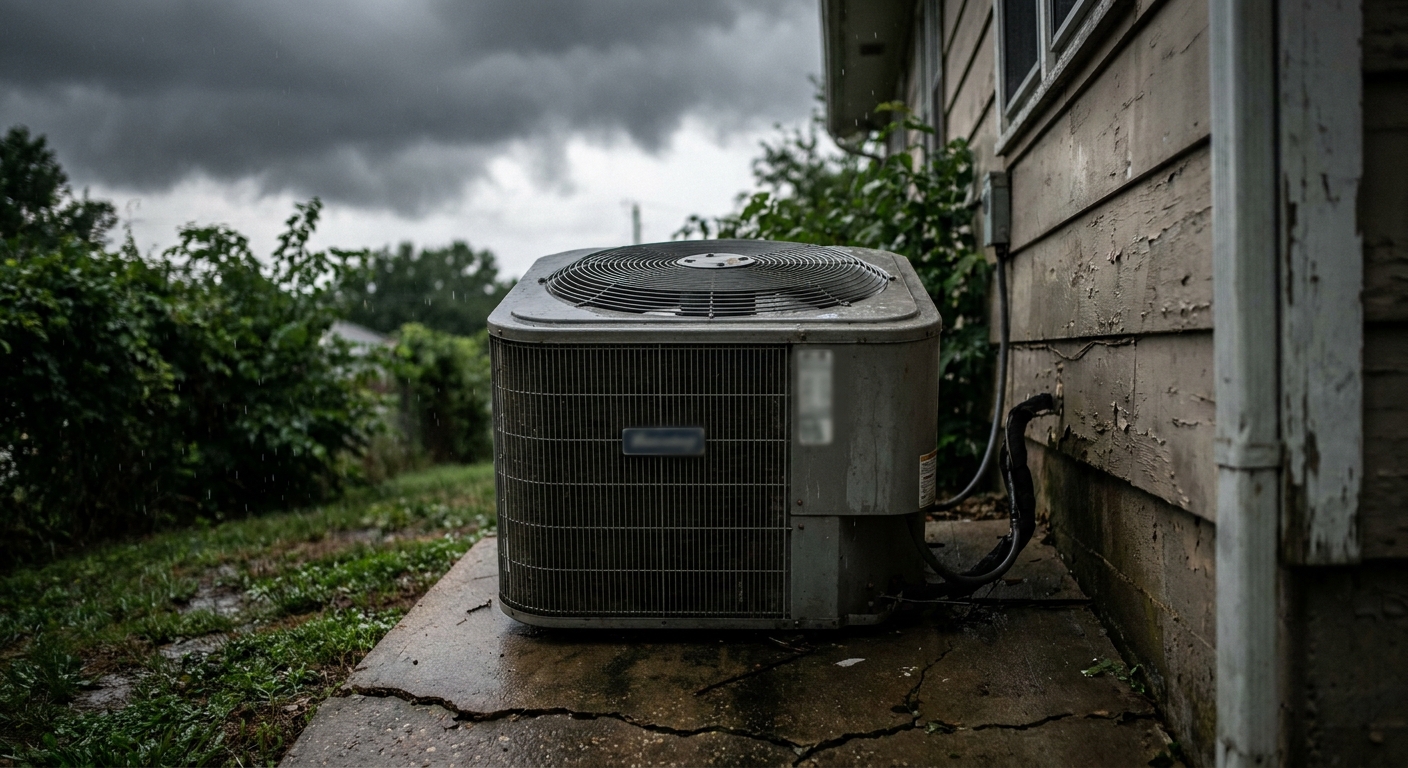
When the National Hurricane Center issues a storm watch, many homeowners in Kenner and Metairie start thinking about windows, roof shingles, and sandbags. One piece that often gets overlooked is the outdoor air-conditioner condenser, which sits low on a concrete pad and can become a direct target for flood water and wind-driven debris. If you’ve noticed water collecting around the base of your unit after a heavy rain, or you’re hearing rattling noises as a storm approaches, those are clear signs that your AC needs attention before the next hurricane makes landfall.
Skipping the prep work can turn a routine service call into a costly repair after the storm passes. A flooded condenser can lose refrigerant, corrode electrical components, and force the entire system offline, leaving you with higher Entergy bills and uncomfortable indoor temperatures. The good news is that most of the protective steps are simple, require only a few tools, and can be verified by a local technician who knows the typical weather patterns in South Louisiana. Below is a step-by-step guide that we at Tegridy Air use with our customers to make sure the system survives the season.
Inspect the Condenser for Flood Risk
The first thing to do is walk around the unit and look for low spots where water can pool. Check the concrete pad for cracks, erosion, or any slope that directs runoff toward the base of the condenser. If the pad is uneven, a short-term solution is to place a sandbag barrier or a low-profile metal ramp to divert water away. Also, examine the surrounding landscaping; overgrown shrubs can trap water and should be trimmed back before the storm.
Next, open the service panel and verify that the electrical connections are tight and free of corrosion. Moisture on terminals is a red flag because it can cause short circuits when the power comes back on. Look for any signs of rust on the fan motor housing or on the copper tubing that carries refrigerant. If you see rust, a quick clean-up with a wire brush followed by a protective spray can buy you time, but a professional assessment is advisable.
Finally, make a note of any visible damage such as bent fins, cracked fan blades, or loose mounting bolts. These issues are often easy to fix before a storm, but if left unchecked they can become points of failure when high winds hit. Documenting the condition now gives you a clear baseline to compare after the event, and it helps a technician focus on the most vulnerable parts during a service call.
Elevate or Shield the Unit From Wind and Debris
Even if flooding isn’t a concern, wind can lift the entire condenser or force large branches into the fan. The most reliable approach is to install a concrete or metal skid that raises the unit a few inches above the ground. In many homes in Metairie, a simple 2-inch concrete block placed under each corner of the pad does the job without requiring a full reconstruction.
If raising the unit isn’t practical, consider a wind-break fence made from lattice or a mesh screen. The barrier should be at least three feet high and positioned so that it doesn’t obstruct airflow to the fan. Proper clearance—usually six to twelve inches around the sides and top—is essential for the unit to operate efficiently and to avoid overheating during the storm.
Secure all bolts and mounting brackets with a torque wrench set to the manufacturer’s specifications. Loose hardware can vibrate loose during high winds, causing the condenser to shift or even tip over. A quick visual check and a hand-tighten of any suspect fasteners can save you from a major repair later on.
Check Refrigerant Levels and Seal Leaks
Refrigerant loss is a common hidden problem that becomes obvious after a storm when the system can’t keep up with indoor humidity. A low-charge condition puts extra strain on the compressor and can lead to premature failure. The best way to verify charge is with a professional gauge set, which reads the pressure in the low- and high-side lines and compares it to the manufacturer’s specifications.
If the pressure readings are out of range, a leak is likely. Common leak sites include the suction line, the coil connections, and the service ports. A technician can perform a dye test or use an electronic leak detector to pinpoint the exact location. Once identified, the leak is repaired, and the system is recharged with the appropriate amount of refrigerant.
Because refrigerant prices have risen, it’s helpful to know the cost before the repair. The material cost for refrigerant in the New Orleans area runs between $125 and $225 per pound, with newer blends like R-454B at the higher end. Labor for a leak repair typically falls in the $400-$900 range, plus the refrigerant itself. Knowing these numbers lets you budget for the service and decide whether to combine the repair with a seasonal tune-up.
Clean Coils and Verify Airflow (Cost Overview)
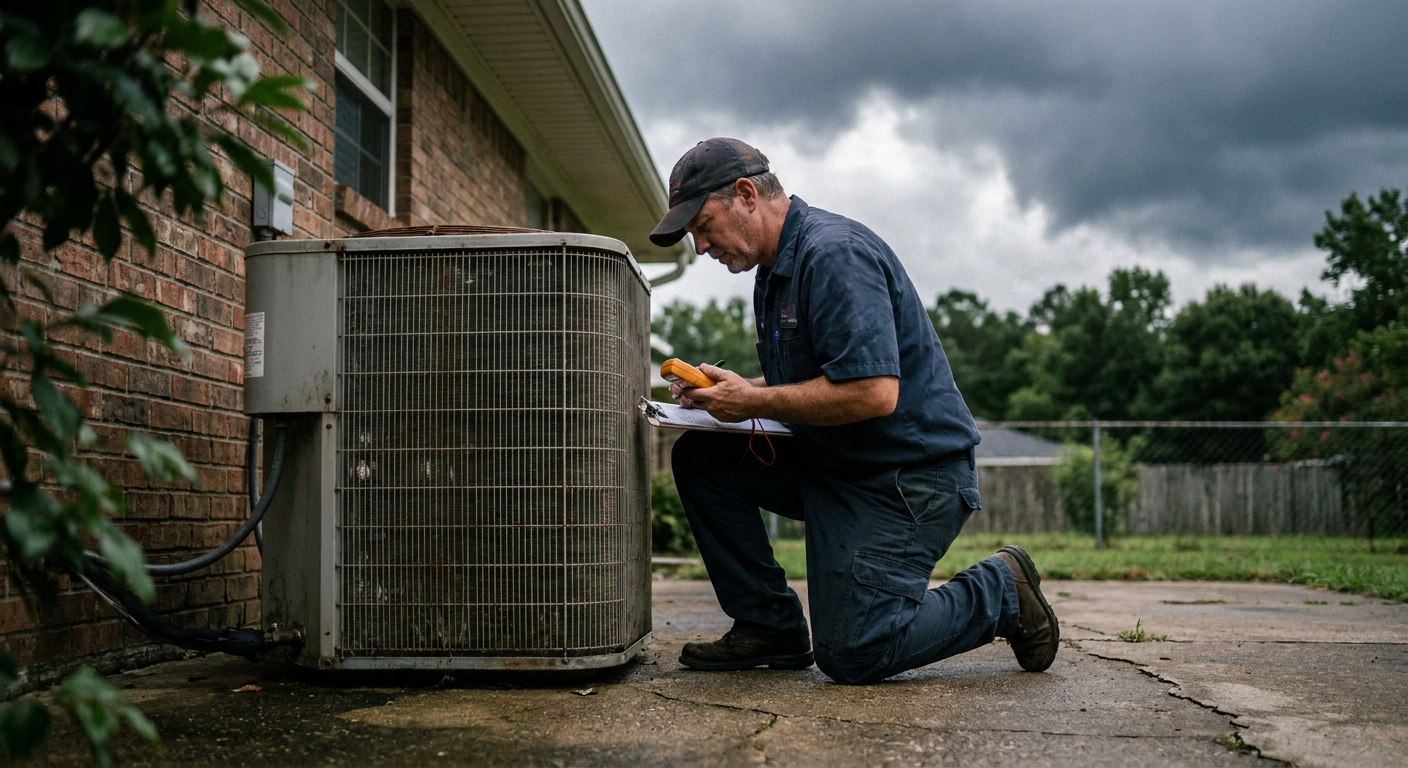
Dust and algae buildup on the condenser coils reduces heat exchange efficiency, forcing the compressor to work harder. In the humid climate of South Louisiana, this buildup can happen quickly, especially after a rainy spell. A visual inspection should reveal any green or black streaks on the fins; if you can see them, they need cleaning.
Cleaning the coils involves spraying a low-pressure water source from the inside out while gently brushing the fins with a soft brush. Avoid high-pressure sprays that can bend the fins. After cleaning, re-inspect the fan for any debris that might have lodged in the blades, and spin the fan by hand to ensure it moves freely.
Professional coil cleaning and airflow verification are part of a standard service call. The typical cost structure in our market includes a service call/diagnostic fee of $90-$150 and an hourly labor rate of about $200. If the fan or blower motor needs replacement, you can expect a price between $450 and $1,200 depending on the motor type. For a full compressor replacement, the range is $1,800-$2,900. These figures are provided so you can compare the estimate you receive from any contractor.
Test Controls, Thermostat Settings and Backup Power
Modern thermostats, including smart models, can be programmed to shut down the system when the outdoor temperature drops below a set point, which helps protect the compressor during a storm. Verify that the thermostat is set to “auto” mode rather than “on,” and that the fan setting is not locked to “run.” A quick test is to raise the indoor temperature a few degrees and watch the unit respond.
Battery-backed or generator-powered control boards keep the system from losing its settings if the power goes out. If you have a generator, make sure the transfer switch is properly wired to the HVAC circuit. For homes without a generator, a small UPS (uninterruptible power supply) can keep the thermostat and safety switches active for a short period.
Finally, run the system for a few minutes after the storm watch is issued to confirm that the condenser starts, runs, and shuts off without unusual noises. Listening for rattles, clunks, or a high-pitched whine can reveal loose components before they become a bigger problem. If anything sounds off, schedule a diagnostic visit as soon as the weather clears.
Plan for Post-Storm Service and Repairs
Even with the best preparation, a strong hurricane can still cause damage that isn’t obvious until the unit is turned back on. Common post-storm issues include water-logged electrical boxes, bent fan blades, and clogged condensate drains. A quick visual inspection after the rain stops can catch many of these problems early.
When you call a technician, let them know what you observed before the storm and any steps you took to protect the unit. That information helps the service crew focus on the most likely failure points, which can reduce the time on site and the overall cost. Many of our customers in Kenner and Metairie opt for a maintenance plan that includes a post-storm check, so the system is cleared for use before summer peaks.
If major components need replacement, ask about the possibility of bundling the repair with an upgrade, such as a higher-efficiency air filter, duct sealing, or a smart thermostat. Adding air purification devices can also improve indoor air quality after a storm, when mold spores and dust are more prevalent. A qualified HVAC professional can provide a written estimate that outlines parts, labor, and any additional services you might want.
What to Do After the Storm
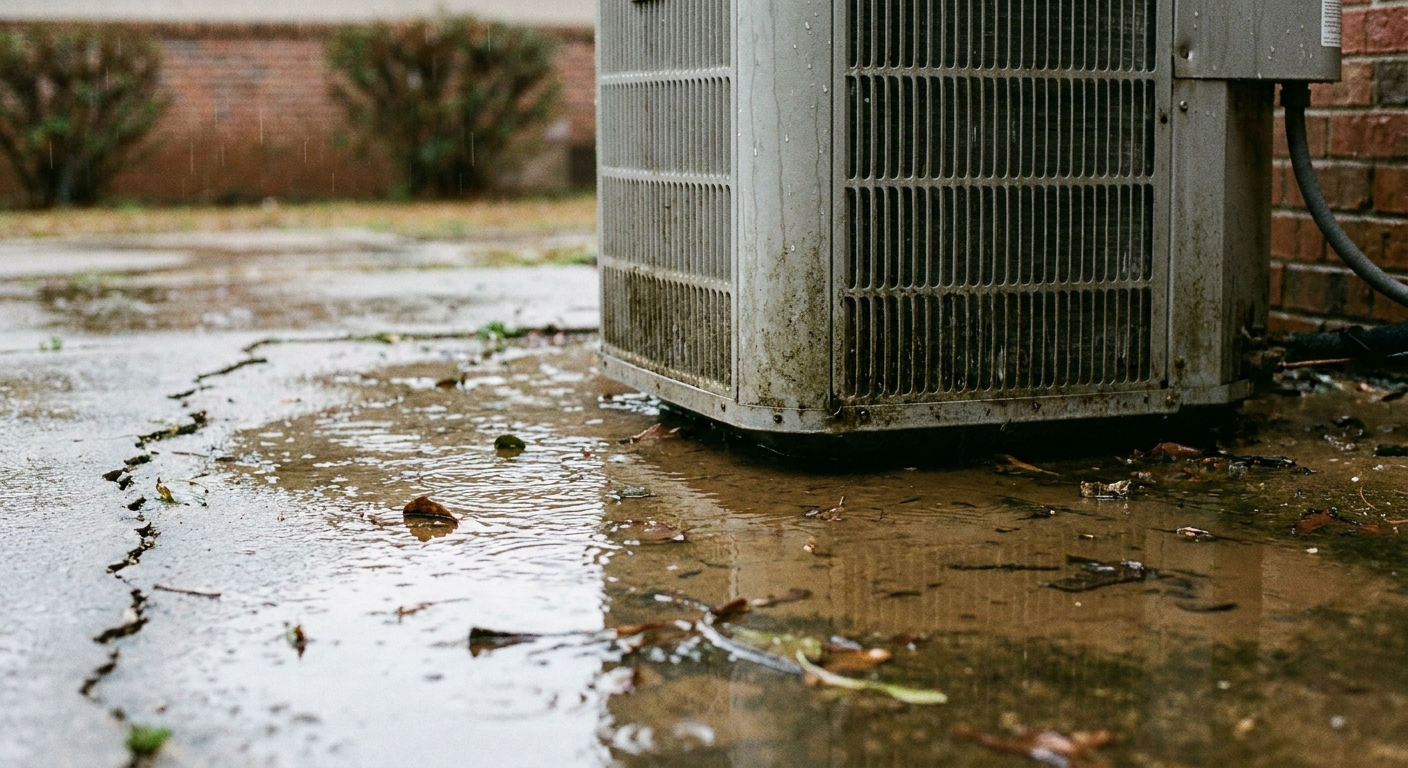
Leave the power off until the outdoor unit is dry and clear of debris. If floodwater or standing water reached the condenser, wait at least 24 hours before you restore power. Water sitting in the motor windings, the contactor, or the control board can short out the moment electricity hits it. That turns a unit you might have saved into a parts replacement.
The same rule applies after the water drains away. Storm water leaves mud and salt behind, and both hold moisture against metal and speed up corrosion. Give the unit a full day, and longer if the weather stays damp and the air is still. Do not try to speed things up by running the system to “dry it out.” That is how a wet motor fails for good.
Work through the restart in this order every time:
- Confirm the power is off. Shut the breaker for the AC at the main panel and pull or switch off the outdoor disconnect next to the condenser. Do this before you touch the unit.
- Clear the debris. Pull branches, leaves, shingles, and trash out of the fan grill and away from the sides of the cabinet. Keep at least a foot of open space around the unit.
- Verify the unit is dry. Check for standing water, mud lines on the cabinet, and dampness inside the service panel and the disconnect box. If anything is wet, wait the full 24 hours. If you rinse mud off, use low pressure and never spray toward the disconnect or the electrical panel.
- Inspect for damage. Look for bent coil fins, cracked or bent fan blades, a dented cabinet, loose mounting bolts, kinked refrigerant lines, and corrosion or scorch marks on the electrical terminals. Also check that the condensate drain is not blocked.
- Restore power. Once the unit is dry, clear, and undamaged, close the outdoor disconnect, then turn the breaker back on. Give the system a few minutes before you call for cooling at the thermostat.
- Run a short test cycle and listen. Let it run five to ten minutes and pay attention to the sound.
Certain sounds mean you should shut it back down. Rattling or grinding usually points to a bent fan blade or debris still inside the cabinet. A hum that never turns into a start is often a seized motor or a failed capacitor. If the breaker trips again as soon as you reset it, stop and leave it off. Repeated resets on a shorted unit cause more damage than the storm did.
Call a technician if the unit was submerged, if it will not start after it is fully dry, or if you see damage to the refrigerant lines or the electrical connections. A flooded condenser needs to be checked by someone certified and insured before it goes back into regular service, since insurers and manufacturers both ask about water exposure. In our market the diagnostic fee runs $90-$150, and that visit tells you whether you are looking at a cleanup or a replacement. Tegridy Air answers at (504) 414-8655 for post-storm calls in Kenner, Metairie, and the rest of the Greater New Orleans area.
Final Thoughts
Preparing your outdoor AC unit for hurricane season doesn’t require a major renovation, but it does need a systematic check of flood risk, wind exposure, refrigerant health, and control settings. The steps outlined above give you a clear roadmap to protect your investment and keep your home comfortable when the power returns.
If you prefer to have a local, family-run team handle the inspection, repair, or a full seasonal tune-up, we’re ready to schedule a visit. A qualified technician can verify that the condenser is secure, the refrigerant charge is correct, and the system will run efficiently when you need it most.
Need honest HVAC help in Kenner, Metairie, or anywhere across the Greater New Orleans area? Call Tegridy Air at 504-414-8655 or request a free quote online – we’ll get you comfortable fast.
Related Reading
- Hurricane Season HVAC Prep: Protect Your AC Before the Storm Hits
- Repair or Replace Your AC? Honest Cost Breakdown for New Orleans Homeowners
- How Often Should You Change Your HVAC Filter
Frequently Asked Questions
How can I tell if my condenser has taken on water after a storm?
Look for standing water around the base, rust on metal parts, and dampness inside the service panel. If the unit sounds different when it starts, or if it doesn’t turn on at all, have a professional inspect it for internal water damage.
Is it safe to run my AC if the power comes back on after a hurricane?
Yes, but only after you’ve inspected the unit for visible damage, cleared debris, and verified that the electrical connections are dry. If the unit sat in standing water, leave the power off for at least 24 hours so it can dry out first. Turn the system on for a short cycle and listen for unusual noises before running it for an extended period.
What maintenance tasks should I do before hurricane season begins?
Clean the condenser coils, check and tighten all mounting bolts, verify refrigerant pressure, test thermostat settings, and install any needed barriers to keep water away from the unit. Scheduling a professional service call can combine these tasks into one visit.
Can I install a generator to keep my AC running during a power outage?
A generator can supply power to the HVAC circuit if it’s properly wired through a transfer switch. Consult an electrician and a certified HVAC technician to size the generator and ensure safe operation.