

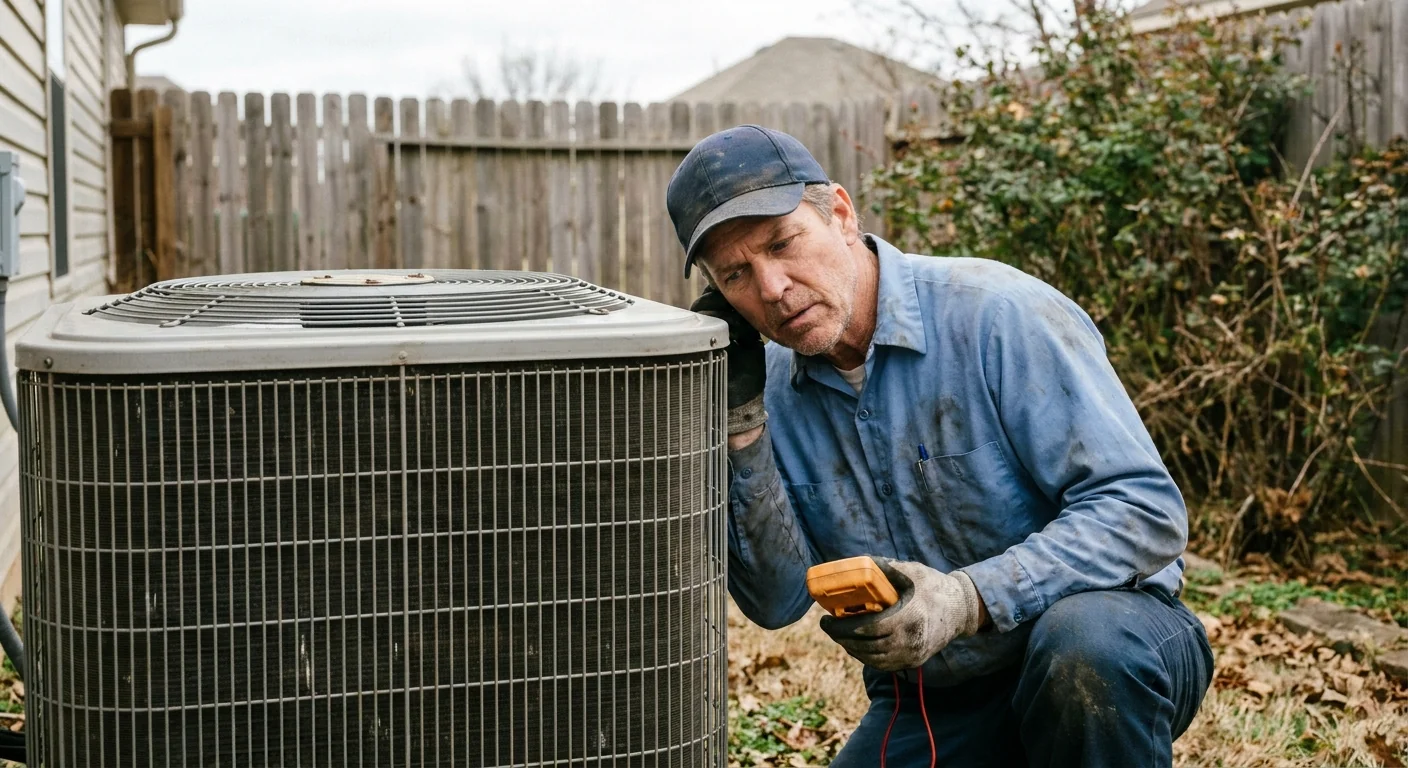
A grinding, buzzing, or clicking sound from your AC usually points to a specific component problem that needs a professional look.
If you’re hearing any of those noises, you’re probably wondering what’s wrong and whether you can fix it yourself. The sound tells you which part is struggling, and that can save time and money. Below we break down the three common noise types, what they typically mean, and what steps you should take in Kenner, Metairie, or anywhere in Greater New Orleans.
We’ll also cover how a simple diagnostic can pinpoint the issue, what typical repair costs look like, and how regular maintenance can keep those noises from showing up again. The goal is to give you clear, actionable information so you can decide when to call a certified and insured technician.
Identifying the Noise Type
The first step is to listen carefully and note when the sound occurs. Does it start as soon as the thermostat calls for cooling? Does it happen only when the fan is on? Does it change pitch as the unit runs? These clues help a technician narrow down the culprit.
Grinding usually sounds like metal on metal. It’s a low, harsh rumble that can be felt through the walls. Buzzing is a higher-pitched vibration that often feels like the unit is shaking. Clicking is a short, sharp snap that repeats at regular intervals.
Write down the pattern: continuous vs. intermittent, and whether the indoor or outdoor unit seems louder. A quick note can save an hour of diagnosis time. When you call us, we’ll ask for the same details so we can bring the right tools.
Below is a quick reference you can keep on your fridge:
- Grinding: Likely motor bearings, fan blade, or compressor internal wear.
- Buzzing: Electrical issues, loose components, or a failing motor.
- Clicking: Relay, capacitor, or refrigerant flow problems.
Grinding Noises – What’s Behind Them
A grinding sound most often comes from the fan or blower motor. The motor has bearings that let the shaft spin smoothly. Over time, dust, moisture, and normal wear can cause those bearings to seize a little, creating a grinding noise.
If the fan blade itself is bent or has debris stuck to it, the blade can hit the housing. That contact creates a metallic grinding that gets louder as the motor struggles. In the outdoor unit, a similar problem can happen with the condenser fan.
Another source is the compressor. Inside the compressor are moving pistons that compress refrigerant. When internal parts wear out, they can create a low-frequency grinding that travels through the whole system.
When you hear grinding, turn off the system and let it sit for a few minutes. If the noise stops, it’s likely a motor bearing that is overheating. If the sound continues even when the unit is off, you may have a loose component that needs tightening.
Repair options vary. A motor bearing replacement can cost between $450-$1,200 depending on whether it’s a standard or variable-speed ECM motor. If the fan blade is the issue, straightening or replacing the blade is usually a smaller job, but the cost still falls within that range because the motor often needs to be removed.
Buzzing Noises – Common Causes
Buzzing is usually an electrical symptom. The most common cause is a failing capacitor. The capacitor stores a short burst of energy to give the motor a boost at start-up. When it weakens, the motor can’t start cleanly and you hear a steady buzz as it tries to turn.
A loose or corroded electrical connection can also produce a buzz. The vibration of the motor can loosen terminal screws, creating a small arc that hums. In humid New Orleans weather, moisture can accelerate corrosion on contacts.
Another frequent source is the contactor. The contactor is a switch that powers the compressor and fan. When the contacts wear, they can chatter, creating a rapid buzzing sound that repeats each time the unit turns on.
If the buzzing appears only when the outdoor unit runs, check the condenser fan motor. A failing motor may hum loudly before it stalls. In many cases, the motor is still functional but the bearings need lubrication or replacement.
Typical repair costs for a capacitor or contactor range from $200-$450. If the motor itself is the issue, you’re looking at the same $450-$1,200 range as a bearing replacement.
Clicking Noises – What to Watch For
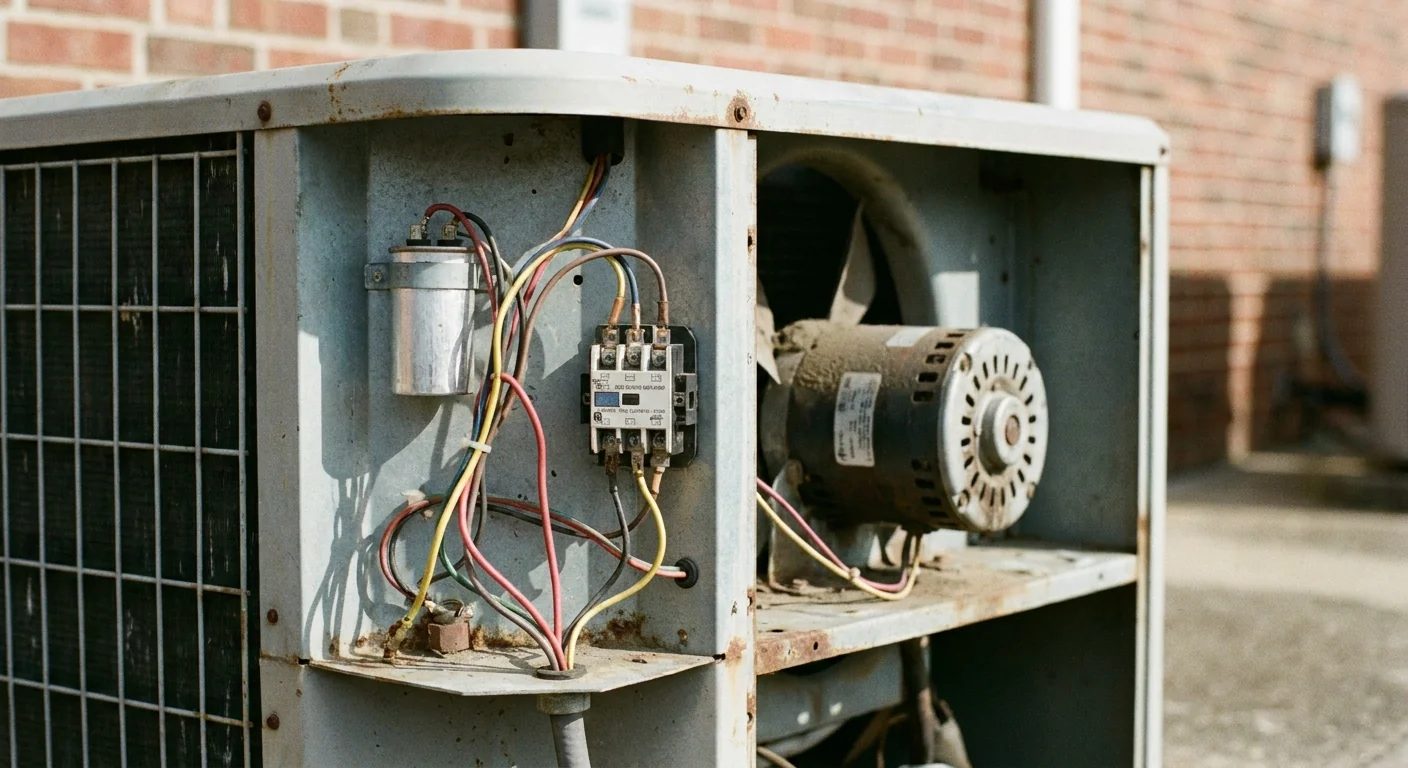
Clicking often signals a relay or a start-up issue. The most common culprit is a dual-run capacitor that has failed partially. When the capacitor can’t deliver full voltage, the compressor makes a clicking sound as it tries to start, then shuts down.
A refrigerant leak can also cause clicking. When the system loses pressure, the compressor may cycle on and off rapidly, creating a short click each time it tries to engage. You might also hear a click from the pressure switch opening and closing.
Another source is the expansion valve or the outdoor unit’s high-pressure switch. If the pressure gets too high, the switch clicks to shut the compressor down. This is a safety feature, but it still means something is out of balance.
When you hear a click, turn the thermostat off for a few minutes, then back on. If the click repeats every few seconds, it’s likely an electrical component that needs replacement. If the click stops after a short cycle, it could be a pressure issue that a technician should check.
Capacitor replacement for a click falls in the same $200-$450 range. If a refrigerant leak is found, the repair typically costs $400-$900 plus the cost of the refrigerant, which is $125-$225 per pound.
When to Call a Pro
If the noise persists after you’ve turned the system off and on, it’s time to schedule a diagnostic. Our service call fee is $90-$150, which includes a thorough inspection of the fan motor, capacitor, compressor, and electrical connections.
During the visit, we’ll listen to the noise, check voltage, and look for signs of wear. If a part needs replacement, we’ll give you a clear estimate before any work begins. For example, a fan/blower motor replacement is $450-$1,200, while a compressor swap runs $1,800-$2,900.
We also test for refrigerant leaks. Leak repair costs $400-$900 plus the refrigerant itself. The price of refrigerant ranges from $125-$225 per pound, with newer R-454B at the high end.
All labor is billed at about $200 per hour, but most repairs are completed within one to two hours. If you need a full system replacement, a new central AC installed in the New Orleans metro typically costs $5,500-$11,000, depending on size and SEER rating.
Don’t wait for the noise to get louder. Small problems can become big, expensive repairs if the compressor burns out or the motor seizes completely.
Keeping Your AC Quiet – Maintenance Tips
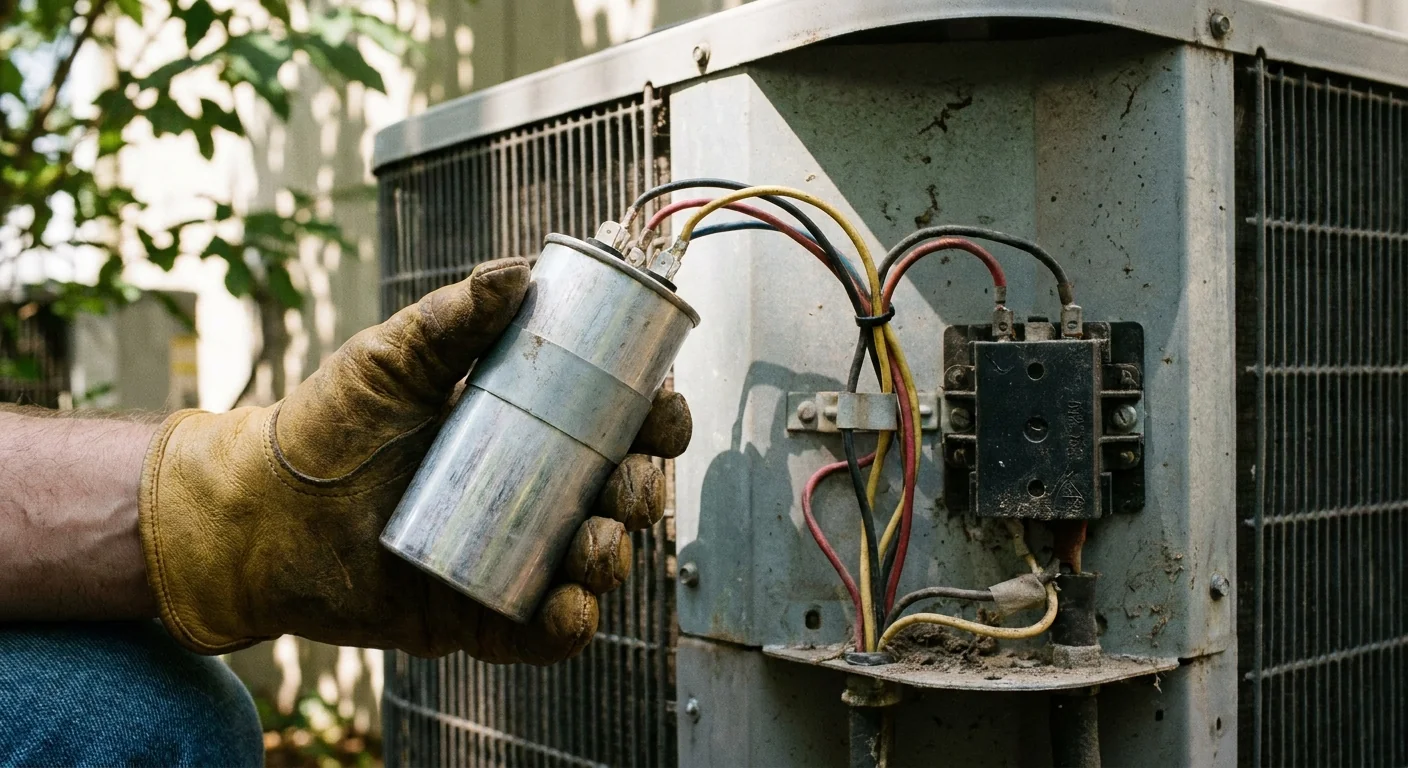
Regular maintenance is the best way to prevent noisy surprises. A clean coil and clear airflow reduce strain on the fan motor and compressor. We recommend a professional tune-up at least once a year, ideally before the summer heat hits.
During a tune-up, we’ll inspect the fan blades for bends, tighten all electrical connections, and test the capacitor and contactor. We’ll also check refrigerant charge and look for early signs of leaks.
Homeowners can help by changing or cleaning filters every 30-60 days. A clogged filter forces the system to work harder, which can wear out bearings faster. Keep the outdoor unit free of leaves, grass, and debris to maintain proper airflow.
Consider adding a smart thermostat. It can alert you to abnormal cycling that often precedes a noise issue. It also helps you track run times, so you can notice if the unit is running longer than usual.
Finally, schedule duct inspections if you notice uneven cooling. Leaky or blocked ducts can cause the fan to run longer, increasing wear on moving parts. While we don’t list a price for duct work here, we’ll quote it after a diagnostic.
The Short Version
Grinding points to motor bearings or a worn compressor, buzzing usually means a bad capacitor or loose wiring, and clicking often signals a failing capacitor or refrigerant pressure issue. Each problem has a typical repair range, and a professional diagnostic will tell you exactly what needs fixing.
Turn the system off, note the noise pattern, and call us for a service call. We’ll diagnose, give a clear estimate, and get your AC back to quiet operation so you can stay comfortable without worrying about high Entergy bills.
Not sure what your system needs? Tegridy Air can help – call 504-414-8655 or request a free quote online and we’ll give you a straight answer.
Related Reading
- What AC Repair Actually Costs in Kenner – An Honest Breakdown
- R-410A Phase-Out: How It Affects Your Next AC Repair Bill in New Orleans
- New Orleans Humidity Wrecking Your Comfort? What Actually Helps
Frequently Asked Questions
Why does my AC make a grinding noise only when the fan is on?
Grinding while the fan runs usually means the fan motor bearings are wearing out or the fan blade is hitting something. The motor struggles, creating a metallic sound that stops when the fan stops.
My AC buzzes when it starts but then runs quietly. Is that normal?
A brief buzz at start-up can be normal as the motor engages, but a continuous buzz indicates a capacitor, contactor, or loose wiring issue that should be checked.
What causes a clicking sound every few seconds after I turn on my AC?
Repeating clicks often mean a capacitor can’t give the compressor enough boost, or a pressure switch is cycling due to low refrigerant. Both require a professional inspection.
How much will it cost to replace a fan motor in my Kenner home?
Fan or blower motor replacement generally runs between $450 and $1,200, depending on the motor type and labor needed. A diagnostic will confirm the exact part required.