

High indoor humidity can make a home feel clammy. Condensation, musty odors, or damp surfaces can also point to leaks or other moisture problems, so measure relative humidity rather than assuming the air conditioner is the cause. Moisture control matters throughout the humid season in the Greater New Orleans area.
Start by measuring humidity, addressing leaks promptly, and using bathroom and kitchen exhaust fans that vent outdoors. The temperature on your thermostat does not tell you the relative humidity. If moisture persists, have the AC, drainage, ducts, and ventilation assessed before choosing a dehumidifier.
Why Indoor Humidity Matters More Than Temperature Alone
Humidity affects comfort because it changes how your body perceives temperature. When the air is saturated with water vapor, sweat evaporates more slowly, so you feel hotter even if the thermostat reads the same temperature as a drier day. That “sticky” feeling is not just uncomfortable; it can also strain your HVAC system. Removing moisture adds to the cooling load. High humidity alone does not establish a condenser fault or predict compressor life.
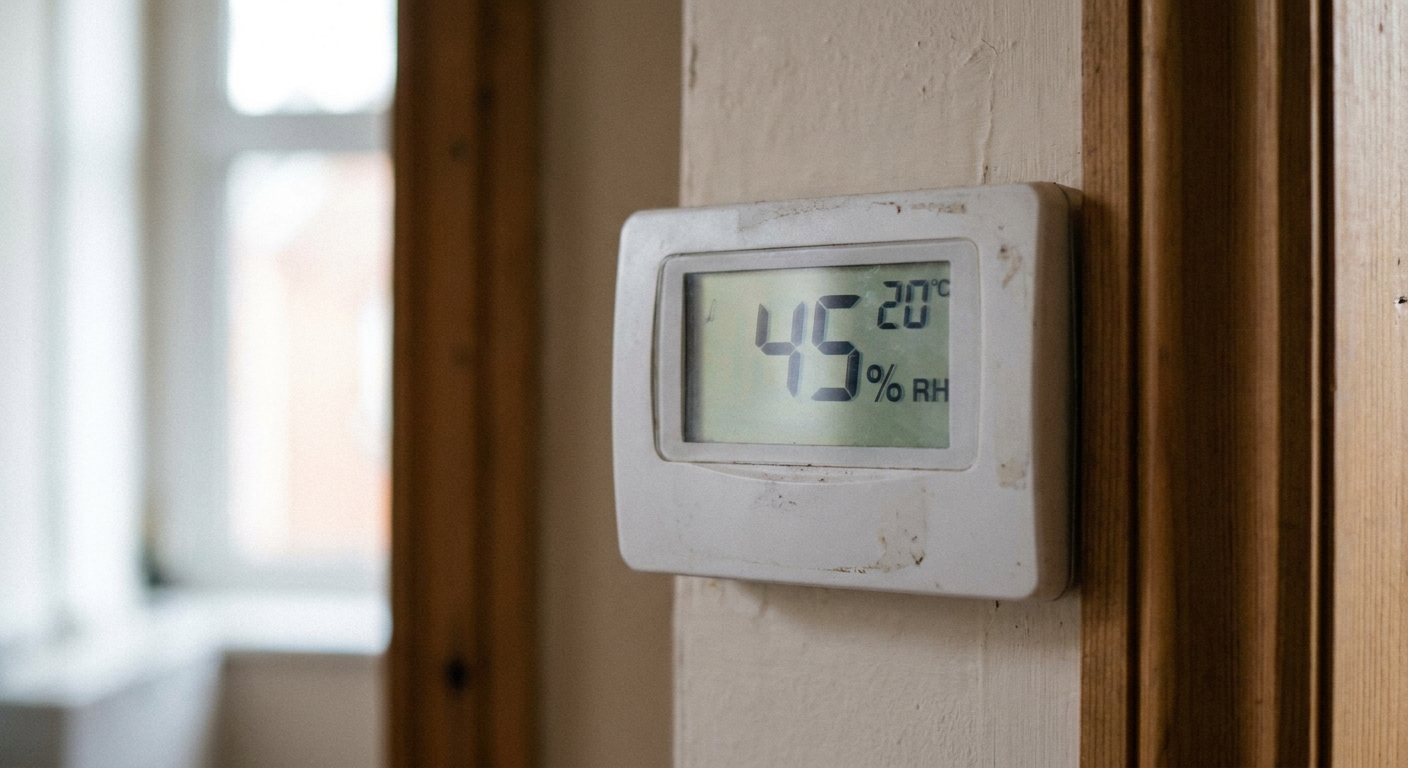
Beyond comfort, persistent dampness encourages mold growth. EPA recommends keeping indoor relative humidity below 60 percent and, when possible, between 30 and 50 percent to help limit mold. Address leaks and condensation even when a room humidity reading falls within that range. Moisture control is an important part of indoor air quality.
Another practical impact is on your home’s structure. Excess moisture can seep into wood framing, causing warping, rot, and even compromising the integrity of doors and windows. Address leaks or wet materials promptly rather than waiting for visible damage; chronic moisture can also affect older homes common in the New Orleans metro. A dehumidifier does not repair water leaks or remove existing mold.
How to Measure Indoor Humidity Accurately
The first step is to know what you’re dealing with. A simple digital hygrometer will give you a reading of relative humidity (RH) in any room. Place the device away from direct sunlight, drafts, or the immediate output of an air vent for the most reliable reading. Most homeowners find that the living room and bedroom are the best places to gauge overall home conditions.
If you want a more complete picture, consider a smart thermostat that includes humidity monitoring. Check whether the model displays indoor RH and supports humidity alerts; these features vary. This is useful in Kenner and Metairie homes where humidity can spike after a rainstorm or when the AC cycles off during the night.
A technician can use a moisture meter to assess damp building materials. Those readings are different from air relative humidity and must be interpreted for the material and instrument. A hygrometer reading persistently above 60 percent calls for a moisture-source assessment, not automatically a new appliance.
Common Sources of Excess Moisture Inside Your Home
Even with a well-maintained air conditioner, certain everyday activities add moisture faster than the system can remove it. Cooking, especially boiling water or using a dishwasher without a vent, releases a lot of steam into the kitchen. Showers and baths generate humidity that can linger in bathrooms if exhaust fans are undersized or not used.
Moisture from soil and damp crawl spaces can enter the living space through gaps. Leaking return ducts can draw humid air from an attic or crawl space into the HVAC system. Plumbing leaks, whether under the slab or inside walls, are another source of hidden water that can wet building materials and raise indoor RH.
Improper ventilation can also trap humidity. If you rely solely on window opening for fresh air, you may be letting in humid outdoor air while not providing a clear path for moist indoor air to escape. This is especially true during the summer when the outdoor humidity is already high, but the indoor moisture generated by daily activities still adds up.
- Cooking without a vent hood or with the hood off
- Long, hot showers without an exhaust fan running
- Dryer venting into the attic or a closed space
- Unsealed crawl spaces or basements
Whole-Home Dehumidifiers: What They Do and When to Choose One
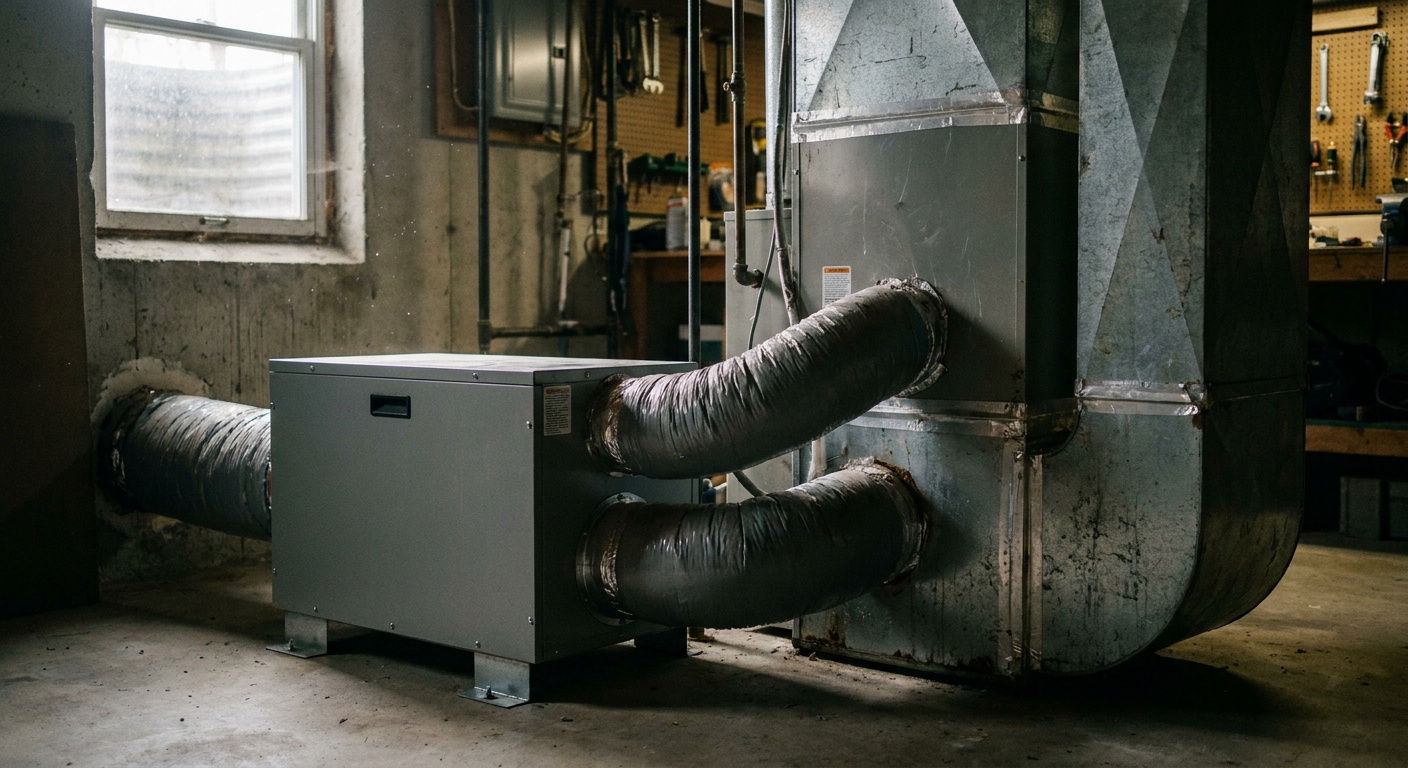
A whole-home dehumidifier removes water from indoor air and circulates drier air through ductwork. It needs an approved drain arrangement, which may use gravity or a separate condensate pump. A humidity control starts it when needed; compatible installations can remove moisture even when the AC is not cooling.
The installer should follow the model’s instructions for duct connections, which may use dedicated ducts or compatible HVAC ductwork. The unit serves the areas covered by that duct design. It does not automatically dehumidify an unconditioned attic. In Kenner and Metairie homes that have central air, a whole-home dehumidifier can be a cost-effective upgrade compared to buying separate portable units for each room.
Dehumidifier sizing depends on the moisture load, air leakage, indoor conditions, and the area being served. A fixed pints-per-square-foot rule is not enough. Have a professional use the model’s rated performance and the home’s conditions to select a whole-home unit.
Some whole-home units work with compatible smart thermostats; others use a separate humidity control. Confirm compatibility and the recommended settings for the installation. A suitable humidity control can limit unnecessary operation, but energy use depends on the equipment, settings, and moisture load.
Using Your Existing AC and Ventilation to Reduce Humidity
Your central air conditioner already removes some moisture as a by-product of cooling. When the AC runs, the evaporator coil condenses water from the indoor air, and the condensate drains away. However, the system is designed primarily for temperature control, not for maintaining a specific humidity level. Blower airflow must be set for the equipment; increasing it is not a general remedy for high humidity. Have a technician check airflow and any supported dehumidification settings.
Use a comfortable thermostat setting rather than overcooling the house to chase humidity. Repeated short cycles can limit moisture removal and need diagnosis. Water condenses on a cold evaporator coil and drains away; the goal is not to evaporate that water back into the home. Keep the specified filter clean and room grilles unobstructed.
Use bathroom and kitchen exhaust fans that discharge outdoors during moisture-producing activities and afterward as needed. If moisture persists, check fan operation and sizing. An energy recovery ventilator (ERV) can temper incoming ventilation air, but it is not a substitute for dehumidification and must be selected for the local climate and home.
For homes without central air, a portable dehumidifier can supplement the AC during peak humidity days. Place the unit in the most affected area, such as the living room, and keep doors closed to allow the unit to work efficiently. Remember to empty the condensate tank regularly, or choose a model with a continuous drain option.
When to Call a Professional and What to Expect
If you’ve measured indoor humidity above 60 percent and the simple steps above haven’t lowered it, it’s time to get a professional diagnostic. A technician will check the AC’s refrigerant charge, inspect the evaporator coil for dirt or damage, and verify that the condensate drain is clear. They will also look for hidden leaks in the duct system that can introduce humid air from the attic or crawl space.
Tegridy Air’s published dispatch fee for Greater New Orleans is $109. Repair pricing is quoted after diagnosis and before the repair proceeds.
Other common repairs that affect humidity control include fan or blower motor replacement ($450-$1,200), compressor replacement ($1,800-$2,900), and capacitor or contactor replacement ($200-$450). Repairing a confirmed fault can improve cooling and moisture removal, but high humidity alone does not identify a failed component. Ask for the diagnosis and a written quote before authorizing repair.
Free replacement estimates are separate from repair diagnostic visits. For planning information, see our 2026 Kenner AC replacement cost guide. Your final quote depends on the equipment and installation scope.
Final Thoughts
High indoor humidity is a common frustration for homeowners in Kenner, Metairie, and the surrounding South Louisiana area. The problem is usually a mix of external climate, everyday moisture sources, and the limits of an air conditioner that wasn’t designed to be a dehumidifier. By measuring humidity, fixing water leaks, having air leakage assessed, using outdoor-vented exhaust fans, and considering a properly sized dehumidifier when needed, you can improve moisture control.
If the steps above don’t make a noticeable difference, a professional assessment can investigate refrigerant, airflow, drainage, and hidden-moisture problems. Knowing the right price range for common repairs helps you plan and avoid surprises. Keeping indoor humidity in check not only improves comfort but also protects your home’s structure and indoor air quality for years to come.
Need honest HVAC help in Kenner, Metairie, or anywhere across the Greater New Orleans area? Call Tegridy Air at 504-414-8655 or request a free replacement estimate online – we’ll get you comfortable fast.
Related Reading
- Is Your AC Ready for a Louisiana Summer? Here’s What a Tune-Up Actually Includes
- Leaky Ductwork in Older New Orleans Homes: The Hidden Comfort Tax
- What AC Repair Actually Costs in Kenner – An Honest Breakdown
Frequently Asked Questions
How do I know if my indoor humidity is too high?
Use a digital hygrometer to measure relative humidity in the main living areas. If readings repeatedly exceed 60 percent, investigate moisture sources and humidity control. Do not wait several days to address visible condensation or a water leak.
Can I rely on my air conditioner alone to control humidity?
An AC removes moisture while cooling, but may not control humidity during mild or very humid weather. Check leaks, drainage, equipment operation, and ventilation before deciding whether supplemental dehumidification is needed.
What size dehumidifier do I need for my home?
Size a whole-home dehumidifier for the home’s moisture load, air leakage, indoor conditions, and the model’s performance. Square footage alone does not establish the required capacity. Ask a professional to assess those factors.
How often should I service my AC to keep humidity under control?
Arrange professional cooling maintenance before the hot season and follow the equipment instructions. Filter care, coil and drain checks, and correct airflow can support moisture removal, but recurring water or high humidity needs assessment before the next routine visit.