
By Scott Gieseler · Published · Updated
If the AC runs but blows warm air, check the thermostat settings, a safely accessible filter and clear space around the outdoor unit. Stop cooling and call for service if you see ice, a damaged fan or leaking water, hear grinding, or have a repeatedly tripping breaker. Keep cabinets and electrical compartments closed.
Warm air in a Kenner or Metairie home can come from a simple setting or an equipment fault. Protect people from the heat while arranging help: move to an air-conditioned place if the home becomes too hot. CDC heat guidance says indoor fans should be used only below 90°F.
The checks below are limited to normal owner controls and accessible maintenance. Leave electrical testing, refrigerant measurements and internal fan or blower work to a qualified technician. For smoke or fire, leave the building and call 911 from outside.
Check the Thermostat Settings
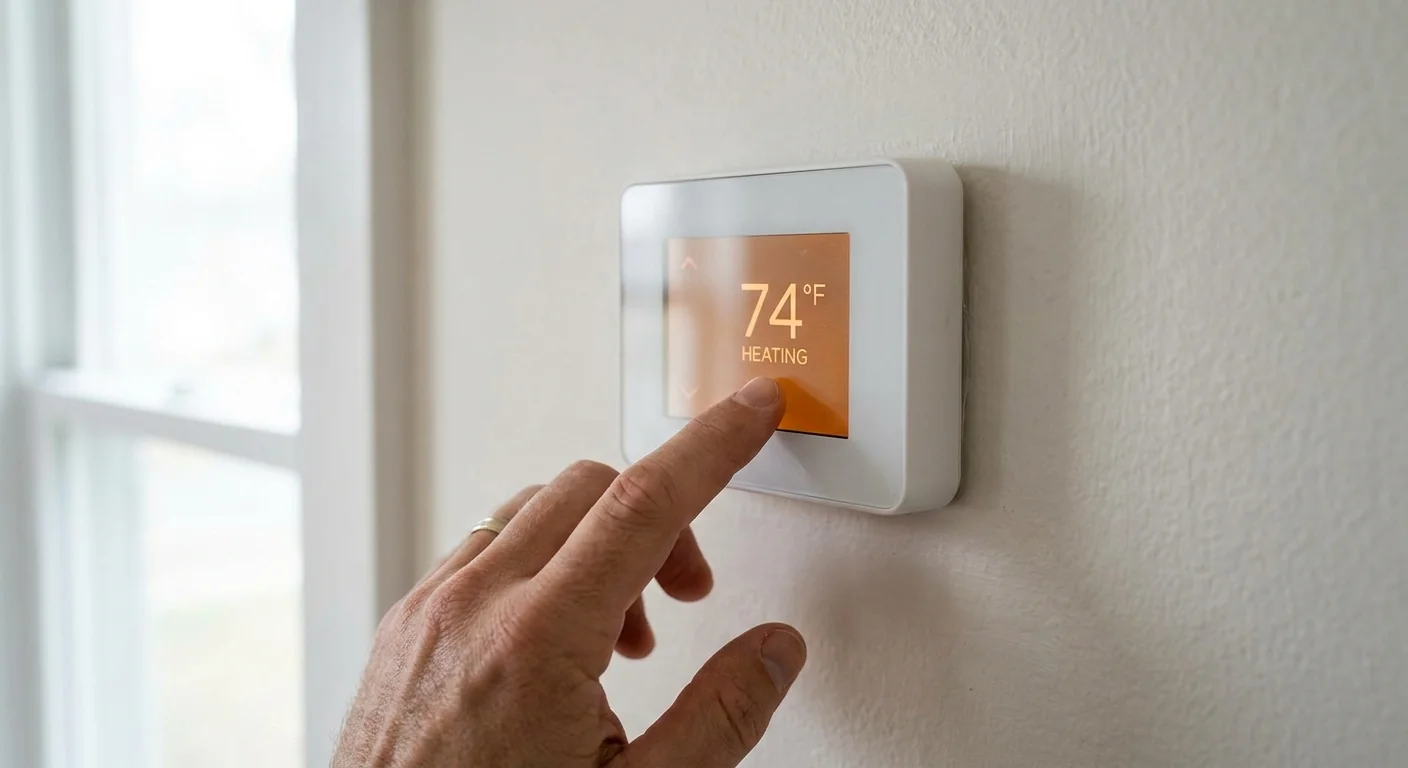
The thermostat is the first place to look. Make sure it is set to “cool” and that the temperature is lower than the current room temperature.
The system mode and fan setting do different jobs. “Cool” selects cooling; “On” often runs the indoor fan continuously, including between cooling cycles. Air moving from a vent therefore does not prove the compressor is cooling.
On many thermostats, fan “Auto” runs the blower with a heating or cooling call. Some systems also use circulation settings or fan delays. Follow your model’s manual; changing the fan setting cannot repair a failed cooling component. See this manufacturer example of separate system and fan controls.
Check the programmed schedule, any temporary hold and user-replaceable batteries if your model uses them. After a setting change, allow the protective delay described in the manual to finish; do not keep switching power off and on.
Inspect the Air Filter
A clogged filter restricts airflow and can contribute to an iced evaporator coil. If you see ice on accessible equipment or refrigerant lines, turn cooling off and arrange service; do not chip the ice away. Trane’s frozen-coil guidance explains why the underlying cause still needs diagnosis.
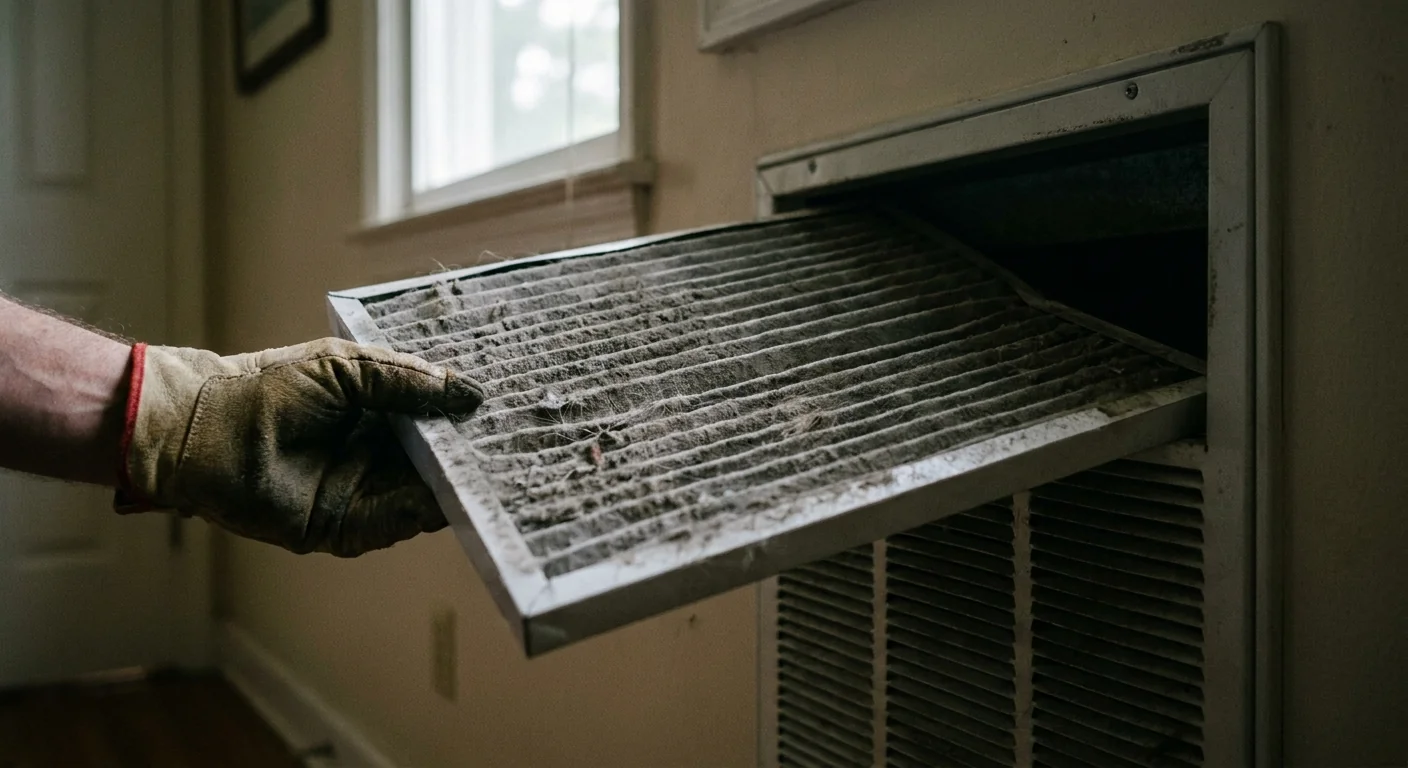
Find the filter location in your equipment manual. It may be at a return-air grille or a designated filter slot. Turn the system off as the instructions direct before changing it; do not open a blower or electrical compartment to search for a filter.
Use the specified size and type, and install it in the marked airflow direction. Replace a dirty disposable filter or clean a reusable one as its instructions allow. Do not rely on how much light passes through it; filter materials vary.
Inspect the filter monthly during heavy cooling use. Follow the filter and equipment maker’s service interval, replacing or cleaning sooner when needed. If you cannot safely reach it, ask for help rather than climbing into an unsafe space.
- Check the filter monthly during the cooling season.
- Match the filter to the system’s airflow capacity and filter slot. EPA recommends checking compatibility when choosing a higher-efficiency filter.
- Mark the replacement date on your calendar.
Look at the Outdoor Condenser Unit
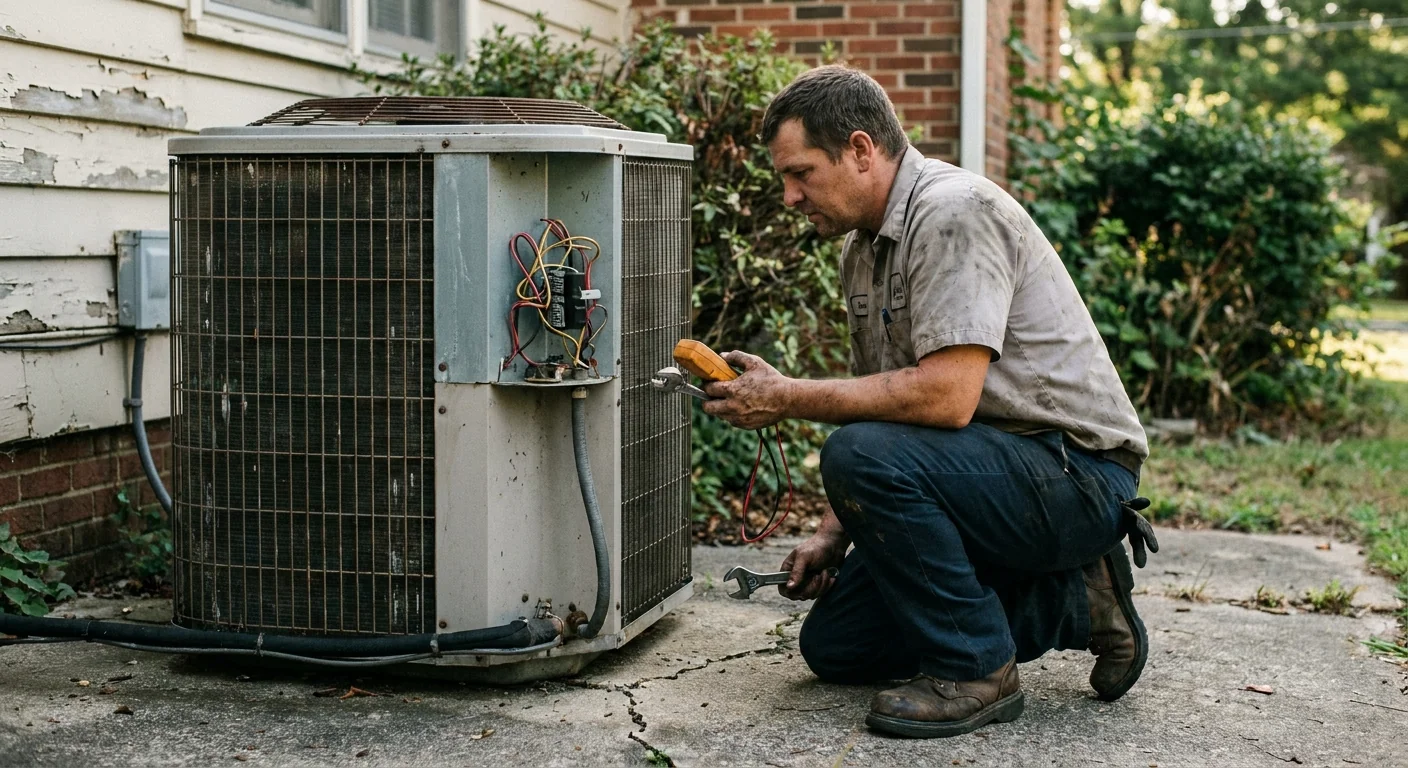
The outdoor unit needs unobstructed airflow to release heat. From a safe position outside the cabinet, look for vegetation or stored items crowding it. Do not touch refrigerant lines, electrical boxes or the fan.
Move only loose items around the unit that you can safely reach without touching or opening it. Follow the owner’s manual for any permitted maintenance and power-off precautions. If debris is caught inside the cabinet, leave removal to a technician.
Do not reach through the grille, remove guards or handle the fan blades. Report visible damage or unusual noise. If the unit is humming but the fan is not turning, turn cooling off and arrange service.
Coil cleaning is equipment-specific. Do not spray electrical components, use a pressure washer or remove panels to wash the coil. Trane recommends leaving coil service to an HVAC professional.
- Keep the side and overhead clearances specified for your outdoor unit.
- Keep vegetation and stored items out of the airflow path and service-access area.
- Have the coils inspected during scheduled maintenance and cleaned as needed.
Leave Refrigerant Diagnosis to a Professional
An incorrect refrigerant charge can reduce cooling, but warm air alone does not establish the cause. A low charge may result from a leak or an earlier charging error. Restricted airflow and other faults can produce similar symptoms.
Do not attach gauges or add refrigerant yourself. EPA Section 608 requirements cover refrigerant-circuit work, including gauge connections; closely supervised apprentices are an exception to individual certification. Ask for a qualified service technician to assess operating conditions and the equipment’s specified charge.
The technician may need to check airflow, temperatures, pressures and possible leak locations before recommending a repair. A low pressure reading alone is not proof of a leak. Ask what was measured and, if a leak is found, whether the quote includes finding and repairing it as well as refrigerant.
Repair costs vary. A typical refrigerant leak repair runs $400-$900 plus the cost of the refrigerant, which is $125-$225 per pound.
Report Blower and Fan Symptoms Without Opening the Unit
The indoor blower moves air through the home. A motor, control or airflow problem can reduce that flow. Some blowers are direct-drive and have no belt, so belt advice does not apply to every system.
Tell the technician about weak airflow, humming, grinding or squealing and when it happens. A sound alone cannot identify a worn belt, bearing or capacitor. Stop the system for severe mechanical noise and arrange diagnosis rather than continuing to run it.
Keep the blower compartment closed. Internal inspection, belt work where applicable, motor replacement and capacitor testing require the appropriate service procedures. Electrical components can remain hazardous even after the system is switched off.
Motor replacement costs range from $450-$1,200 depending on the type. Variable-speed ECM motors sit at the high end.
When to Call a Professional
Call for diagnosis if the safe checks do not restore cooling. Do not wait to finish the checklist when there is ice, leaking water, a tripping breaker or unusual mechanical noise. Report any error message and the checks you already completed.
Common reasons to call include a refrigerant leak, a failed compressor, or a malfunctioning capacitor.
Tegridy Air’s published dispatch fee for Greater New Orleans is $109. Repair pricing is quoted after diagnosis and before the repair proceeds.
Ask the technician to assess airflow, controls, electrical operation, refrigerant conditions and duct leakage as appropriate. SEER and SEER2 are seasonal efficiency ratings based on standardized test procedures; a routine service visit does not measure a new rating for your home. AHRI’s rating standard explains the test basis. A technician can review the equipment’s documented rating and diagnose performance problems. Maintenance benefits and any bill savings depend on the fault, equipment and use.
Our team in Kenner and Metairie is certified and insured. Request a diagnostic visit and confirm the applicable fee before scheduling.
The Short Version
Start with the thermostat and a safely accessible filter, then look for obstructions around the outdoor unit without opening it. Stop at the warning signs above. Persistent warm air, refrigerant concerns and internal blower or electrical faults need professional diagnosis.
Tegridy Air’s published dispatch fee for Greater New Orleans is $109. Repair pricing is quoted after diagnosis and before the repair proceeds.
Tegridy Air serves Kenner and Metairie. Request a diagnostic visit; free estimates apply separately to system replacement.
Dealing with this right now? Call Tegridy Air at 504-414-8655 or request a diagnostic visit online. The diagnostic visit is $109; confirm appointment availability and any applicable after-hours charges when scheduling.
Related Reading
- What AC Repair Actually Costs in Kenner – An Honest Breakdown
- How to Tame Heating & Cooling Costs in Kenner & Metairie
- Why One Room Is Hot: Fixing Uneven Cooling in Kenner Homes
Frequently Asked Questions
Why is my AC blowing warm air even though the thermostat says “cool”?
Warm air can have several causes, including a settings problem, restricted airflow, an incorrect refrigerant charge or an equipment fault. Check only the accessible owner items. Stop cooling and arrange service for ice, water leaks, a repeatedly tripping breaker or unusual mechanical noise.
How often should I change my air filter in a hot climate like New Orleans?
Inspect the filter monthly during heavy use and follow the equipment and filter manufacturer’s replacement or cleaning instructions. Dust, pets and filter type affect the interval; replace or clean sooner when needed.
Can I add refrigerant myself if I suspect a low-charge issue?
No. Leave refrigerant measurements and charging to a qualified technician using the required certification and equipment. Adding refrigerant does not repair a leak; ask for diagnosis of the cause and the correct repair before any recharge.
What is the typical cost to replace a compressor in a central AC system?
Compressor replacement usually runs $1,800-$2,900 installed. The exact price depends on the unit size and model. A diagnostic visit will confirm if a replacement is needed.