

You’ve probably noticed the first signs of heat creeping in around early May. The thermostat nudges higher, the house feels sticky, and you start wondering if your AC will hold up when July hits full swing. The question on most homeowners’ minds is simple: should I wait until something breaks, or get a tune-up now?
Skipping a seasonal check might feel like a way to save a few dollars, but a missed inspection can turn a minor inefficiency into a costly repair when the temperature spikes. In Kenner and Metairie, the combination of high humidity and intense afternoon heat puts extra strain on every component of a central air system.
This article walks through what a spring AC tune-up actually does, why it matters for July, and how to plan the service so you stay comfortable without surprise bills.
Why a Spring Tune-Up Matters
When the outdoor temperature climbs above 80°F, the compressor and fan have to work harder to pull heat out of the house. Any restriction in airflow, low refrigerant charge, or worn motor will cause the system to run longer, which raises your electricity usage and puts stress on parts that are already near the end of their design life.
In the early months of the season, the condenser is still relatively clean from the winter lull, but dust, pollen, and even a light coating of algae can begin to accumulate. Those deposits act like a filter on the coil, reducing heat exchange efficiency by up to 15% if left unchecked.
Beyond efficiency, safety is a factor. A cracked refrigerant line or a failing electrical contact can cause the unit to shut down abruptly, leaving you without cooling on the hottest days. Detecting those problems while the system is still idle is far easier than trying to fix them during a heat wave.
What’s Included in a Professional AC Tune-Up
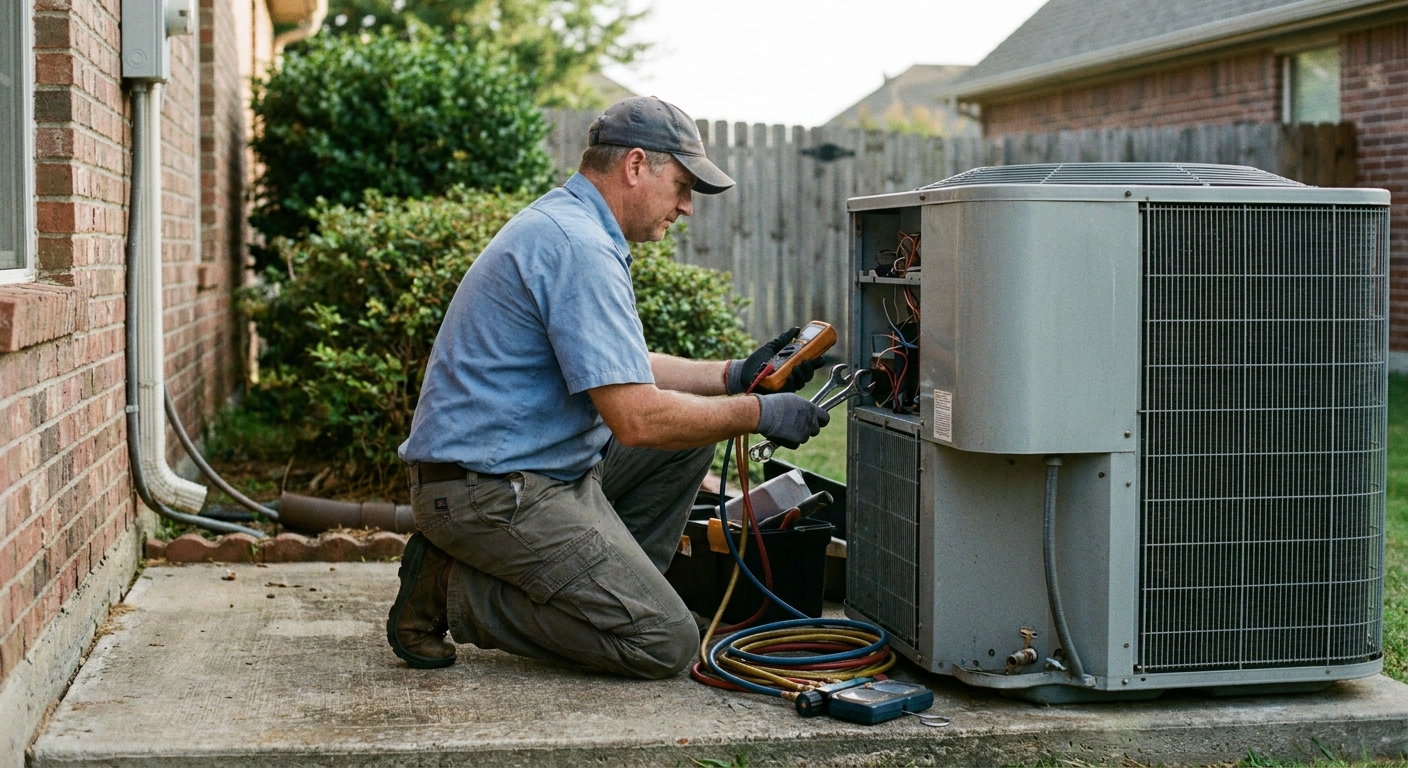
A qualified technician will start with a visual inspection of the outdoor unit, checking for debris, corrosion, and proper clearances. The next step is to verify electrical connections, tighten any loose terminals, and test the capacitor and contactor for proper operation.
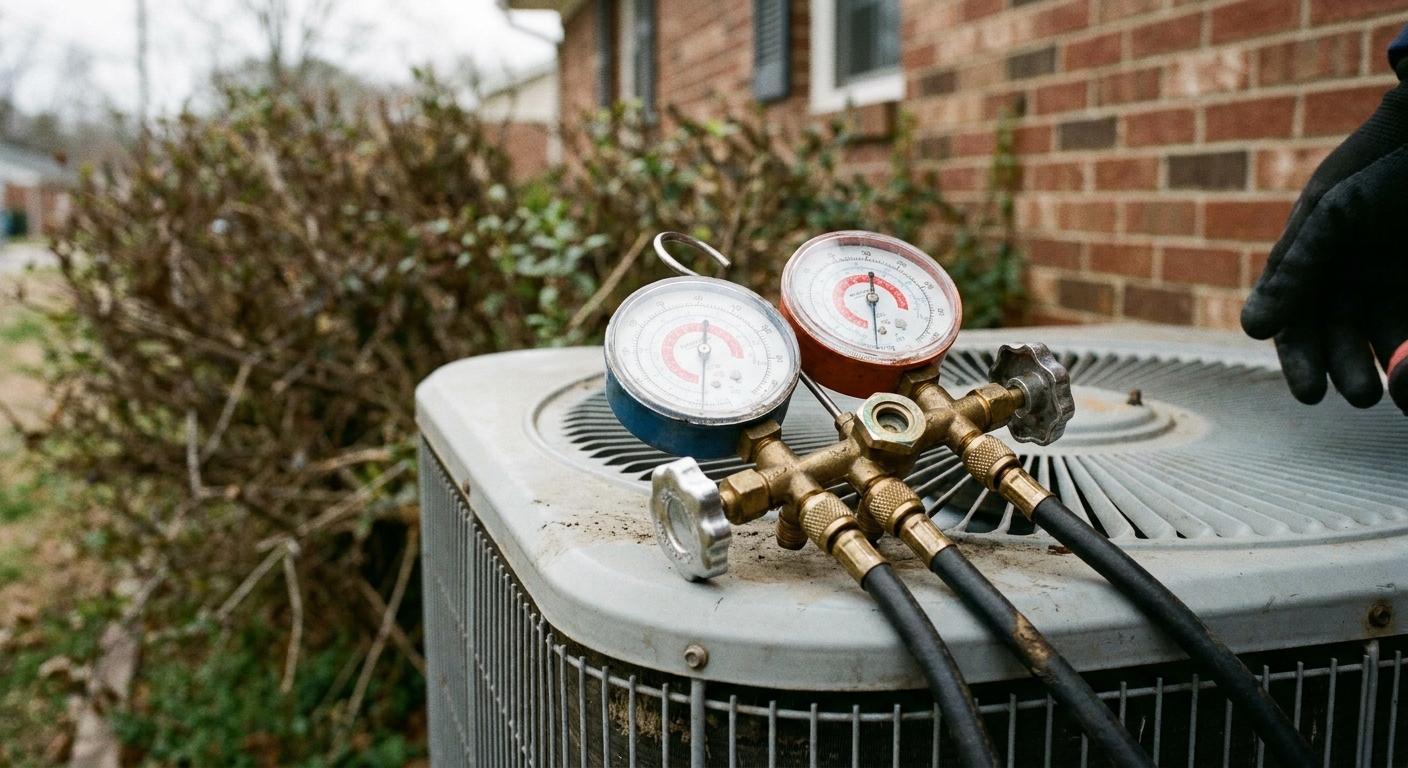
After the visual check, the technician will measure refrigerant pressure with a manifold gauge set. This tells whether the system is correctly charged and if there are any hidden leaks. The indoor evaporator coil is also inspected, and the condensate drain is cleared to prevent water overflow.
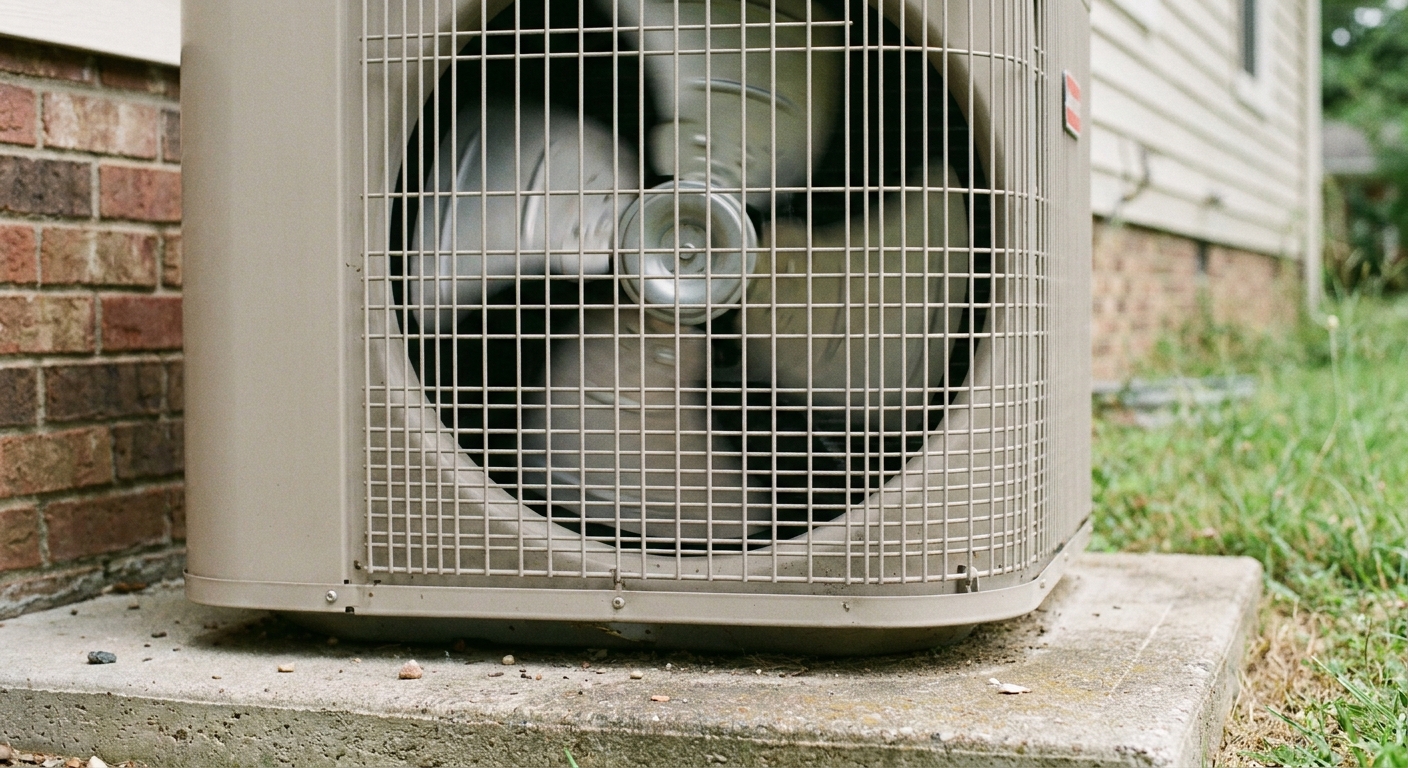
Finally, the fan motor and blower assembly are tested for correct speed and airflow. If the motor is a variable-speed ECM model, the control board is calibrated to match the manufacturer’s specifications. The whole process usually takes about an hour, plus travel time.
Cost Overview
- Service call / diagnostic: $90-$150
- Refrigerant (R-454B or R-410A): $125-$225 per pound
- Capacitor or contactor replacement: $200-$450
- Fan/blower motor replacement (if needed): $450-$1,200
- Compressor replacement (if needed): $1,800-$2,900
- Refrigerant leak repair: $400-$900 (plus refrigerant cost)
- Hourly labor for additional work: around $200
- New central AC system installed: $5,500-$11,000
Common Issues That Show Up in Early Summer
One of the first problems you might see after a warm weekend is reduced airflow from the vents. That symptom often points to a dirty condenser coil or a clogged fan grille. When the coil can’t shed heat efficiently, the refrigerant temperature rises, and the compressor may overheat.
Another frequent issue is a refrigerant leak that went unnoticed during winter. Leaks can develop from vibration, corrosion, or accidental damage during home renovations. Low refrigerant pressure forces the compressor to run longer, which not only hikes the electric bill but also shortens the compressor’s lifespan.
Electrical hiccups also surface as the system ages. A failing capacitor can cause the outdoor fan to spin too slowly or not at all, while a weak contactor may cause intermittent power loss. Both conditions are easy to test with a multimeter, but they require a professional to replace the parts safely.
How the Tune-Up Saves Money on July Bills
Efficiency is the most direct way a tune-up cuts your energy cost. A clean coil and properly charged refrigerant allow the system to remove the same amount of heat while using less electricity. In practice, homeowners in the Greater New Orleans area often see a 5-10% reduction in their monthly Entergy bill after a full service.
Preventive repairs also avoid emergency service calls that typically carry higher labor rates and after-hour fees. Replacing a capacitor during a scheduled tune-up costs a few hundred dollars, while waiting for it to fail in the middle of a July heat wave can lead to a $500-plus repair plus the cost of a temporary cooling solution.
Beyond the immediate savings, a well-maintained system retains its SEER rating longer. The Seasonal Energy Efficiency Ratio is a measure of how much cooling you get per kilowatt-hour. As components wear, the SEER can drop, meaning you pay more for the same comfort level.
Here’s a quick checklist of the financial benefits you’ll see after a spring service:
- Lower electricity usage due to improved heat exchange
- Avoided emergency repair premiums
- Extended equipment life, delaying the need for a full replacement
- Preserved SEER rating, keeping the unit in its most efficient operating range
Scheduling, Timing, and What to Expect on the Day
We recommend booking the tune-up between late March and early May. This window gives the technician enough time to address any issues before the first big heat spikes in June. Most homeowners in Kenner and Metairie find a weekday morning works best, as traffic is lighter and the technician can arrive on time.
When the technician arrives, they’ll confirm the model and serial number of your unit, then walk you through the service plan. If any parts need replacement, they’ll give you a written estimate before ordering. Most repairs can be completed the same day, but a compressor swap may require a follow-up appointment because of the larger part and the need for proper refrigerant handling.
After the work is done, the technician will run the system through a full cycle, checking temperature drop across the evaporator, confirming proper airflow, and listening for unusual noises. They’ll also show you the thermostat settings and suggest any adjustments, such as setting a programmable schedule to lower cooling when the house is empty.
It’s a good idea to keep the service receipt and any warranty information in a safe place. If you later decide to enroll in a maintenance plan, the documentation will help the next technician understand what has already been done.
Maintenance Plans vs One-Time Service
A maintenance plan spreads the cost of regular tune-ups over the year and often includes priority scheduling during peak season. For a family that wants to avoid the hassle of remembering to call each spring, a plan can be a convenient option.
One-time service is best for homeowners who prefer to handle each visit individually or who have a newer system that they expect to run without issues for several years. The cost difference is usually modest; a plan might add $100-$200 per year, but it guarantees a visit before the hottest months.
Both options give you access to the same qualified technicians and the same thorough inspection process. The key difference is the level of ongoing monitoring. With a plan, the technician may keep a log of performance trends and alert you if something looks like it’s deteriorating.
When deciding, consider how much you value predictability versus flexibility. If you’ve had multiple breakdowns in the past, a plan can provide peace of mind. If your unit is relatively new and you’re comfortable scheduling a spring visit each year, a single service may be sufficient.
Final Thoughts
Getting a spring AC tune-up in Kenner or Metairie is a practical step that protects you from unexpected July breakdowns. The service checks the most common failure points—airflow, refrigerant charge, and electrical components—before the heat pushes them to the limit.
By addressing small issues early, you keep your system running efficiently, lower your energy bills, and extend the life of a major investment. Whether you choose a one-time service or a maintenance plan, the goal is the same: reliable cooling when you need it most.
Need honest HVAC help in Kenner, Metairie, or anywhere across the Greater New Orleans area? Call Tegridy Air at 504-414-8655 or request a free quote online – we’ll get you comfortable fast.
Related Reading
- Spring AC Tune-Up in Kenner Saves You From a July Break-Down
- Is Your AC Ready for the Louisiana Heat? 5 Spring Tune-Up Tips for Kenner Homeowners
- Mid-Summer AC Tune-Up to Keep Your Kenner Home Running in July
Frequently Asked Questions
How often should I have my AC tuned up?
A professional tune-up is recommended once a year, ideally in the spring before the cooling season begins.
What if my AC is more than ten years old?
Older units can still benefit from a tune-up, but the technician may suggest evaluating the cost of replacement if major components are near the end of their service life.
Can I do any of the maintenance myself?
Homeowners can keep the outdoor unit clear of debris and replace a dirty filter, but tasks like checking refrigerant pressure, testing electrical components, and cleaning the coil should be done by a qualified technician.
Do you offer any financing for large repairs or new installations?
Financing options are available through many HVAC contractors; ask the technician about the specific programs they work with.