

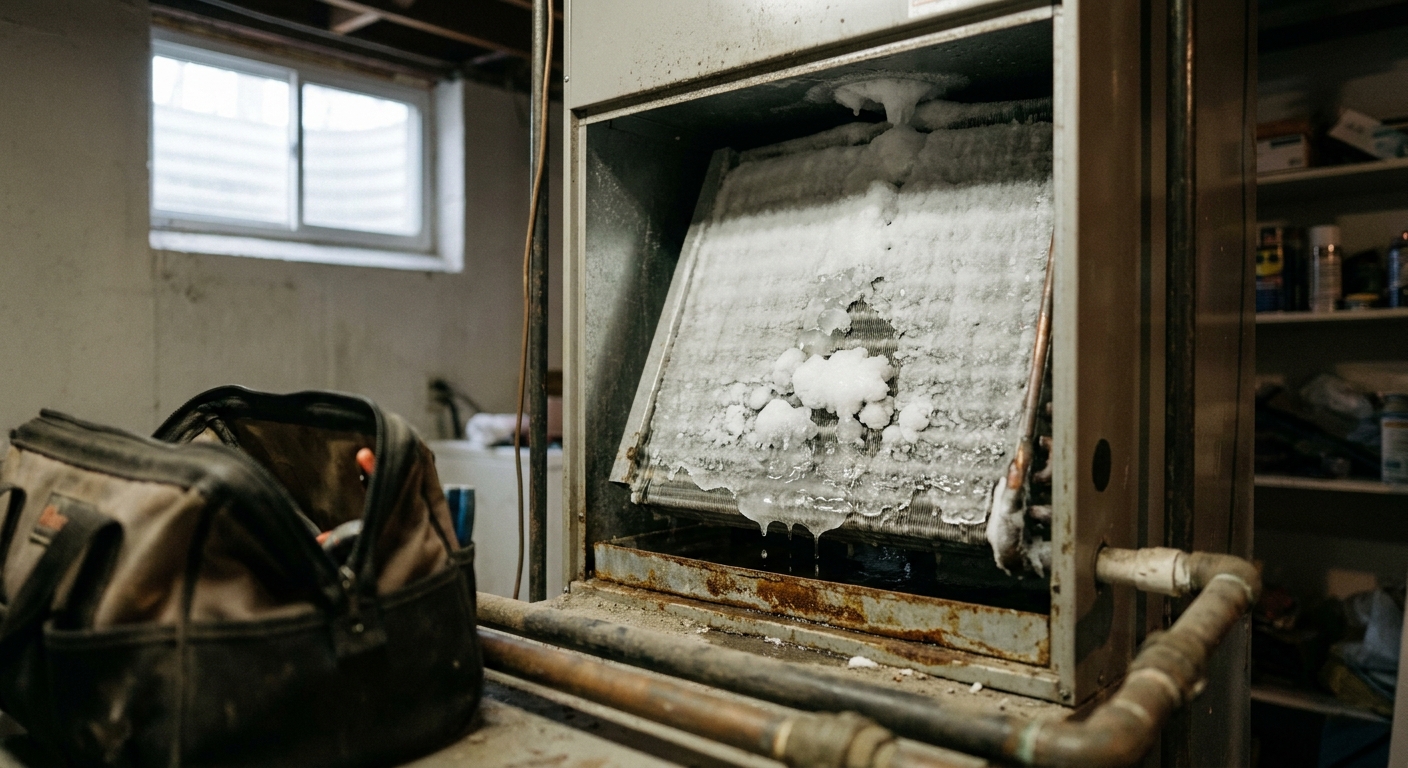
When you turn the thermostat up to 72°F and the air that comes out of the vents feels like room temperature, the first thought is often “the system is broken.” One of the most common reasons for that symptom is a frozen evaporator coil. The coil sits inside the indoor air handler, and when it freezes, the heat-exchanging surface can’t transfer heat from the indoor air to the refrigerant. The result is a stream of warm air that looks like the system is off, even though the blower is still running.
Homeowners in Kenner and Metairie see this problem most often in the middle of the summer, when the outdoor temperature pushes the system to work at full capacity. A frozen coil can develop quickly, sometimes within a few hours of the unit starting up, and it can cause the compressor to overheat if left unchecked. Understanding why the coil freezes helps you decide whether to call an AC repair professional or try a short-term fix before the next service call.
How a Frozen Evaporator Coil Causes Warm Air
The evaporator coil’s job is to absorb heat from the indoor air. Refrigerant flows through the coil as a low-pressure, low-temperature liquid. As warm air passes over the coil, the refrigerant evaporates, turning into a gas and pulling heat out of the air stream. The blower then pushes the cooled air back into the living space.
If ice builds up on the coil, the surface area that can exchange heat shrinks dramatically. Ice acts as an insulator, preventing the refrigerant from absorbing heat. The blower continues to move air, but because the coil can’t do its job, the air temperature stays close to the room temperature. In some cases the thermostat thinks the unit is still cooling and keeps the compressor running, which can lead to higher electricity usage and a higher Entergy bill.
Because the coil is hidden inside the air handler, the freeze isn’t always obvious. Homeowners often notice the problem first when the air feels warm, the unit makes a louder-than-usual humming sound, or the indoor fan runs constantly without a noticeable temperature drop.
Common Causes of a Frozen Coil
Several conditions can lead to a coil freezing. The most frequent cause is restricted airflow. When the blower can’t push enough air across the coil, the refrigerant stays too cold and ice forms. Dusty filters, clogged return ducts, or a malfunctioning blower motor are typical culprits.
Another common cause is low refrigerant charge. If there’s a leak in the system, the refrigerant pressure drops, and the temperature of the refrigerant in the evaporator falls below freezing. The coil then becomes a surface for ice to develop. Leaks can be tiny and hard to see, but the effect on performance is immediate.
Improper thermostat settings can also contribute. Setting the thermostat too low when the outdoor temperature is high forces the unit to run longer than it should, increasing the chance of a freeze. Similarly, using a “fan-only” setting while the AC is off can draw cold air over a coil that still has residual refrigerant, allowing ice to form.
How Airflow Restrictions Lead to Freeze
Air filters are the first line of defense against debris, but they need regular replacement. In South Louisiana homes, the combination of pollen, construction dust, and indoor pet hair can clog a filter in as little as a month. When airflow drops below the design specification, the coil temperature can dip below the freezing point.
Return ducts and supply registers can become blocked by furniture, stored items, or even a buildup of insulation material. In older homes around Kenner, it’s not unusual to find ductwork that has sagged or become disconnected, creating pockets of stagnant air. Those pockets reduce the volume of air that reaches the coil, encouraging ice formation.
The blower motor itself can fail partially, delivering less air than it should. A motor that’s starting to seize will still turn, but at reduced speed, which the homeowner may not notice until the AC stops cooling. In that scenario, the coil can freeze in as little as an hour of operation.
The Role of Refrigerant and Low Charge
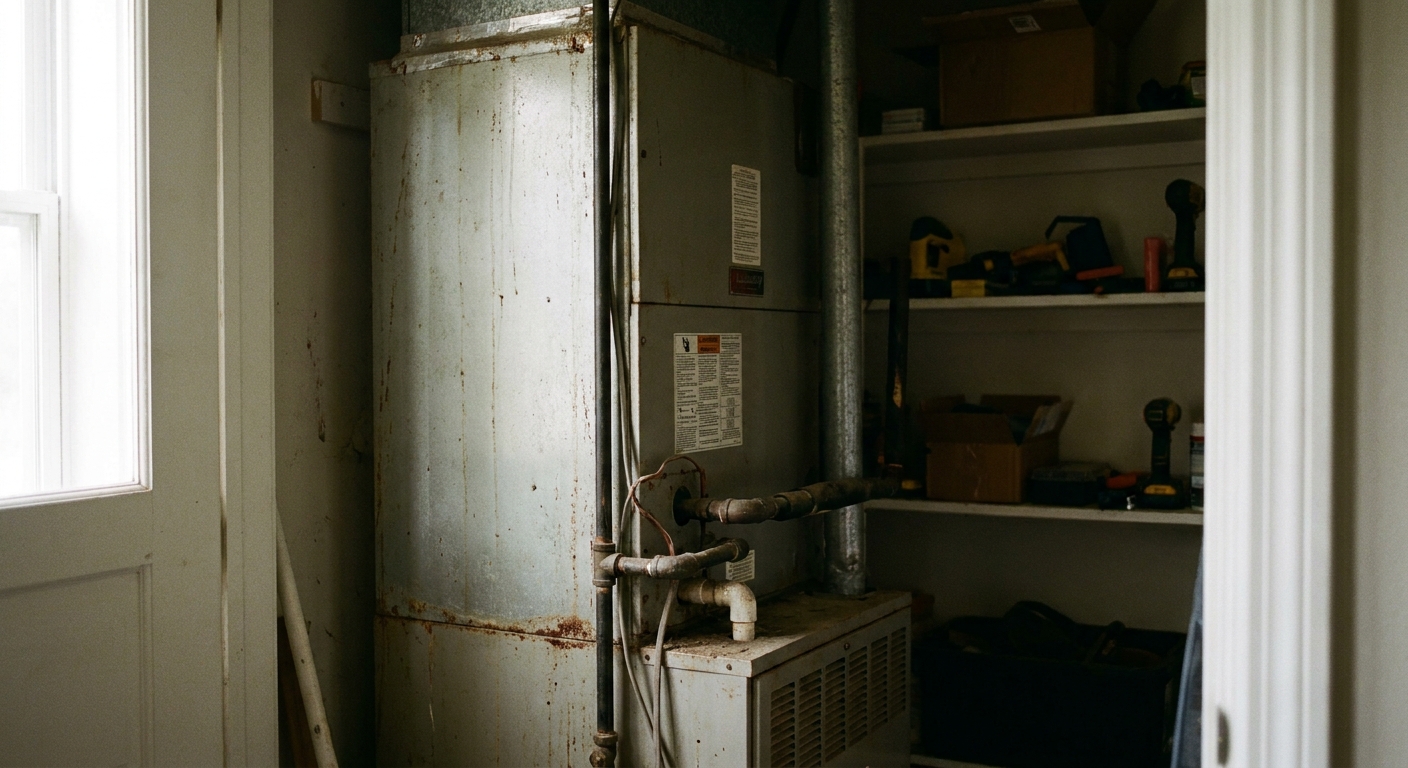
Refrigerant is the working fluid that carries heat out of your home. Modern residential systems in New Orleans typically use R-410A, though newer installations are moving toward R-454B. When the system is properly charged, the refrigerant absorbs heat at a controlled temperature and pressure.
If a leak develops, the pressure in the evaporator drops. The lower pressure means the refrigerant boils at a lower temperature, which can bring the coil surface below 32°F. Ice then forms on the fins and the copper tubing. The leak may be a small pinhole in a line, a faulty seal around the coil, or a compromised service valve.
Detecting a leak usually requires a professional with a refrigerant leak detector. Once the leak is located, it must be repaired before the system is recharged. Adding refrigerant without fixing the leak is only a temporary fix and can lead to repeated freezes and higher repair costs.
Diagnosing a Frozen Coil and What It Costs
When you suspect a frozen coil, the first step is to turn off the unit and let the ice melt. This can take anywhere from 30 minutes to a few hours, depending on the amount of ice. While you wait, check the air filter and replace it if it looks dirty. If the problem returns after the melt, it’s time to call for professional AC repair.
A qualified technician will perform a diagnostic service call, which typically includes a visual inspection of the coil, measurement of refrigerant pressure, and a check of blower motor operation. The diagnostic fee in the Greater New Orleans area ranges from $90-$150. Labor is billed at about $200 per hour, and any parts used are added to the total.
- Refrigerant refill: $125-$225 per pound (higher end for R-454B).
- Fan/blower motor replacement: $450-$1,200.
- Compressor replacement: $1,800-$2,900.
- Capacitor or contactor replacement: $200-$450.
- Refrigerant leak repair (parts + labor): $400-$900.
These figures are averages; the final quote depends on the exact model, the extent of the freeze, and any additional components that need attention. A technician will explain the findings and give a written estimate before any work begins.
Repair Options and Preventive Steps
If the coil is only lightly frosted, a simple cleaning of the evaporator and a new filter may be enough to restore proper airflow. In cases where the blower motor is underperforming, replacement is the most reliable fix. For a low-charge system, the leak must be sealed and the refrigerant recharged to the manufacturer’s specifications.
Beyond fixing the immediate problem, regular maintenance helps prevent future freezes. A seasonal maintenance plan that includes filter changes, coil cleaning, and a system performance check can catch airflow issues before they cause a freeze. Installing a smart thermostat can also help by avoiding extreme temperature set-points that stress the system.
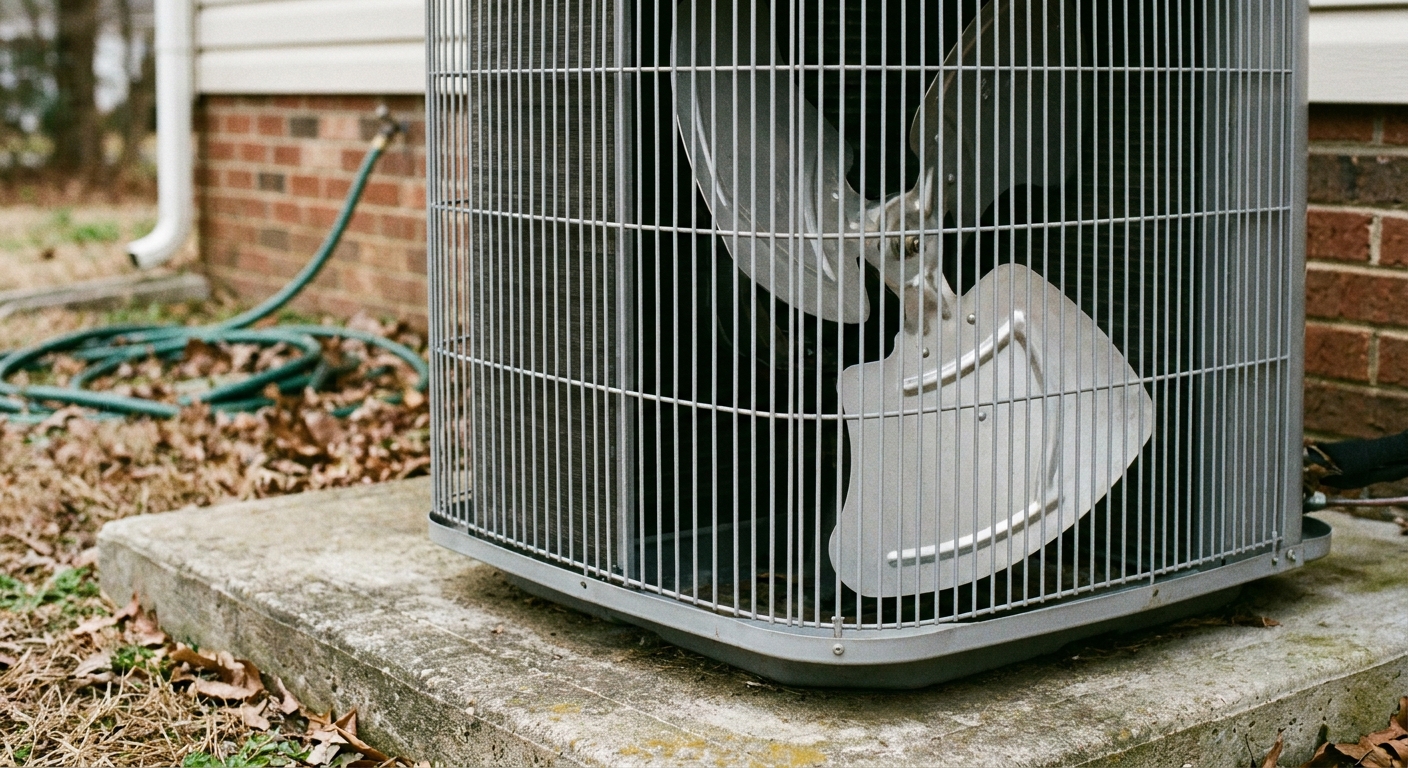
Other upgrades that improve overall comfort include sealing or repairing ducts in older homes, adding an air purification system to reduce indoor pollutants that clog filters, and ensuring the outdoor condenser has clear airflow. All of these measures reduce the load on the evaporator coil and keep the refrigerant cycle stable.
Final Thoughts
A frozen evaporator coil is a specific failure mode that turns a working AC into a warm-air blower. The underlying causes—restricted airflow, low refrigerant, or motor issues—are all addressable with proper diagnosis and repair. Ignoring the problem can lead to higher energy bills, compressor damage, and costly replacements.
For homeowners in Kenner, Metairie, and the surrounding South Louisiana area, the best approach is to act quickly: turn the unit off, replace the filter, and call a local HVAC technician for a diagnostic visit. Regular maintenance and sensible thermostat settings go a long way toward keeping the coil free of ice and the home comfortable all summer long.
Need honest HVAC help in Kenner, Metairie, or anywhere across the Greater New Orleans area? Call Tegridy Air at 504-414-8655 or request a free quote online – we’ll get you comfortable fast.
Related Reading
- Repair or Replace Your AC? Honest Cost Breakdown for New Orleans Homeowners
- AC Repair Explained: 10 Most Common Air Conditioner Problems and Solutions
- Repair or Replace? An Honest Guide to Aging AC Units in the New Orleans Metro
Frequently Asked Questions
Why does my AC start blowing warm air after a few hours of running?
The most common reason is a frozen evaporator coil, which blocks heat transfer. Restricted airflow, low refrigerant, or a failing blower motor can cause the coil to ice over, resulting in warm air.
Can I melt the ice on the coil myself?
You can turn the system off and let the ice melt naturally, but this only addresses the symptom. The underlying cause—such as a dirty filter or refrigerant leak—needs professional attention to prevent recurrence.
How often should I replace my air filter to avoid a frozen coil?
In the humid climate of South Louisiana, a filter should be checked monthly and replaced at least every 60-90 days, or more often if it looks dirty or if you have pets.
What is the typical cost to repair a frozen coil problem?
A diagnostic service call is $90-$150, and labor is about $200 per hour. Specific parts like a blower motor ($450-$1,200) or refrigerant refill ($125-$225 per pound) add to the total, depending on what the technician finds.