

If your AC stops cooling in the Kenner heat, first decide whether it is safe to troubleshoot. Follow the CDC heat-safety guidance and move to an air-conditioned place if your home is becoming too hot. For an ordinary cooling problem, start with the thermostat and an accessible filter; keep equipment cabinets closed.
Check thermostat settings and any user-replaceable batteries according to the manual. Do not cycle the breaker as a generic reset. If a breaker has tripped repeatedly, leave the system off and arrange a professional diagnosis. If the system still won’t cool, ask for the next available appointment and a confirmed arrival window. That’s where a local, family-run operation like Tegridy Air fits in.
This guide walks through what to ask when you call for emergency AC repair, how to confirm appointment timing, the typical reasons an AC stops cooling, what a diagnostic visit involves, and the published planning ranges for common repairs. Use it to compare the proposed work and ask questions before authorizing a repair.
What to Expect When Your AC Stops in the Heat
Note what you can observe without opening the equipment: whether air comes from the vents, whether it feels warm, and whether there is an unusual noise or visible ice. Tell the technician when the problem began. These clues help describe the fault, but a humming or clicking sound alone does not identify the failed part.
When you call for a Kenner emergency HVAC service, have the model number, approximate unit age and recent maintenance information ready if you can find them safely. These details can help describe your equipment. Do not open a service panel just to gather them.
Ask for the next available appointment and a confirmed arrival window. Explain whether the home is becoming too hot and whether you have moved to a cooler location. Do not rely on an unconfirmed arrival time when making your heat-safety plan.
If your system is already down and you are in Kenner, you do not have to read the rest of this first. Book AC repair in Kenner, LA or call (504) 414-8655. That page lists our typical repair price ranges, the diagnostic fee, and how to request an appointment. For a failure after hours or on a weekend, go to emergency HVAC service in Kenner.
Close sun-facing blinds and limit heat from cooking or other appliances while arranging help. CDC advises using indoor fans only below 90°F; fans do not replace air conditioning during dangerous heat. Move to a cooler location rather than waiting in an overheating home. If you see smoke or fire, leave and call 911 from outside.
How Same-Day Emergency Service Works
When you call, ask for the next available appointment, a confirmed arrival window and the applicable service-call fee. Confirm the service address and how you will be notified if the arrival window changes.
A visual inspection can be a starting point, but electrical, airflow or refrigerant measurements may be needed to diagnose the fault. Ask what the findings show before deciding on a repair. Whether the repair can be completed during the visit depends on the diagnosis and availability of the correct parts.
If the repair needs another visit, ask what work remains, whether parts need to be ordered, the expected timing and any additional cost. You can then decide whether to authorize the proposed work or consider other options.
Before authorizing work, ask for the service-call charge, the proposed repair scope and the total quoted price. Ask for written parts and labor warranty terms, including any exclusions that apply to the repair.
Common Reasons for No Cooling and Quick Checks
Low refrigerant can reduce cooling and contribute to an iced indoor coil. Restricted airflow can also cause icing, so visible ice does not establish that refrigerant is low. If you see ice on accessible equipment or refrigerant lines, turn cooling off at the thermostat and arrange service; do not chip the ice away. Trane explains the possible causes of a frozen coil.
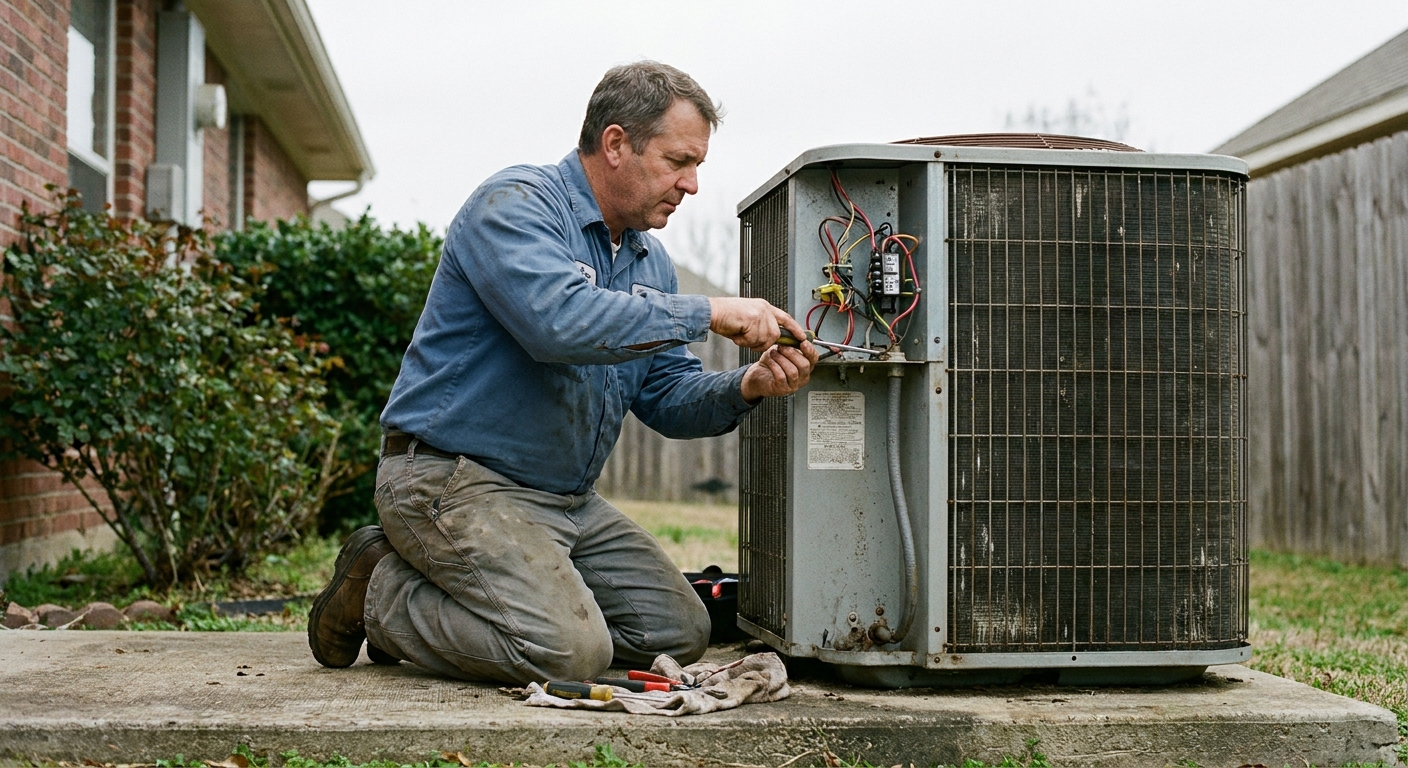
A failed indoor blower can reduce airflow through the home. A failed outdoor fan can prevent normal heat rejection and damage equipment if cooling keeps running. Turn cooling off and call for service if a fan is visibly damaged or the outdoor unit is humming while its fan is not turning. Do not reach through a grille or try to start a blade by hand or with a tool.
A faulty capacitor or contactor can prevent a motor or compressor from operating. A capacitor stores electrical energy and supports motor starting or running in systems that use one. A contactor is an electrically operated switch that controls power to equipment. They perform different jobs. Capacitors can retain a dangerous charge after power is disconnected; leave testing and replacement to a qualified technician.
A dirty filter can restrict airflow. A blocked condensate drain can cause water damage; on equipment fitted with an overflow safety switch, backed-up water may also stop cooling. An accessible filter is a reasonable owner check. Water leaks, internal drain work and safety-switch faults need professional attention; never bypass a switch to make the AC run.
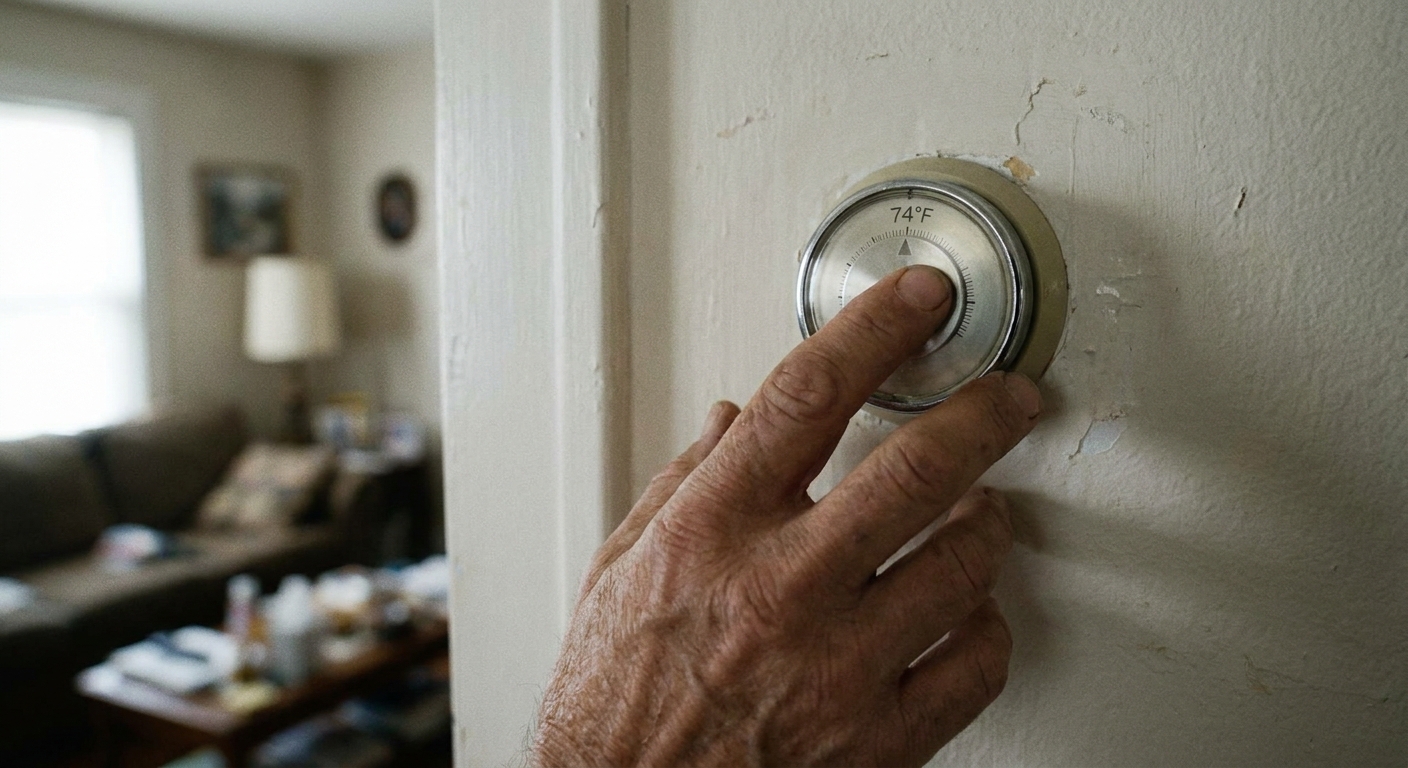
Before the technician arrives, make sure the thermostat is set to “cool” with a setpoint below room temperature. Allow any protective delay specified in your manual to finish. Keep service panels closed. Skip checks in a hot attic, wet area or other unsafe location.
- Do not repeatedly reset a tripping breaker or bypass a safety control. Leave the system off and call for service if it trips again.
- Inspect a user-accessible filter with the system off as the manual directs. Use the specified filter size and type; ask for help if access requires a service panel or unsafe climbing.
- Look for blocked airflow around the outdoor unit from outside its cabinet. Do not remove guards, touch wiring or reach into the fan.
What the Technician Will Do Onsite
The diagnostic should follow the symptoms and the equipment’s service instructions. Ask what the technician found in the controls, electrical supply, airflow and cooling performance. Refrigerant diagnosis may require pressure and temperature measurements; a pressure reading alone is not a complete diagnosis. EPA certification requirements apply to work such as attaching refrigerant gauges and adding or removing refrigerant, with an exception for closely supervised apprentices.
If a refrigerant leak is found, ask where it is, whether the component can be repaired or needs replacement, and what the quote covers. A qualified technician should use the equipment-approved repair, recovery, leak-test, evacuation and charging procedures as applicable. Simply adding refrigerant does not repair a leak. Carrier describes professional leak diagnosis and repair.
For a failed motor or capacitor, the replacement must be compatible with the equipment. Ask which part failed and why it is being replaced. Motor type, controls and access can affect the repair; the price ranges below remain planning information until the specific work is quoted.
Ask the technician to explain how the repair follows the equipment’s service instructions and how operation will be checked afterward. A cooling run, airflow and relevant operating measurements can help confirm that the diagnosed fault has been addressed.
Cost Overview for Typical Repairs
Understanding the price ranges for common repairs helps you avoid surprises. Below is a summary of the most frequent service items you might encounter during an emergency call.
- Dispatch fee in Greater New Orleans: $109. Repairs are quoted after diagnosis.
- Repair labor and parts: included in the quoted repair scope.
- Refrigerant: $125-$225 per pound. Newer R-454B refrigerant sits at the high end of the range.
- Fan/blower motor replacement: $450-$1,200, depending on whether a standard or variable-speed ECM motor is needed.
- Compressor replacement: $1,800-$2,900. The exact cost depends on the unit’s size and brand.
- Capacitor/contactor replacement: $200-$450.
- Refrigerant leak repair: $400-$900, plus the cost of the refrigerant itself.
- System replacement: free estimates; see the 2026 Kenner AC replacement cost guide for planning information.
For services without a listed planning range, such as duct sealing, coil cleaning or installing a smart thermostat, ask for an estimate after the diagnostic. Review the scope, price and applicable fees before approving the work.
Ask for written parts and labor warranty terms before authorizing a repair. Confirm which parts and work are covered, who provides the coverage, how long it lasts and whether exclusions or registration requirements apply.
Compare the final invoice with the repair scope and price you approved. Ask about any unclear service-call charge, labor, parts or additional fee. For a major repair, reviewing that scope alongside a replacement estimate can help you compare the options.
Preventive Steps to Reduce Future Emergencies
Plan a pre-season tune-up using the equipment’s maintenance schedule. ENERGY STAR recommends checking cooling equipment in spring and heating equipment in fall. Ask the technician to review coils, drainage, electrical connections, controls and airflow. Maintenance can find developing problems, but it cannot guarantee an outage-free season.
Inspect the filter monthly during heavy use and follow its replacement or cleaning instructions. Filter type, dust and pets can change the interval. Use a filter the system can accommodate rather than choosing a higher rating without checking compatibility.
If you want temperature alerts, check whether your particular smart thermostat supports them and how they are configured. Do not assume every programmable thermostat can warn you about a cooling failure.
Ask about duct leakage if some rooms stay warm or airflow seems poor. A professional can assess the ducts and recommend appropriate repairs. Avoid entering an unsafe attic or crawlspace, and do not treat duct sealing as a fix for an undiagnosed electrical or refrigerant fault.
Final Thoughts
When the AC goes out in Kenner or Metairie, ask a local service provider for the next available appointment and a confirmed arrival window. Compare the diagnosis, repair options and quoted scope before deciding how to proceed.
Use the safe checks to describe the problem, then have persistent no-cooling, icing, water leaks or unusual mechanical noises diagnosed. Keep up with the equipment’s filter and maintenance schedule, and make a heat-safety plan in case cooling stops again.
Need honest HVAC help in Kenner, Metairie, or anywhere across the Greater New Orleans area? Call Tegridy Air at 504-414-8655 or request a free quote online and ask about appointment availability.
Related Reading
- AC Running But Not Cooling? Kenner & Metairie Homeowners’ First Checks
- What AC Repair Actually Costs in Kenner – An Honest Breakdown
- Expert AC Repair Tips for Kenner & Metairie Homeowners
Frequently Asked Questions
How quickly can a technician arrive for an emergency AC repair in Kenner?
Ask for the next available appointment and a confirmed arrival window. Whether a repair can be completed during the visit depends on the diagnosis and availability of the correct parts.
What should I do while waiting for the technician?
Close sun-facing blinds and limit indoor heat sources. Use fans only when the indoor temperature is below 90°F, and move to an air-conditioned place if your home becomes too hot. Do not delay getting to a cooler location while waiting for an AC repair.
Can I get a repair estimate before any work starts?
Ask for a written estimate after diagnosis and review the repair scope, price and any additional fees before authorizing the work. Confirm whether a diagnostic or service-call charge applies even if you decline the repair.
Are there any warranties on the parts and labor?
Ask for written parts and labor warranty terms before authorizing a repair. Confirm what is covered, who provides the coverage, how long it lasts and any exclusions or registration requirements. Coverage depends on the specific repair and applicable terms.