

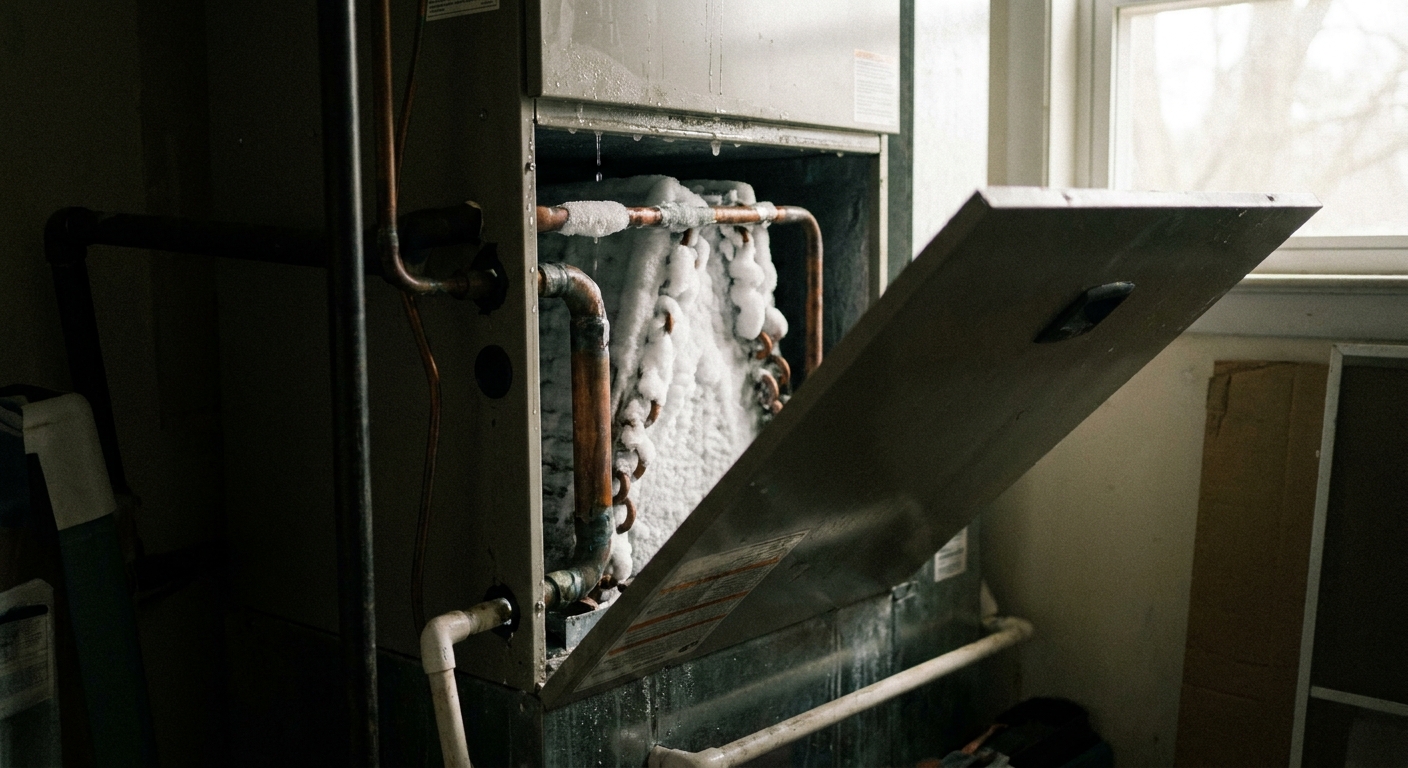
You’ve turned the thermostat up, the fan is running, but the air coming out of the vents is warm. It feels like the system is trying, but something is stopping it from cooling. In many homes around Kenner and Metairie, the culprit is a frozen evaporator coil. When the coil freezes, the heat-exchange process stalls, and the unit ends up blowing warm air instead of the cool breeze you expect.
This article walks through exactly why a frozen coil happens, how you can tell it’s the problem, and what steps are needed to get your system back to normal. We’ll keep the focus on practical details, not marketing fluff, so you know what to expect before you call a technician.
How a Central AC Works – The Role of the Evaporator and Refrigerant
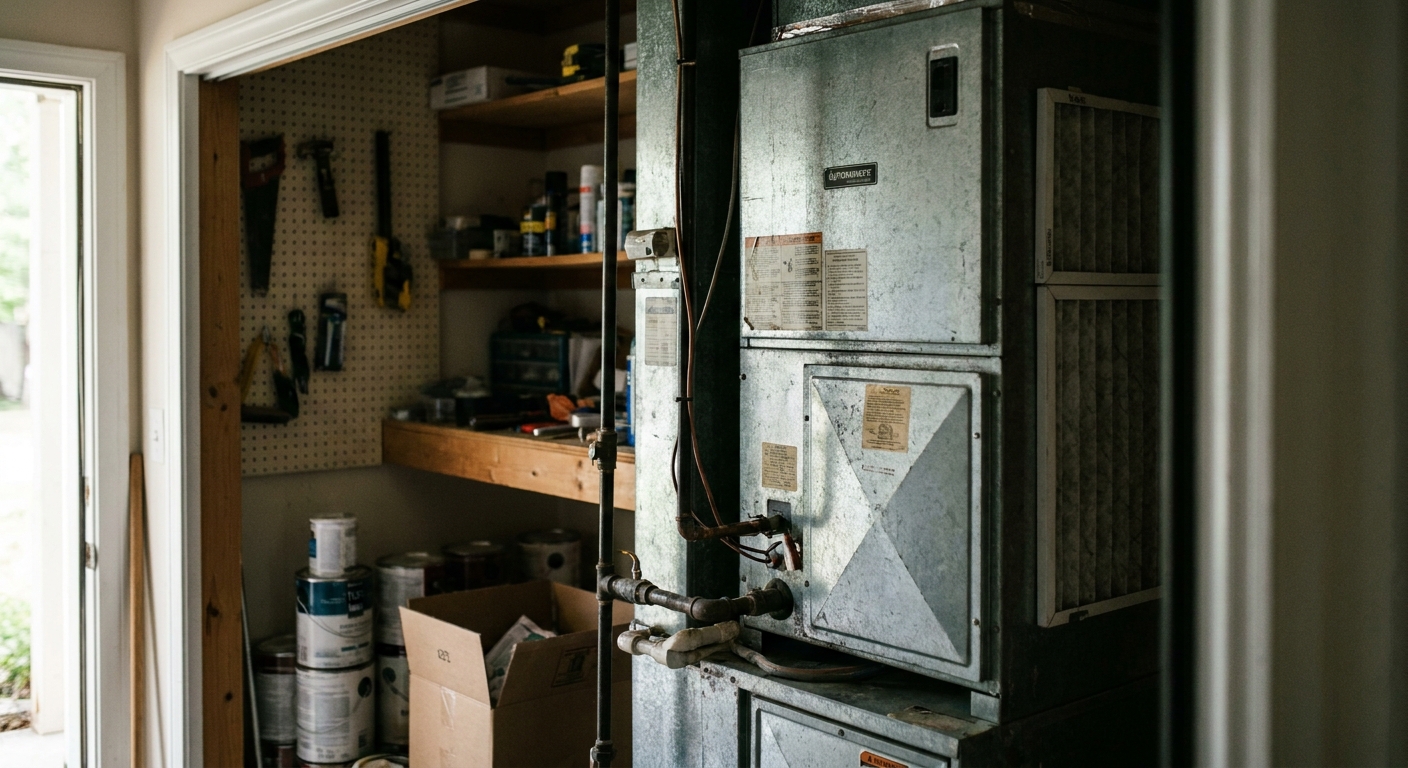
The heart of a split-system AC is the evaporator coil located inside the air handler. Warm indoor air is drawn across the coil by the blower motor, while the refrigerant inside the coil absorbs heat and turns from a low-pressure liquid to a low-pressure vapor. This heat-absorption process cools the air, which the blower then distributes through the ductwork.
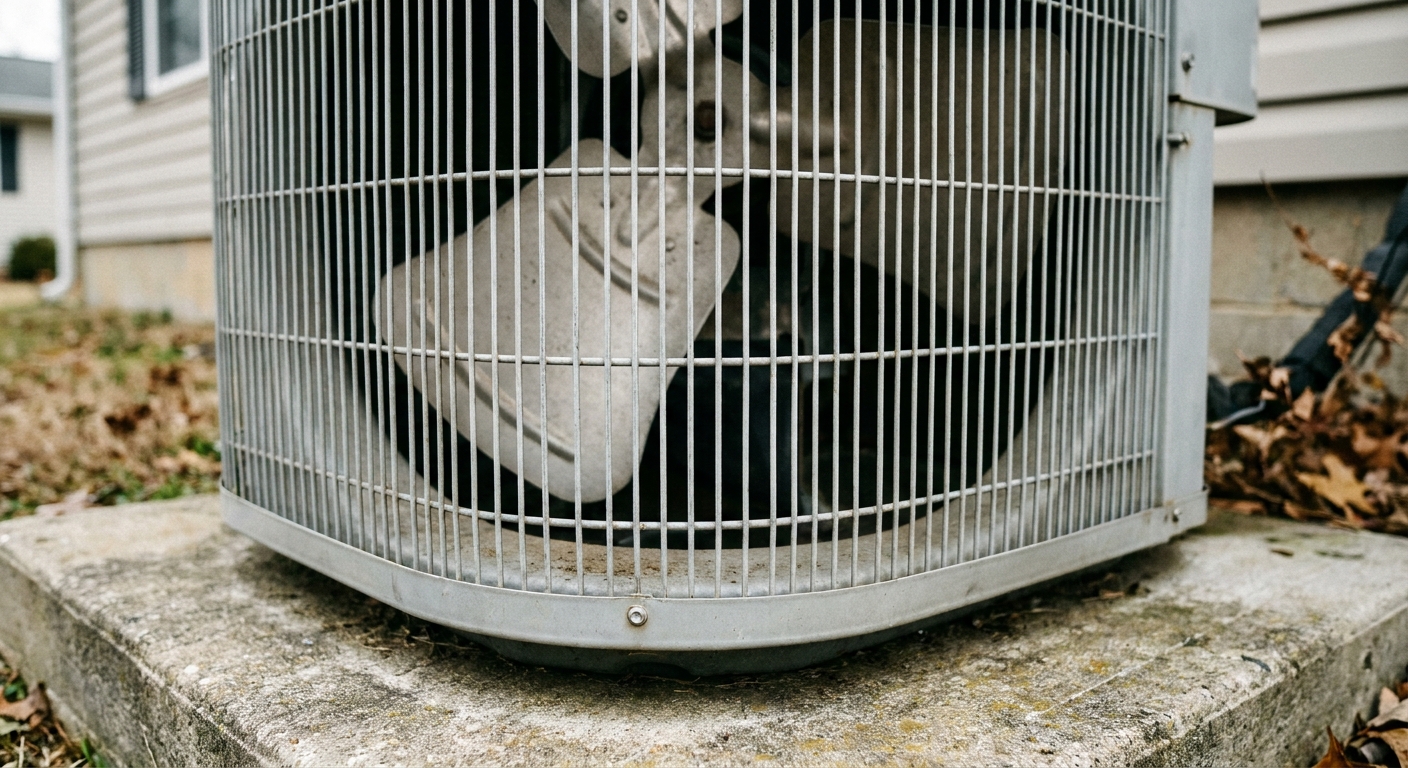
After leaving the indoor unit, the refrigerant travels to the outdoor condenser. There a fan pulls outside air across the condenser coil, releasing the absorbed heat and turning the refrigerant back into a high-pressure liquid. The cycle repeats as long as the thermostat calls for cooling.
Two things keep the cycle running smoothly: proper airflow across the evaporator and the correct amount of refrigerant. If either of those is compromised, the coil can get too cold, moisture in the air condenses, and eventually ice builds up on the coil surface.
Understanding this loop helps you see why a frozen coil directly leads to an AC blowing warm air. When the coil is covered in ice, the refrigerant can’t absorb heat, and the blower ends up moving air that never got cooled.
Common Causes of a Frozen Evaporator Coil
Low airflow is the most frequent trigger. A clogged air filter, blocked return grille, or closed supply registers restrict the amount of air moving over the coil. With less air to absorb heat, the coil temperature drops below freezing and ice forms.
Another major cause is low refrigerant charge. Leaks in the line set or a mischarged system mean there isn’t enough refrigerant to carry the heat away. The reduced pressure causes the coil temperature to fall too low, again leading to ice buildup.
Dirty coils also contribute. Dust and debris on the evaporator act as insulation, preventing heat exchange. Over time this can cause localized cold spots that freeze.
Finally, a malfunctioning blower motor or a faulty thermostat can keep the fan from running when the compressor is on. Without the fan moving air, the coil will inevitably freeze.
How to Recognize a Frozen Coil Before It Causes Damage
First sign: you notice the air feels cooler than usual at the vent, then suddenly becomes warm. The temperature swing often happens within a short period as ice builds up and then melts.
Second sign: visual ice on the coil. If you can access the air handler, you may see a white, frosty coating on the copper tubes. Even a thin film of frost is a warning.
Third sign: reduced airflow. The fan may sound louder because it’s working harder, or you may feel a weak breeze from the vents. In some cases the blower motor will shut off entirely to protect itself.
Fourth sign: the system cycles on and off more frequently. The thermostat sees the temperature not dropping, so it keeps calling for cooling, which can overwork the compressor.
Why a Frozen Coil Makes Your AC Blow Warm Air
When ice covers the evaporator, the refrigerant can’t absorb indoor heat. The coil’s surface temperature drops below the dew point, so water vapor in the air condenses and freezes instead of being removed as liquid. The refrigerant stays in a low-pressure vapor state, but without heat exchange there’s nothing to cool the air.
The blower continues to push air across the frozen coil, but that air never gets chilled. The result is a stream of warm air that feels like the system is off. Because the compressor is still running, the unit draws more electricity without delivering any cooling, which can raise your Entergy bill without any benefit.
If the ice continues to grow, it can eventually damage the coil fins, the blower motor, or even the compressor. That’s why a frozen coil should be addressed promptly, not left to melt on its own while the system runs.
In short, the frozen coil cuts off the heat-exchange step that makes an AC work, so the whole system ends up blowing warm air.
What to Do When You Suspect a Frozen Coil
Turn the thermostat off or set it to “off” and switch the fan from AUTO to ON. Room air moving across the ice speeds up the thaw while the compressor stays off. A full thaw usually takes one to three hours, and up to a full day if the coil is packed in solid ice. Do not chip at the ice, and do not aim a hair dryer or heat gun at the coil. Once the ice has melted, check the air filter; replace it if it looks dirty or clogged.
Next, inspect the supply registers and return grilles. Make sure none are closed and that there’s no obvious blockage in the ductwork. If airflow looks normal, the problem is likely refrigerant-related or a component failure, which requires professional attention.
Call a qualified HVAC service for an AC repair. A technician will run a diagnostic, check refrigerant pressure, locate any leaks, and verify blower motor operation. Below is a typical cost outline for the most common repairs related to a frozen coil:
- Dispatch fee in Greater New Orleans: $109. Repairs are quoted after diagnosis.
- Refrigerant leak repair (including refrigerant): $400-$900 plus $125-$225 per pound of refrigerant
- Capacitor or contactor replacement: $200-$450
- Fan/blower motor replacement: $450-$1,200
- Compressor replacement (if needed): $1,800-$2,900
Repair pricing depends on the diagnosis, parts, access, and applicable warranty. We provide a quote before repairs proceed.
Do not attempt to add refrigerant yourself. Handling refrigerant requires certification and proper equipment. A certified technician will also test the system after repair to confirm that the coil stays ice-free and that the AC is blowing cool air again.
Preventive Maintenance to Keep Your Coil From Freezing
Regular maintenance is the most reliable way to avoid a frozen coil. A yearly tune-up that includes cleaning the evaporator, checking refrigerant charge, and testing airflow can catch problems before they cause a shutdown.
Replace or clean the air filter every 1-3 months, depending on usage and indoor air quality. A clean filter preserves airflow and reduces the chance of the coil getting too cold.
Keep the outdoor condenser clear of debris, grass, and leaves. Good airflow around the condenser helps maintain proper refrigerant pressure, which in turn protects the indoor coil.
Consider upgrading to a variable-speed blower motor if your system still uses a single-speed motor. Variable-speed motors adjust airflow to match cooling demand, reducing the likelihood of low-airflow conditions that lead to freezing.
For homes in Kenner and Metairie, sealing ducts and insulating refrigerant lines can also improve overall efficiency. While duct sealing costs depend on the home’s layout, a professional will give you a clear quote after a diagnostic.
When to Call a Professional for AC Repair
If you’ve turned the system off, let the coil thaw, replaced the filter, and still get warm air, it’s time to call a technician. The same applies if you hear unusual noises, notice water pooling around the air handler, or see a significant jump in your electricity bill during cooling season.
Professional AC repair includes a full system inspection, pressure testing for refrigerant leaks, and verification of blower motor performance. Technicians from Tegridy Air are familiar with the local climate and typical installation practices in South Louisiana, so they can diagnose issues quickly.
Ask the technician about a maintenance plan. Regular visits can keep the evaporator clean, ensure proper refrigerant charge, and catch airflow problems early. Many homeowners find that a maintenance plan pays for itself by preventing costly emergency repairs.
Free replacement estimates are separate from repair diagnostic visits. For planning information, see our 2026 Kenner AC replacement cost guide. Your final quote depends on the equipment and installation scope.
How to Safely Thaw a Frozen Evaporator Coil
Turn the cooling off at the thermostat and switch the fan to ON. That stops the coil from getting any colder while room air moves across the ice, which is the fastest safe way to thaw it. Leave the breaker on so the blower can still run.
- Set the thermostat mode from COOL to OFF. This shuts the compressor down.
- Set the fan switch from AUTO to ON. Moving air over the coil melts ice much faster than letting it sit.
- Put towels or a shallow pan under the air handler. A full thaw releases a lot of water at once.
- Do not chip, scrape, or pry the ice off. Coil fins bend and copper tubing punctures easily, which turns a small repair into an expensive one.
- Skip the hair dryer, heat gun, and space heater. Concentrated heat can damage the fins and the coil coating.
- Wait for a complete thaw. Ice packed deep inside the coil melts last.
- Check the air filter and replace it if it is dirty. Open every supply register and clear anything blocking the return grille.
- Turn the cooling back on and watch it for about an hour. If the vents blow warm again or frost returns, shut it off and call for service.
How Long a Frozen Coil Takes to Thaw
Plan on one to three hours with the fan running, and up to a full day if the coil is packed in solid ice. Light frost can clear in under an hour. Our humidity slows the thaw, because the air moving over the coil already carries a lot of moisture. Do not rush it. Restarting the compressor while ice is still hiding inside the coil blocks airflow again, and the coil refreezes within minutes.
Fan Blowing Hot Air? Check These Before Blaming the Coil
Check the thermostat first. Confirm the mode is COOL, not HEAT or emergency heat, and that the setpoint is below the room temperature. A thermostat bumped into heat mode runs the blower and delivers hot air with nothing wrong in the equipment. Then step outside and see whether the condenser is running. If the blower runs but the outdoor unit is silent, check the outdoor disconnect and the breaker. When both check out and the air is still warm, a frozen coil is the likely answer.
What a Freeze Does to the Condensate Drain
A thawing coil dumps more water than the drain pan and line were built to carry at once. That is why a freeze often shows up as a water problem before anyone sees the ice.
- Water pooling on the floor around the air handler or in the closet.
- Ceiling stains below an attic unit, common in Kenner and Metairie homes with the air handler overhead.
- Sloshing or bubbling sounds as meltwater works its way past the ice.
- The system shutting itself off because the float switch in the drain pan tripped.
Humidity keeps the drain line damp year round, so algae and sludge build up inside it. A partly clogged line that handled normal condensate fine backs up the moment a frozen coil thaws. Have the drain cleared at the same visit that fixes the freeze.
Refrigerant Leaks: The Signs and Where They Hide
A leak lowers the pressure inside the evaporator, and lower pressure makes the refrigerant boil at a lower temperature. That drops the coil surface below 32 degrees, so moisture in your indoor air freezes onto the fins and tubing instead of draining away. Most systems here use R-410A, and newer installations use R-454B.
Signs of a leak include steady hissing near the indoor or outdoor unit, ice on the thin copper line running to the condenser, a system that runs nonstop without cooling, and a faint chemical or sweet smell near the equipment.
Leaks hide in a few predictable places: a pinhole in the line set, a failed seal where the coil connects, a corroded spot on the coil, or a leaking service valve. Gulf salt air is hard on outdoor coils and line sets, so older systems lose charge more often. Most of these leaks are too small to see, so a technician finds them with an electronic leak detector. The leak has to be repaired before the system is recharged. Adding refrigerant to a leaking system is temporary, and the coil freezes right back up.
When the Metering Device or Too Much Refrigerant Is the Cause
Not every freeze comes from a dirty filter or a low charge. The metering device, usually a thermostatic expansion valve, controls how much refrigerant enters the evaporator. When it sticks or drifts out of calibration, the coil runs at the wrong temperature and ice forms even with a clean filter and a healthy blower.
Too much refrigerant does damage too. An overcharged system can send liquid refrigerant where it does not belong, freeze the coil, and put the compressor at risk. That usually happens when someone adds refrigerant without measuring. Both take gauges and temperature readings to confirm, which is why a coil that keeps freezing after a filter change needs a technician.
More Frozen Coil Questions
Can I turn my AC back on as soon as the ice melts?
Only after you have dealt with the cause. If the filter was clogged and you replaced it, a restart is reasonable. If the filter was clean, something else caused the freeze and the coil will ice over again, often within an hour. Running it that way risks the compressor.
Does a frozen coil mean I need a new air conditioner?
Usually not. Most frozen coils trace back to a dirty filter, blocked vents, a weak blower motor, or a refrigerant leak, and all of those are repairs. Replacement only comes up when the coil or compressor is already damaged from running frozen, or when the system is old enough that a repair stops making sense.
If the coil freezes again after a thaw and a filter change, shut the system off and call Tegridy Air at (504) 414-8655. Our certified and insured technicians cover Kenner, Metairie, and the Greater New Orleans area.
Final Thoughts
A frozen evaporator coil is a common reason for an AC that blows warm air, especially when airflow is restricted or refrigerant is low. Recognizing the signs early—ice on the coil, weak airflow, and temperature swings—lets you take the right steps before the compressor is damaged.
Simple actions like changing the filter, ensuring vents are open, and scheduling regular maintenance can keep the coil from freezing. When the problem persists, a qualified technician can diagnose refrigerant issues, replace faulty components, and get your system back to delivering the cool air you need during those hot Louisiana summers.
Need honest HVAC help in Kenner, Metairie, or anywhere across the Greater New Orleans area? Call Tegridy Air at 504-414-8655 or request a free quote online – we’ll get you comfortable fast.
Related Reading
- Repair or Replace Your AC? Honest Cost Breakdown for New Orleans Homeowners
- AC Repair Explained: 10 Most Common Air Conditioner Problems and Solutions
- Honest Ways to Lower Your Entergy Bill Without Sweating Through Summer
Frequently Asked Questions
Why does my AC start blowing warm air after a few minutes of running?
The most common cause is a frozen evaporator coil. Low airflow or low refrigerant makes the coil temperature drop below freezing, forming ice that blocks heat exchange. Once the coil is covered in ice, the system can no longer cool the air, so warm air is blown out.
Can I fix a frozen coil myself?
You can turn the system off and let the ice melt, then replace a dirty air filter. However, the underlying cause—such as low refrigerant, a leak, or a malfunctioning blower—requires a certified technician. Attempting to add refrigerant or replace major components without proper training is unsafe and illegal.
How long does it take to repair a frozen coil?
After the technician arrives, a diagnostic usually takes 30-45 minutes. If the issue is a simple filter change or blower cleaning, the repair can be completed in under an hour. More involved fixes like refrigerant leak repair or compressor replacement may require a few hours and possibly a follow-up visit.
What maintenance steps can prevent a frozen coil?
Our maintenance plan is $25 per month or $300 per year and includes two service visits and a 15% discount on repairs. Repair discounts do not apply to system installations. Confirm the plan terms and any separately quoted work when booking.