
Before resetting your AC, check the owner’s manual for your exact model. There is no single reset sequence for every system. If the breaker keeps tripping, or you notice a burning smell, sparks, or visible electrical damage, stop and get qualified help. Do not open equipment panels or keep cycling the breaker.
Before You Reset: Two Quick Checks for Louisiana Homes
First, note any visible water around the indoor unit without opening panels. A condensate safety switch may stop the AC when water backs up. Do not bypass the switch or keep resetting the system; ask a technician to check the cause.
Second, check whether there has been a power outage. Once power returns, follow your model’s restart instructions and any specified delay. If the AC does not restart normally, contact a technician instead of repeatedly cycling power.
This guide explains what to check before a reset, how to find your model’s instructions, and when to leave the system off for professional diagnosis.
Why Would You Need to Reset an Air Conditioner?
Air conditioners can stop for several reasons. The situations below do not all call for the same response, and a reset may be inappropriate:
- A power outage or surge shuts the AC system down.
- The thermostat is set incorrectly and falls out of sync.
- The compressor overheats, stopping the unit from operating.
- A tripped circuit breaker cuts the power to the AC.
A reset does not repair an electrical fault or an overheating component. Repeated breaker trips or shutdowns need professional diagnosis.
Where Is the Reset Button Located on an AC Unit?
Check the owner’s manual to see whether your model has a user-accessible reset control and how to use it. Do not assume there is a red button, remove a panel to look for one, or use the breaker as a substitute for missing instructions.
If the manual does not identify a reset procedure you can safely carry out, contact the manufacturer or a qualified HVAC technician.
How to Reset AC Unit Step by Step
Use this checklist before attempting the procedure in your owner’s manual:
- Check for warning signs. If the breaker keeps tripping or there is a burning smell, sparks, or visible electrical damage, do not attempt a reset. Get qualified help.
- Find the instructions for your exact model, including any restart delay. Do not guess a waiting time.
- Use only the user-accessible controls identified in the manual. Do not remove panels or reach inside the unit.
- Follow the manufacturer’s reset and restart steps only if there are no warning signs and you can do so safely. If the instructions are unclear, ask a technician.
- If the system does not resume normal operation, or the breaker trips, stop. Leave further testing to a qualified technician.
A reset may restore operation after a temporary interruption, but it does not establish why the AC stopped. Recurring problems need diagnosis.
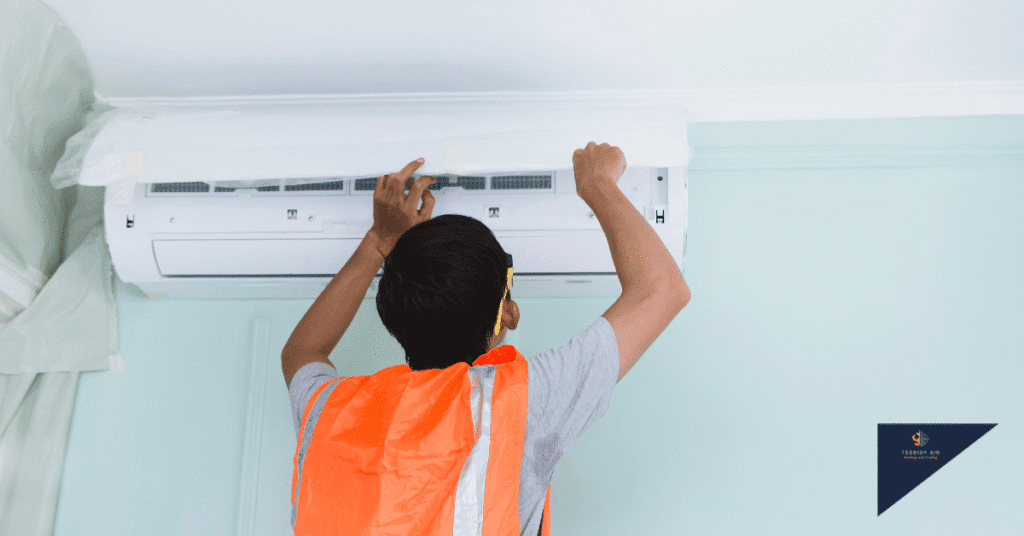
What If the AC Still Isn’t Cooling?
Sometimes, even after you reset your air conditioning unit, the AC still isn’t cooling. If your air conditioner isn’t working, it may indicate deeper problems such as:
- Dirty air filter blocking airflow.
- Low refrigerant levels.
- Faulty compressor or capacitor.
- Unit malfunctions with wiring or power to the compressor.
If the reset doesn’t work, it’s time to call a professional for air conditioning repair
Reasons Your AC Might Need a Reset
These symptoms can have several causes. They are useful details to tell a technician, rather than a reason to keep resetting the AC:
- Warm air blowing after a surge.
- Thermostat is set to “cool” but the AC still isn’t cooling.
- Unit and thermostat communication errors.
- The outdoor unit is not working properly.
If these symptoms persist, have the cause checked before trying another reset.
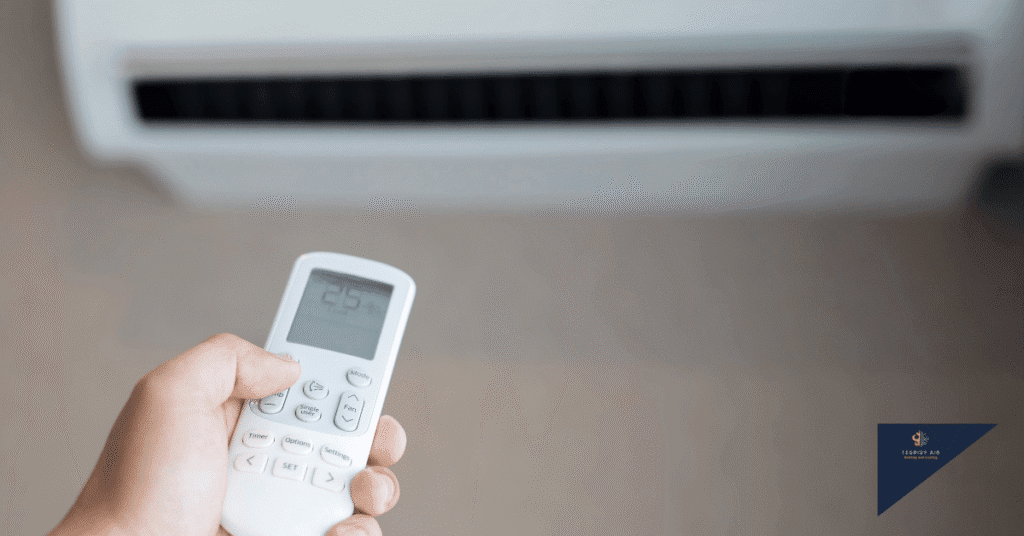
Using the Reset Button on Window AC Units
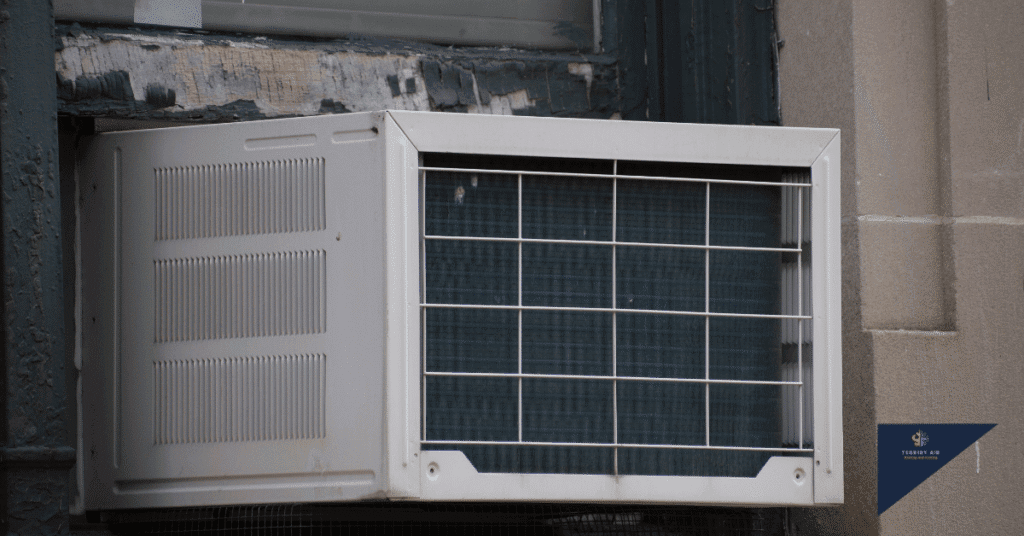
Window and portable AC controls vary by model. Use the owner’s manual for that unit’s reset instructions, including any controls on its plug. Do not apply a central-AC breaker sequence or open the unit to find a button.
If the unit’s protective control trips repeatedly, stop using it and contact the manufacturer or a qualified technician.
When to Call a Technician After Resetting
A reset does not fix every AC problem. Contact a technician if:
- The AC still isn’t working after a reset cycle.
- You notice burning smells or electrical sparks.
- Your unit malfunctions repeatedly and trips the circuit breaker.
- The system needs maintenance or repairs beyond the owner-service tasks in the manual.
A qualified technician can assess your air conditioning system and recommend any needed repairs.
Preventative Maintenance to Avoid Frequent Resets
Use the manufacturer’s maintenance schedule and owner-service instructions as your guide:
- Check, clean, or replace user-accessible air filters only as directed in the owner’s manual.
- Schedule professional maintenance as the manufacturer recommends.
- Keep the area around the outdoor unit clear of debris, following the manufacturer’s instructions.
- Leave equipment-panel removal, internal cleaning, and repair work to a qualified technician.
If a task is not clearly described for homeowners in the manual, ask a qualified technician.
Quick Reset vs. Professional Help
Sometimes, a quick reset might get your AC unit running again. But if your air conditioner unit keeps failing, resetting your unit repeatedly may hide bigger problems.
A technician can perform diagnostics, recommend repair, or suggest installation of a replacement if needed.
Learn How to Reset and Stay Cool
Before attempting a reset, check your model’s instructions and the warning signs described above. If the AC still does not work, contact the manufacturer or a trusted air conditioning repair service for guidance.
Follow the manufacturer’s maintenance instructions, and arrange professional diagnosis for repeated shutdowns or resets.
Manufacturer safety references: Carrier’s electrical troubleshooting guidance, LG’s panel-and-guard safety warnings. Follow the instructions for your own equipment model; these references are not a model-specific reset procedure.