

Understanding the tonnage of your AC unit helps you confirm whether your HVAC system is properly sized to cool your home.
How do I find the tonnage of my AC?
Tonnage describes the cooling capacity of the air conditioner, and knowing this number helps you select the right AC when planning installation, repair, or cleaning. Most people in Kenner and southern Louisiana rely on cooling throughout the year, so having the correct AC tonnage prevents wasted energy and discomfort.
When the size is correct, your AC unit keeps your home comfortable without working too hard. If the tonnage is too low, the AC struggles to cool, especially during humid months. If the unit has too many tons, it may short cycle and cause uneven temperatures, poor humidity control, and higher costs. Finding the tonnage of your ac unit may seem confusing at first, but the information is simple once you know where to look.
In this guide, we explain how to find the tonnage, why the size matters, and what to do if your current hvac unit is improperly sized.
What Is AC Tonnage?
Tonnage measures how much cooling an air conditioner can produce. In hvac terms, one ton equals 12,000 BTU (British thermal units) of cooling per hour. So, a 3 tons unit cools approximately 36,000 BTU. The air conditioner size depends on the square footage, insulation, number of windows, layout, and local climate.
Louisiana’s humidity means the btu rating and hvac tonnage matter even more because the ac unit must remove excess moisture as it cools. The tonnage describes the cooling capacity needed to keep your space balanced.
Why Does AC Tonnage Matter?
Tonnage affects the performance of your ac system. The right size helps maintain comfort, saves energy, and extends your equipment life. The wrong tonnage can lead to repair issues, high bills, and moisture problems.
A properly sized hvac unit:
- Keeps stable temperatures
- Removes humidity
- Avoids long run times
- Reduces wear
- Helps keep your home comfortable
An oversized unit cycles quickly, leaving humidity behind. An undersized unit may struggle to cool your home.
Where To Find AC Tonnage On Your Unit
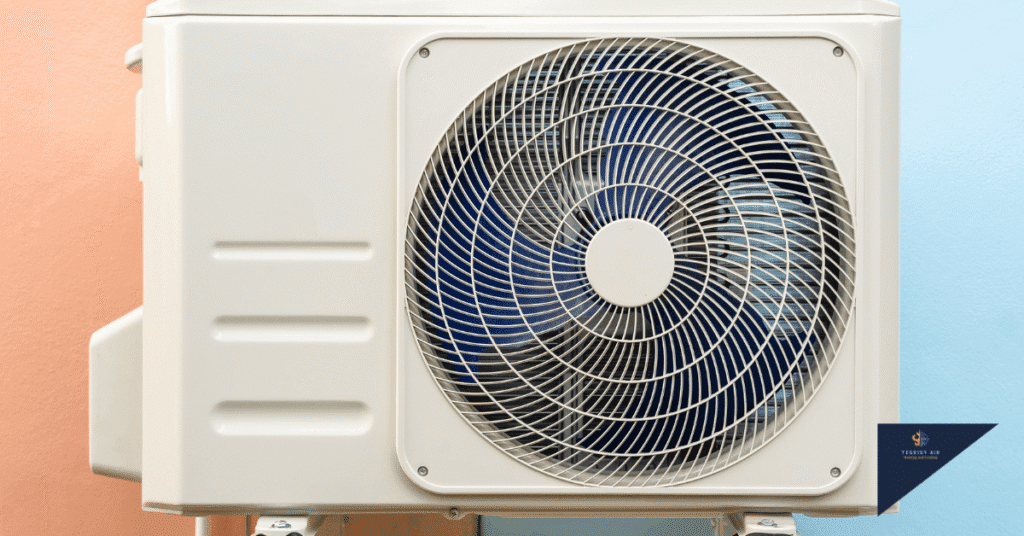
The easiest way to determine the tonnage is by checking the outdoor condenser unit. The model number on the nameplate usually shows the two-digit number representing BTUs per 1,000. You can find this on:
- Metal nameplate
- Sticker on side panel
- Manufacturer label
- Model and serial number
Look for a two-digit number between 18 and 60 in the model number. That number typically indicates capacity.
Examples:
- 18 → 1.5 tons
- 24 → 2 tons
- 36 → 3 tons
- 48 → 4 tons
- 60 → 5 tons
You can also calculate the tonnage using:
BTU ÷ 12,000
If your model shows 36, then that equals 36,000 BTUs, or 3 tons.

How To Decode A Model Number
Example: GSX160361
036 = 36,000 BTU → 3 tons
Another example: LRA1248JT
48 = 48,000 BTU → 4 tons
Nearly all manufacturers follow similar formatting. If you have trouble reading the model number, take a photo, zoom in, or search the air conditioner’s model number online.
Other Ways To Find AC Tonnage
If your model number is damaged or unreadable, try:
- Owner’s manual
- Installation invoice
- Search model online
- Ask manufacturer
- Ask local hvac technician
A technician can verify sizing during cleaning, repair, or maintenance.
What If You Can’t Find A Label?
Weather can fade labels, especially on the outdoor unit. A professional can evaluate the hvac unit internally and confirm ac tonnage. This ensures whether your current unit may be properly sized for your home.
Signs Your AC Might Be Poorly Sized
The wrong tonnage affects comfort and performance.
If the tonnage is too small:
- Constant running
- Hot spots
- Higher energy bills
- Difficulty cooling
If the tonnage is too large:
- Short cycling
- Humidity problems
- Uneven temperatures
How Professionals Determine Correct AC Tonnage
To help you determine the tonnage of your ac unit or the right ac unit for your home, technicians perform a Manual J load calculation. This considers:
- Square footage
- Number of occupants
- Number of windows
- Ceiling height
- Sun exposure
- Construction
- Heating and cooling needs
This helps find the best size so the unit does not struggle to cool your home.
Approximate AC Tonnage By Home Size
Estimates by square footage:
- 600–900 sq ft → 1.5 tons
- 900–1200 sq ft → 2 tons
- 1200–1500 sq ft → 2.5 tons
- 1500–1800 sq ft → 3 tons
- 1800–2100 sq ft → 3.5 tons
- 2100–2400 sq ft → 4 tons
- 2400–2700 sq ft → 4.5 tons
- 2700+ sq ft → 5 tons
These help you find how many tons you may need, but load calculation is always better.
Common Misconceptions About AC Tonnage
- Bigger does not mean better
- More tonnage doesn’t cool faster
- Smaller ac unit doesn’t save long-term
Selecting the correct tonnage or btu rating ensures proper performance.
When Should You Upgrade Your AC?
Even with the right tonnage of your unit, older systems can lose efficiency. Consider replacement if:
- Bills increase
- Frequent repair calls
- Indoor humidity stays high
- Cooling is inconsistent
A new ac unit with the correct ton ac or 2-ton ac unit can better keep your home comfortable.
Why Work With Tegridy Air
Tegridy Air in Kenner offers:
- Correct ac sizing
- Repair
- Replacement
- Maintenance
- System installation
- Honest recommendations
We make sure your hvac unit is properly sized so your home stays cool.
Final Tips For Finding Your AC Tonnage
- Check the condenser unit
- Look for a two-digit number
- Convert to tons
- Use a tonnage calculator
- Ask a professional if unsure
Correct ac sizing protects comfort and efficiency throughout Louisiana’s hot season.
Conclusion
Understanding ac tonnage helps you choose the right hvac system for your home. You can confirm sizing using your model number, a tonnage calculator, or a professional inspection. Proper air conditioner size helps your unit cool effectively, manage humidity, and avoid overworking the equipment.
If your current unit feels off, or you want a new air conditioner sized correctly, Tegridy Air can help.