
By Scott Gieseler · Published · Updated
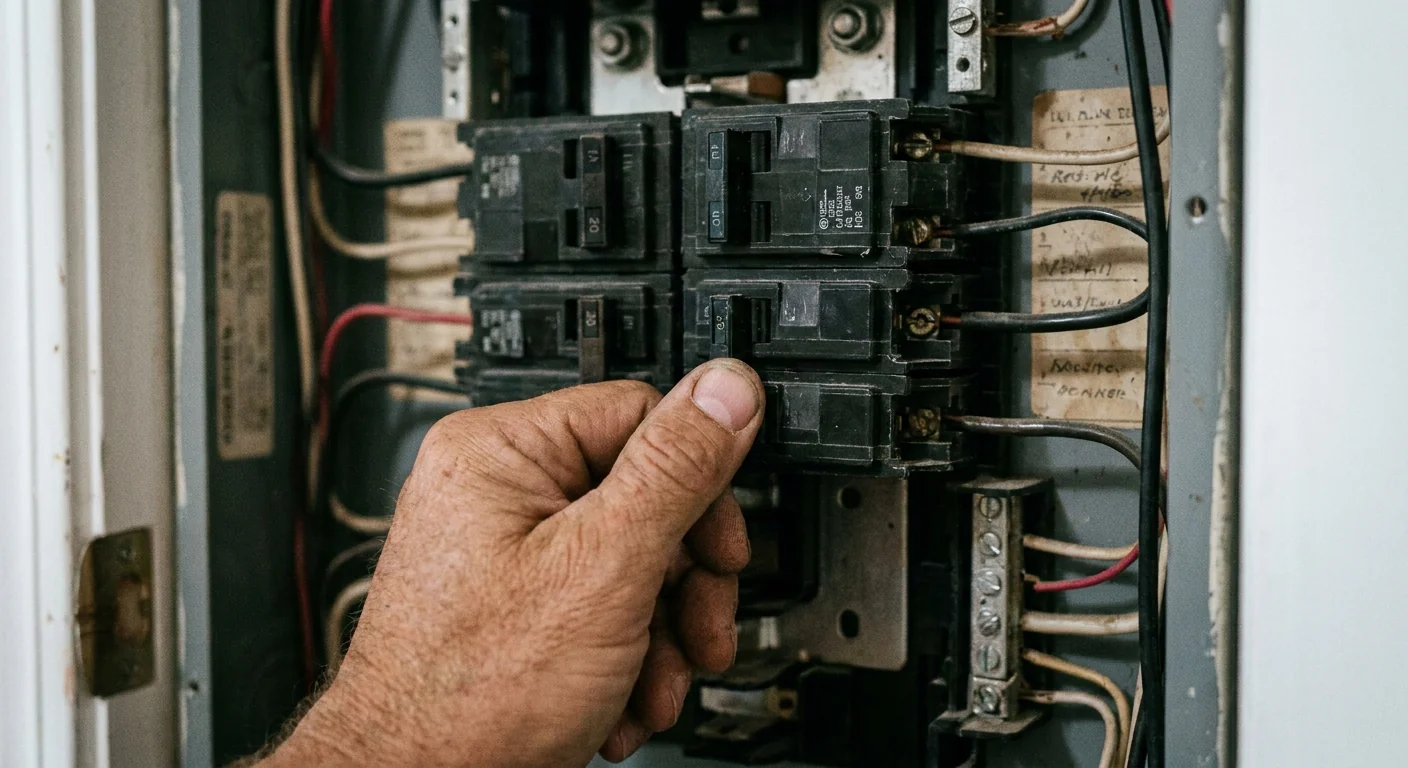
If your AC keeps tripping the breaker, it needs professional attention. Set the thermostat to Off and leave the AC off until a qualified HVAC technician or electrician checks the cause. Do not keep resetting the breaker.
Homeowners notice the breaker flipping as soon as the thermostat calls for cooling. The unit stops, the lights stay on, and the house gets hotter fast. In the heat of a Louisiana summer, that can feel urgent. The problem is rarely something you can fix with a screwdriver alone.
Tegridy Air sees this issue often in Kenner and Metairie homes. The symptoms are the same whether the house is a new build or an older ranch. Understanding why the breaker trips helps you decide when to call a pro and what to expect.
How a Circuit Breaker Protects Your Home
A breaker interrupts excessive current to help protect wiring from overheating and fire. Its response depends on how much current is flowing and for how long. Brief motor-starting current can exceed the breaker’s amp rating without causing a trip.
AC units have three main electrical loads: the compressor, the fan motor, and the control circuit. Each load draws a specific amount of current. The compressor usually uses the most power, especially at start-up.
When the start-up current is higher than normal, the breaker may see it as an overload. This can happen if the compressor is hard to start or if the fan motor is stuck. An overload trip may be delayed; a high-current short circuit can cause a much faster trip.
Older breakers can also become worn and trip at lower currents. That is a separate issue that still requires a qualified electrician. In most cases, the AC itself is the source of the problem.
Electrical Problems That Cause Tripping
Several electrical faults can contribute to breaker trips, including short circuits, capacitor failures, and contactor problems. Their effects depend on the type of failure.
A short circuit creates an unintended path for current around the normal load. Faults can occur between live conductors or from a live conductor to grounded metal, and can produce enough current for a rapid breaker trip.
Start and run capacitors help certain compressor and fan motors start or run properly. A failed capacitor can prevent a motor from starting or cause abnormal operation. A faulty contactor can interrupt power or cause poor electrical contact.
Wiring issues inside the indoor air handler can also cause trouble. Loose connections can overheat even when current is too low to trip a conventional breaker. They require professional repair.
- Shorted wires or damaged insulation
- Failed start or run capacitor
- Bad contactor or relay
- Loose or corroded connections
Mechanical Issues That Increase Electrical Load
Mechanical problems often show up as electrical symptoms. When the compressor or fan motor has to work harder, it pulls more amps.
Low refrigerant can reduce cooling and cause compressor overheating, but it does not necessarily increase current draw. A technician must diagnose the cause of a breaker trip rather than assume the system needs refrigerant.
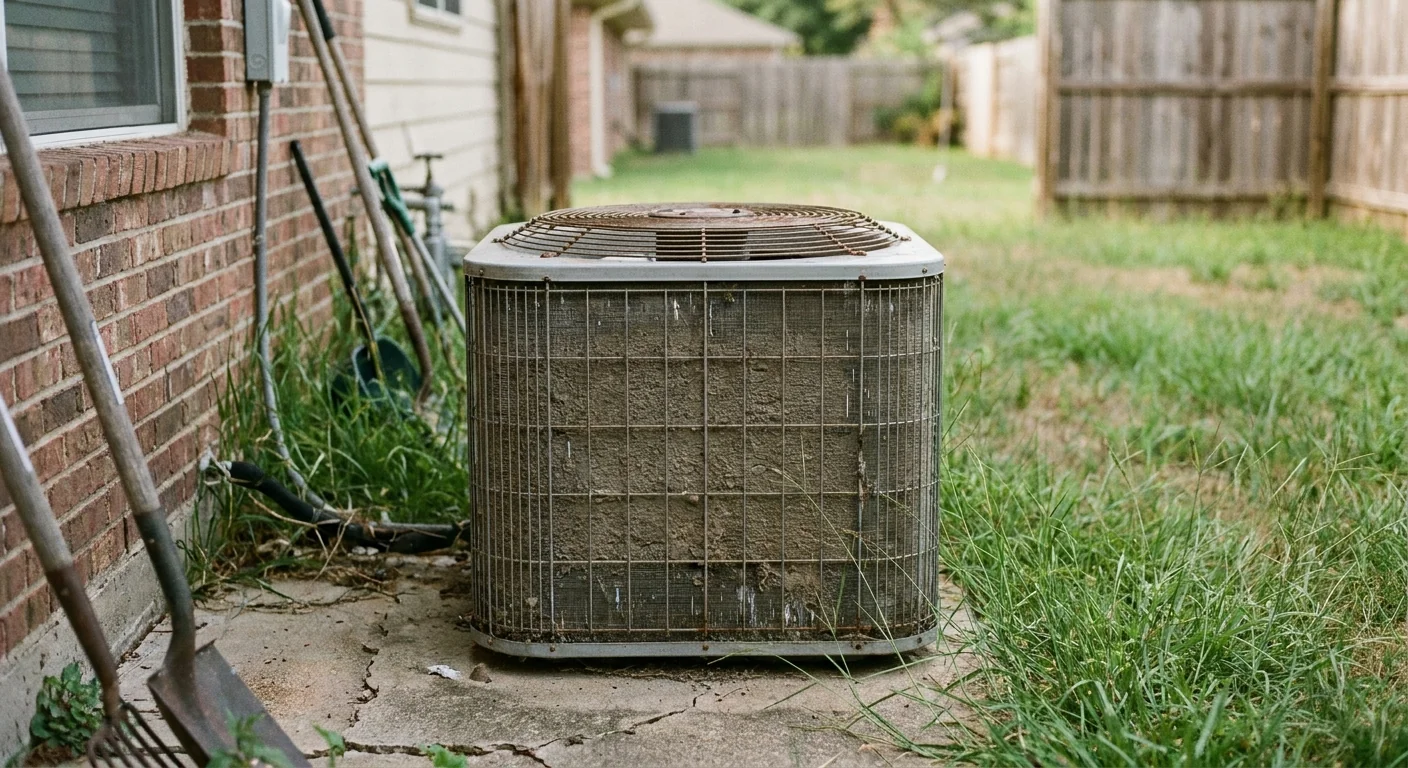
Debris blocking airflow through the outdoor coil can raise refrigerant pressure and increase compressor load. Debris that physically obstructs a fan can also damage or overload its motor.
A compressor that struggles to start can draw high current and trip a protective device. A technician should check the power supply, starting components, and compressor before deciding whether a manufacturer-approved starting aid is appropriate.
- Compressor mechanical damage
- Clogged condenser coil
- Worn fan motor bearings
- Failed start capacitor
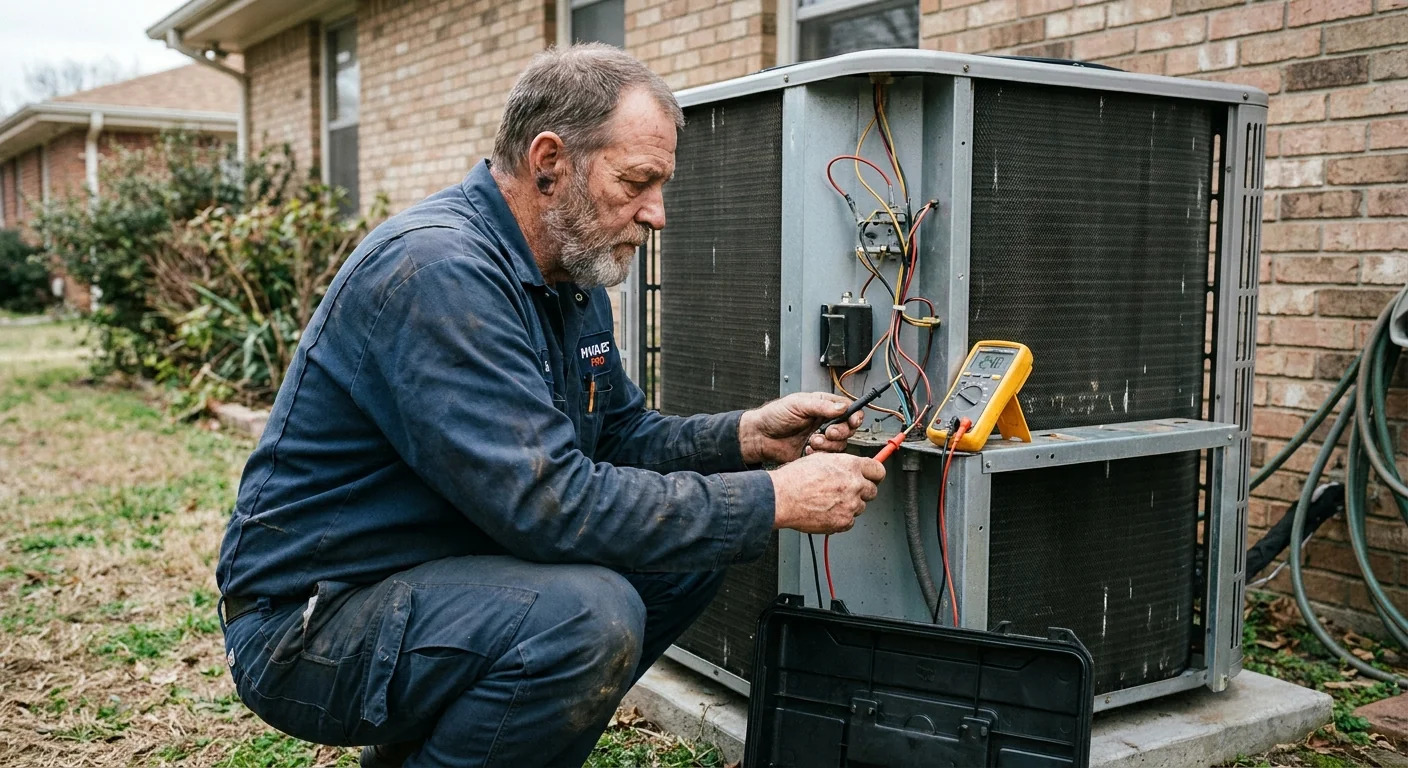
Basic Checks You Can Do Before Calling a Technician
If the breaker has tripped repeatedly, keep the AC off and call a qualified HVAC technician or electrician. Do not reset it again to test the system.
From outside the cabinet, note any leaves or debris around the outdoor unit. Keep your hands and tools out of the grille, and do not try to spin the fan blades. Leave internal checks to a qualified technician.
If your owner’s manual provides a safe, accessible filter-check procedure, follow it with the system off. Do not open electrical compartments. Leave the filter check to a technician if you are unsure.
Tell the technician about any humming, rattling, or grinding you noticed before the system stopped. Do not restart the AC just to reproduce a noise.
Do not open the disconnect box, take voltage readings, or handle capacitors or contactors. Capacitors can retain a dangerous electrical charge even with power off. A qualified technician should carry out electrical testing and repairs.
When to Call a Pro and What the Service Looks Like
Repeated breaker trips require a qualified HVAC technician or electrician. Keep the system off until the cause has been checked.
During the diagnostic, the tech checks voltage, amps, and resistance on each component. They also look for refrigerant leaks and verify proper pressure.
Based on the findings, the repair may involve one or more of the following parts. The cost ranges reflect typical installed prices in the Greater New Orleans area.
- Capacitor or contactor replacement: $200-$450
- Fan/blower motor replacement: $450-$1,200
- Compressor replacement: $1,800-$2,900
- Refrigerant leak repair (labor plus refrigerant): $400-$900 plus $125-$225 per pound
- Dispatch fee in Greater New Orleans: $109. Repairs are quoted after diagnosis.
- Repair labor and parts: included in the quoted repair scope.
These figures are estimates. The exact price depends on the model, the extent of the problem, and any additional parts needed.
Our maintenance plan is $25 per month or $300 per year and includes two service visits and a 15% discount on repairs. Repair discounts do not apply to system installations. Confirm the plan terms and any separately quoted work when booking.
Preventive Steps and Ongoing Maintenance
Keeping the AC in good shape reduces electrical stress. Schedule a professional tune-up at least once a year, preferably before the summer heat hits.
Replace air filters every 1-3 months, depending on use. A clean filter protects the blower motor and improves airflow.
Consider adding a smart thermostat. It can alert you to unusual run times that may indicate a problem. The thermostat also helps you run the system only when needed, saving energy.
Inspect ductwork for leaks or poor connections. Leaky ducts waste conditioned air and can increase energy use. Tegridy Air offers duct sealing services in Kenner and Metairie.
Air purification devices, such as UV lights or high-efficiency filters, may improve indoor air quality when properly selected and installed. Have a technician confirm compatibility, airflow requirements, and any added electrical load before installation.
What to Do Next
If the AC has tripped the breaker repeatedly, leave it off and arrange a professional inspection. A qualified technician can diagnose the cause and explain the needed repair.
Call Tegridy Air or request a free quote online. We are certified and insured, and we serve Kenner, Metairie, and the surrounding South Louisiana area. Our goal is to get your AC running safely and efficiently so you can stay comfortable during the hot months.
Ready to get it handled? Call Tegridy Air at 504-414-8655 or request a free quote online. Honest answers and upfront pricing, no runaround.
Related Reading
- What AC Repair Actually Costs in Kenner – An Honest Breakdown
- Is Your AC Ready for a Louisiana Summer? Here’s What a Tune-Up Actually Includes
- AC Not Turning On? Here’s What to Check Before You Call a Technician
Frequently Asked Questions
Why does my AC trip the breaker only when it’s hot outside?
Heat makes the compressor work harder and draws more current. If the unit is already marginal, the extra load can exceed the breaker’s rating and cause a trip.
Can I replace a capacitor myself?
Capacitors store high voltage and can be dangerous. A certified and insured technician should handle replacement to ensure safety and proper sizing.
How often should I have my AC inspected to avoid breaker trips?
A yearly inspection before the cooling season is recommended. Regular maintenance catches worn parts and electrical issues before they cause trips.
Will a larger breaker solve the problem?
No. Installing a larger breaker on a circuit that draws too much current can create a fire hazard. The underlying issue must be repaired, not bypassed.
Technical references: CPSC research on electrical wiring fires, Schneider Electric’s explanation of breaker trip timing, and NIST’s study of refrigerant-charge faults. These explain general principles and do not replace diagnosis of your equipment.
Manufacturer safety references: Carrier’s electrical troubleshooting guidance, Trane’s capacitor safety guidance, LG’s panel-and-guard safety warnings. Follow the instructions for your own equipment model; these references are not a model-specific reset procedure.