
By Scott Gieseler · Published · Updated
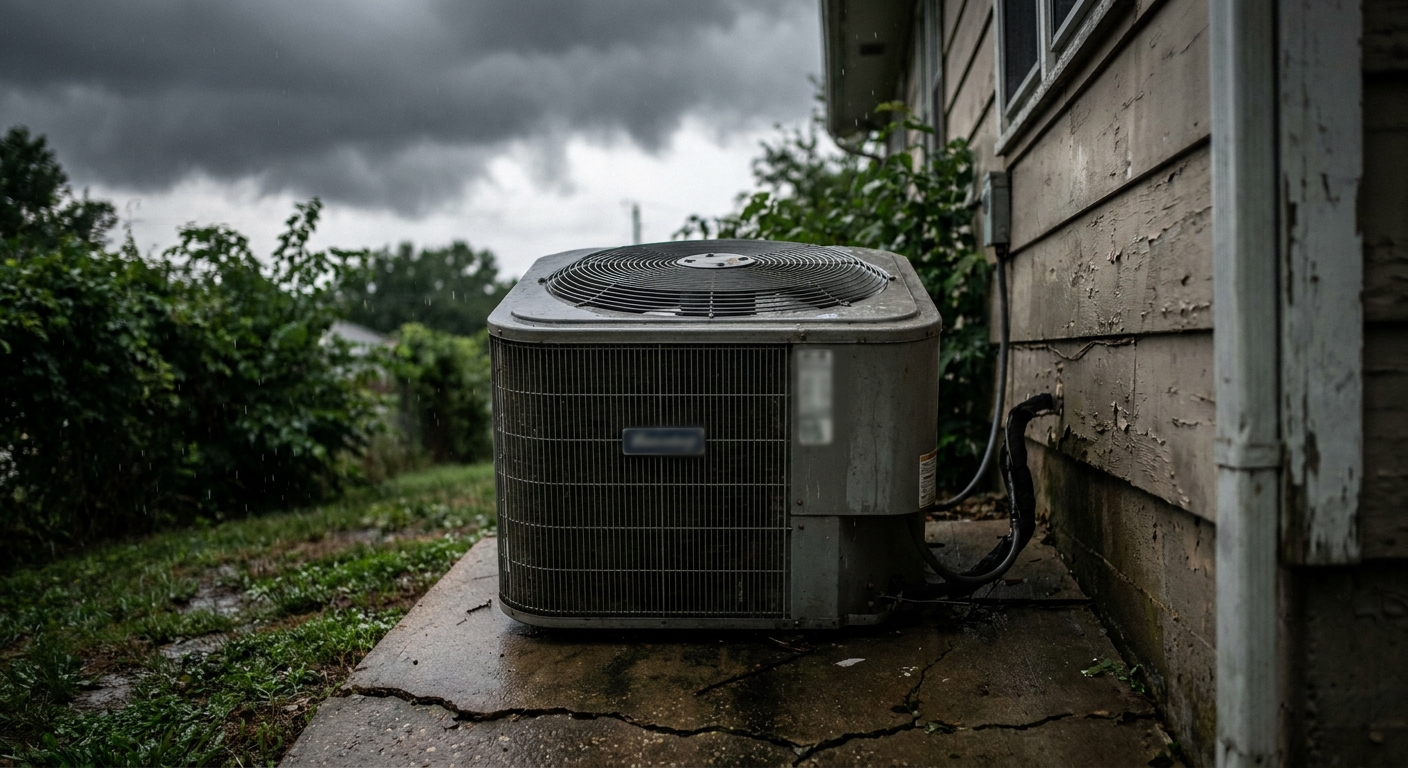
When the National Hurricane Center issues a storm watch, many homeowners in Kenner and Metairie start thinking about windows, roof shingles, and sandbags. One piece that often gets overlooked is the outdoor air-conditioner condenser, which sits low on a concrete pad and can become a direct target for flood water and wind-driven debris. If you’ve noticed water collecting around the base of your unit after a heavy rain, or you’re hearing rattling noises as a storm approaches, those are clear signs that your AC needs attention before the next hurricane makes landfall.
Storm preparation can reduce avoidable damage, but it cannot guarantee that an AC will survive a hurricane or flooding. The checks below separate safe exterior observations from work that needs a qualified contractor. Complete preparations while conditions are safe and follow local emergency instructions.
Inspect the Condenser for Flood Risk
While conditions are safe, look from outside the unit for pooling water, cracks or erosion around the pad, and blocked drainage. Report these to a qualified contractor. Keep loose debris and vegetation clear without moving the equipment or improvising barriers that could obstruct airflow or drainage.
Keep service panels closed. Do not touch wiring, tighten electrical connections, or brush or spray internal components. Record visible exterior corrosion or damage and have a qualified HVAC technician inspect the electrical and refrigerant components.
Finally, make a note of any visible damage such as bent fins, cracked fan blades, or loose mounting bolts. These issues are often easy to fix before a storm, but if left unchecked they can become points of failure when high winds hit. Documenting the condition now gives you a clear baseline to compare after the event, and it helps a technician focus on the most vulnerable parts during a service call.
Elevate or Shield the Unit From Wind and Debris
A qualified contractor should assess the condenser’s support, anchoring, and flood exposure. The required elevation and support depend on the site, flood risk, local requirements, and equipment instructions; a few inches or loose blocks under the pad are not a reliable flood-protection design. Do not lift or move a connected unit yourself.
Any protective barrier must meet the equipment manufacturer’s clearance and airflow requirements and local installation requirements. Do not improvise a fence or cover close to the unit; ask a qualified contractor to assess a suitable design.
From outside the cabinet, note loose-looking supports or shifted equipment and arrange a contractor inspection. Leave anchoring repairs, relocation, and torque checks to a qualified installer using the equipment specifications.
Check Refrigerant Levels and Seal Leaks
Poor cooling may have several causes. Have a qualified HVAC technician assess refrigerant charge and investigate suspected leaks. Connecting refrigerant gauges and adding refrigerant are professional service tasks; do not open lines or adjust fittings yourself.
An unusual pressure reading alone does not establish a refrigerant leak. Airflow, operating temperatures, refrigerant charge, and other faults can affect readings. A qualified technician should use the equipment manufacturer’s diagnostic procedures and a suitable leak-detection method before recommending a leak repair or refrigerant adjustment.
Because refrigerant prices have risen, it’s helpful to know the cost before the repair. The material cost for refrigerant in the New Orleans area runs between $125 and $225 per pound, with newer blends like R-454B at the higher end. Labor for a leak repair typically falls in the $400-$900 range, plus the refrigerant itself. Knowing these numbers lets you budget for the service and decide whether to combine the repair with a seasonal tune-up.
Clean Coils and Verify Airflow (Cost Overview)
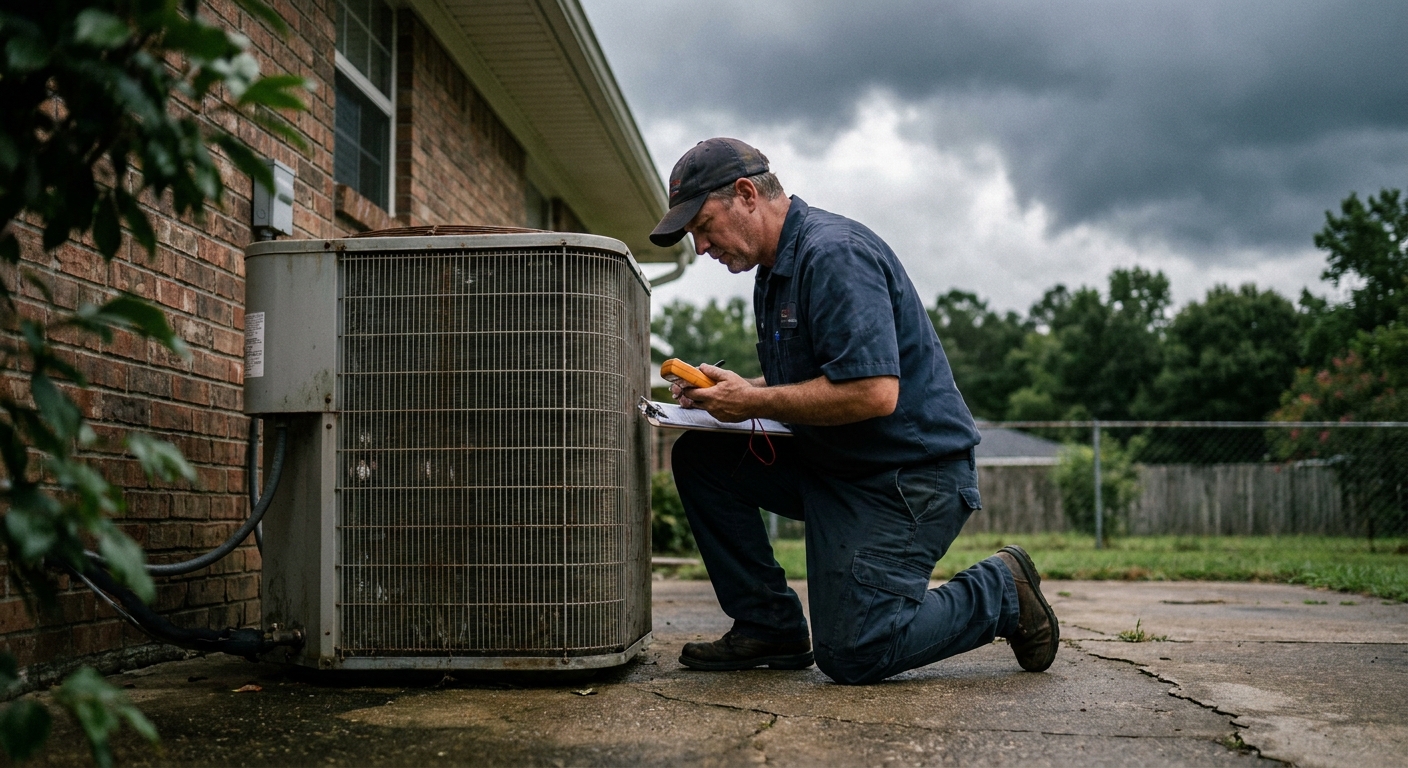
Dirt and debris on condenser coils can restrict airflow and reduce heat transfer. Note visible buildup or discoloration from outside the cabinet, but do not diagnose algae or mold by color alone. Have a qualified technician determine whether cleaning is needed and choose a method suitable for the coil.
Keep hands and tools out of the fan grille and leave guards in place. Do not spin the fan by hand. Clear only loose debris from the surrounding ground when conditions are safe, and have a qualified technician clean inside the unit and check the fan.
Tegridy Air’s published dispatch fee for Greater New Orleans is $109. Repair pricing is quoted after diagnosis and before the repair proceeds.
Test Controls, Thermostat Settings and Backup Power
Follow the equipment manufacturer’s severe-weather shutdown instructions while conditions are safe. A thermostat’s Fan Auto setting controls fan operation; it is not storm protection. Do not handle wet electrical controls or approach the equipment during dangerous weather.
Have an electrician and qualified HVAC technician assess any backup-power system, including capacity, compatibility, and safe transfer equipment. Do not improvise connections or assume a small UPS makes HVAC controls or safety devices safe to operate during an outage.
Arrange operational checks before severe weather arrives, while conditions are safe. A storm watch is not an instruction to start or restart the AC. Follow the manufacturer’s shutdown guidance and local emergency instructions; do not delay evacuation for equipment checks. If you notice new abnormal noises during normal operation, arrange professional assessment rather than repeatedly test-running the system.
Plan for Post-Storm Service and Repairs
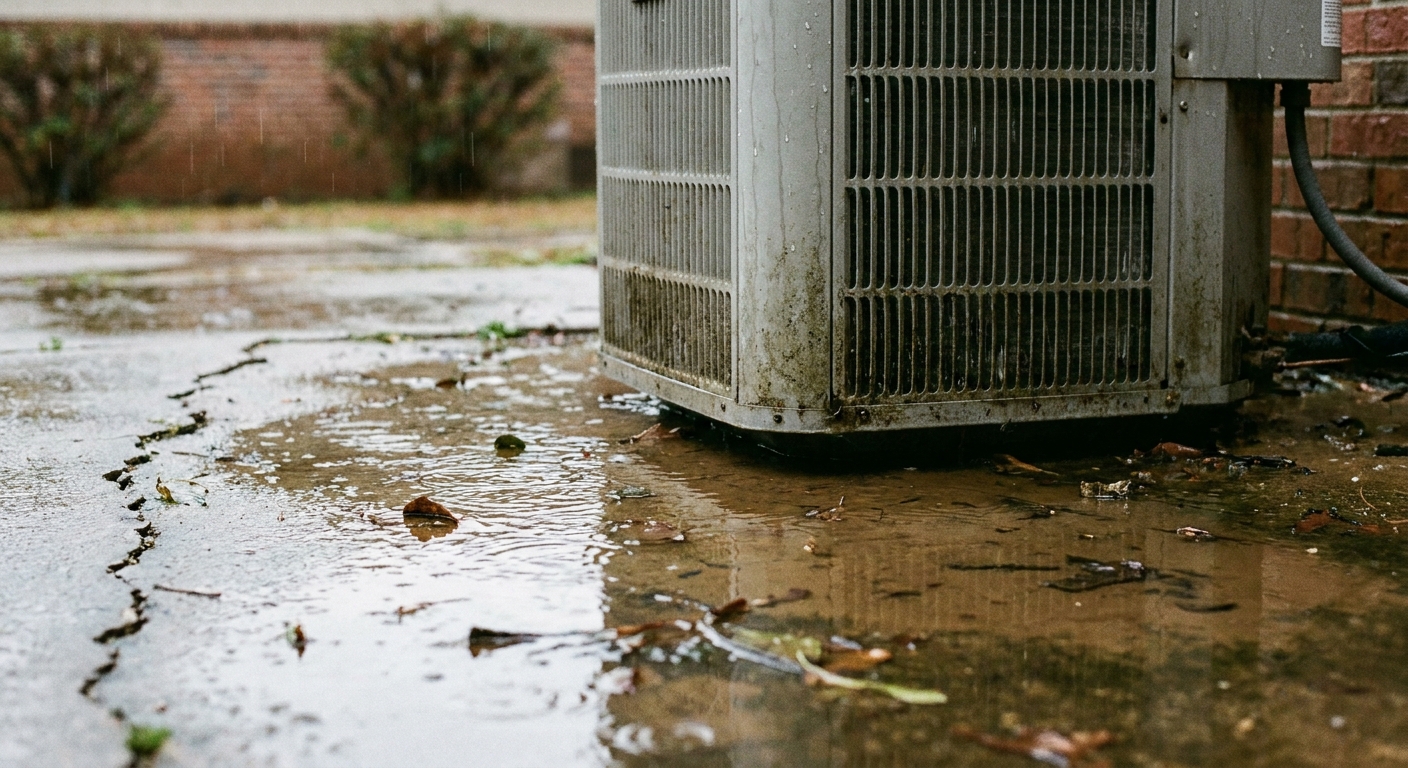
A hurricane can cause hidden electrical or mechanical damage. Wait until local authorities say it is safe to go outside, and make exterior observations only from a safe, dry location. The rain stopping or the cabinet looking dry does not establish that the equipment is safe to run. If flooding or damage is suspected, keep it off for professional assessment.
Our maintenance plan is $25 per month or $300 per year and includes two service visits and a 15% discount on repairs. Repair discounts do not apply to system installations. Confirm the plan terms and any separately quoted work when booking.
If major components need replacement, ask about the possibility of bundling the repair with an upgrade, such as a higher-efficiency air filter, duct sealing, or a smart thermostat. Filtration can supplement efforts to improve indoor air quality, but it does not replace drying, moisture repairs, or removal of mold-contaminated material after a storm. A qualified HVAC professional can provide a written estimate that outlines parts, labor, and any additional services you might want.
What to Do After the Storm
If floodwater reached the equipment, keep the AC off until a qualified professional assesses it. Waiting 24 hours or seeing a dry cabinet does not establish that the system is safe. Do not approach wet electrical equipment or enter standing water to reach a switch.
From a safe, dry location, look for flood marks, shifted equipment, damaged lines, or branches on the unit. Do not open panels or the disconnect box, reach through the grille, or touch wiring. Leave trapped debris and electrical checks to a professional.
After an ordinary power outage with no flood exposure, damage, or electrical warning sign, follow the equipment manual and its compressor protection delay once utility power is stable. Do not repeatedly reset a tripped breaker. Stop cooling if the system makes new loud noises, smells burnt, or repeatedly fails to start.
See our storm restart safety guide for the distinction between normal rain and flooding. Tegridy Air’s published dispatch fee for Greater New Orleans is $109. Repair pricing is quoted after diagnosis and before the repair proceeds.
Final Thoughts
Preparing your outdoor AC unit for hurricane season starts with assessing flood risk, wind exposure, and equipment condition. The work needed depends on the site and system. These checks can reduce avoidable damage, but they cannot guarantee storm protection or that the AC will be safe to run when power returns.
If you prefer to have a local, family-run team handle the inspection, repair, or a full seasonal tune-up, we’re ready to schedule a visit. A qualified technician can verify that the condenser is secure, the refrigerant charge is correct, and the system will run efficiently when you need it most.
Need honest HVAC help in Kenner, Metairie, or anywhere across the Greater New Orleans area? Call Tegridy Air at 504-414-8655 or request a free quote online – we’ll get you comfortable fast.
Related Reading
- Repair or Replace Your AC? Honest Cost Breakdown for New Orleans Homeowners
- How Often Should You Change Your HVAC Filter
Frequently Asked Questions
How can I tell if my condenser has taken on water after a storm?
From a safe, dry location, look for flood marks, displaced equipment, or visible exterior damage. Do not open service panels or electrical boxes. If flooding may have reached the equipment, keep it off and arrange a professional assessment.
Is it safe to run my AC if the power comes back on after a hurricane?
After flooding, keep the system off until a qualified professional assesses it; waiting for it to dry is not enough. After an ordinary outage with no water intrusion, damage, or electrical warning sign, follow the equipment manual once power is stable.
What maintenance tasks should I do before hurricane season begins?
Before severe weather, check thermostat settings and observe the equipment exterior from a safe location. Have a qualified contractor handle internal coil cleaning, anchoring, refrigerant pressure checks, and any flood-protection changes.
Can I install a generator to keep my AC running during a power outage?
A properly sized generator may power the HVAC system through professionally installed transfer equipment. Have an electrician and qualified HVAC technician confirm compatibility. Portable generators must stay outdoors, at least 20 feet from homes, with exhaust directed away from buildings and openings. Never run one in a home, garage, or shed, even with doors open, and keep working carbon monoxide alarms in the home.
Safety references: LG equipment safety precautions; FEMA flood-protection guidance; EPA refrigerant-technician requirements; CPSC generator and carbon monoxide safety; Carrier diagnostic guidance (model-specific); Carrier coil guidance; Trane storm preparation; EPA air-cleaning guidance; EPA mold guidance. Follow your own equipment’s manual; these references do not provide a universal procedure for every model.