
By Scott Gieseler · Published · Updated
Start with the ducts you have. If an older New Orleans-area home has no usable ductwork, ductless mini-splits can avoid the disruption of adding it. If existing ducts are properly sized, sealed, and insulated, a ducted replacement may be the better value. Either can serve a whole house; compare room-by-room comfort, humidity control, and complete installed quotes before choosing.
Comparing options for a Greater New Orleans home? Skip the phone call and book online, or call (504) 414-8655 to discuss your existing system and the rooms you need to condition.
The Attic Problem: Where Local Ductwork Loses Efficiency
Ducts in a hot, unconditioned attic can gain heat and lose conditioned air through leaks. ENERGY STAR estimates that a typical home loses about 20–30% of the air moving through its duct system through leaks, holes, and poor connections. That is an air-leakage estimate, not a guaranteed percentage of your energy bill. Your home needs its own inspection.
Before reusing ducts, have a contractor check leakage, insulation, sizing, and airflow to each room. Sealing a leak and insulating a duct address different problems. A new high-efficiency unit cannot correct a poorly performing distribution system by itself.
The comparison below covers installation, zoning, maintenance, and the questions to ask before requesting a quote. For a humid-climate home, also ask how the proposed system will remove moisture when the cooling load is low.
What is a Ducted HVAC System and How Does It Work?
A ducted HVAC system moves conditioned air through supply ducts and returns indoor air to a central blower through return grilles and ducts. It may use an air conditioner with a furnace or a heat pump that provides both heating and cooling. “Ducted” describes air distribution, not the type of heat source.
The indoor equipment is usually in an attic, closet, or other service space. Supply registers and return grilles remain visible in the rooms. A good duct design can serve a small or large home; house size alone does not decide whether ducted is best.
Keep filters, coils, and drains maintained, and repair duct leaks when found. Routine duct cleaning is a separate question: EPA recommends cleaning ducts only as needed, rather than treating it as automatic annual maintenance. Ask for evidence of contamination and correction of its cause.
What is a Ductless HVAC System?
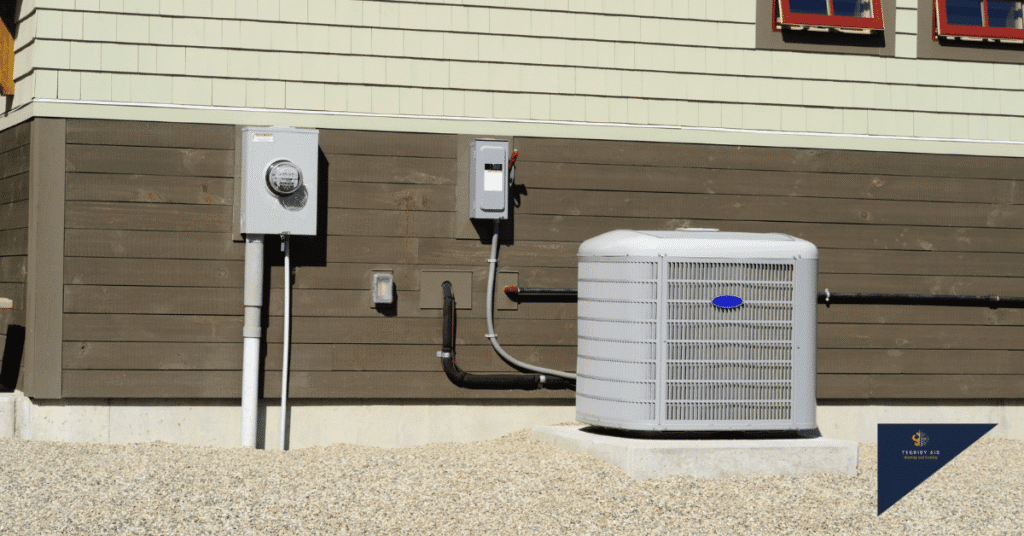
A ductless mini-split delivers conditioned air from indoor units connected to an outdoor unit by refrigerant lines. Wall-mounted, ceiling-recessed, and floor-mounted indoor options are available. Heat-pump models heat and cool; cooling-only models do not provide winter heat.
Each indoor unit serves a room or zone with its own temperature control, within the equipment’s operating limits. This can suit additions, homes without ducts, or households that want different settings in different areas. Closed bedrooms and separate floors need to be included in the layout.
Avoiding new ducts can reduce construction, but installation still needs refrigerant piping, electrical work, and condensate drainage. Cost and complexity depend on the number of zones, access, and the equipment selected. Each indoor unit also adds a filter and components to maintain.
Advantages of Ductless Mini-Split Systems
- Energy efficiency: No supply or return ducts means no air-distribution losses through ductwork. Actual savings depend on the equipment and installation.
- Zoned control: Set temperatures for individual served rooms or areas, rather than relying on one thermostat for the whole house.
- Less construction: Avoid opening walls or ceilings for a new full-size duct network where one does not exist.
- Older homes: A practical option when adding or extending ducts would be difficult.
Those strengths make ductless appealing for families who want flexibility.
Advantages of Ducted Air Conditioning Systems
- Whole-home comfort: A properly designed and balanced duct system distributes conditioned air to the rooms it serves.
- Aesthetics: Only vents are visible; no wall-mounted ductless air conditioners.
- Existing infrastructure: Reusing serviceable ducts may reduce the work involved in replacing a central system.
Ducted systems can accommodate central filtration when the filter and blower are compatible. Filtration can help reduce airborne particles, but it does not remove every pollutant or replace moisture control and appropriate ventilation.
Pros and Cons of Ductless Heat Pumps
Pros of Ductless
- Independent zoning for comfort.
- Potential energy savings by avoiding duct losses.
- No duct network to inspect, seal, or repair.
Cons of Ductless
- Several indoor units can make a whole-house installation costly; compare complete quotes.
- Indoor units remain visible and need accessible service locations.
- Every indoor unit has filters, a coil, and a condensate drain that need attention.
Pros and Cons of Ducted Heat Pumps
Pros of Ducted
- Whole-home heating and cooling through one designed distribution network.
- Can accommodate compatible central filtration and, when needed, dedicated dehumidification.
- Can reuse existing duct routes in a suitable home.
Cons of Ducted
- Leaks in ducts waste energy.
- Adding ducts to a home without them can require substantial labor and space.
- Concealed ducts may be difficult to inspect or repair.
What is the Difference Between Ducted and Ductless Systems?
The difference between ducted and ductless comes down to distribution:
- Ducted heat pump: A central blower distributes heated or cooled air through ducts.
- Ductless heat pump: Indoor units deliver heated or cooled air directly into their zones.
- Whole-home coverage: Either approach can work, provided every room has the capacity and air distribution it needs.
Compare the home’s layout and existing infrastructure before choosing a distribution type. A hybrid layout, such as central air plus a ductless unit for an addition, may also be worth pricing.
How Do Ductless Heat Pumps Work in Practice?
Heat pumps are a type of heating system that can cool and heat by transferring energy. A ductless heat pump connects one outdoor unit to one or more indoor air handling units.
In cooling mode, the indoor coil can remove moisture as well as heat. That does not guarantee humidity control in every condition. Ask about sizing, low-load operation, drainage, and whether additional dehumidification is needed; oversizing can leave a home cool but clammy.
How Do Ducted Heat Pump Systems Work?
A ducted heat pump transfers heat between indoors and outdoors, then uses the duct network to distribute conditioned air. Multi-story homes need careful airflow design and may benefit from separately designed zones or systems.
Supply ducts carry conditioned air to registers, and return paths bring air back to the equipment. Unlike many ductless systems, a conventional ducted setup keeps its indoor air handler outside the living area.
Some compatible multi-split systems can combine ducted and ductless indoor units. A conventional central system usually has one matched indoor air handler per outdoor unit; extra air handlers cannot simply be added to any system.
What Are the Pros and Cons of Ducted vs Ductless Air Conditioning Systems?
- Existing usable ducts: Get a ducted replacement quote that includes any needed duct repairs.
- No ducts or a difficult addition: Price a ductless layout with the number of indoor units clearly stated.
- Appearance and upkeep: Compare visible indoor units and their service access with concealed ducts and central equipment.
- For a permanent installation, compare a properly designed ductless system with a central air conditioning system. The quote should cover the same rooms and comfort requirements.
How to Decide Which System for Your Home?
When making the choice between ducted and ductless systems, ask:
- Which rooms need heating and cooling, including bedrooms with doors closed?
- What is the complete installed price, including electrical work, drains, controls, and any duct repairs?
- Can existing ducts deliver the required airflow, and how will the system handle humidity?
Ask for a Manual J heating and cooling load calculation and an explanation of the equipment selection. Compare like-for-like coverage, warranty terms, maintenance access, and expected operating costs rather than a price per unit alone.
Comparison Table: Ducted vs Ductless
| Feature | Ducted Air Conditioning System | Ductless Mini-Split Systems |
| Installation | May reuse suitable ducts; adding new ducts increases work | No full duct network; each zone still needs piping, power, and drainage |
| Energy | Duct leakage and heat gain can reduce delivered efficiency | Avoids duct losses; performance still depends on sizing and installation |
| Aesthetics | Indoor air handler usually concealed; registers and returns visible | Indoor units visible, with several mounting styles available |
| Maintenance | Filters, coils, drains, and duct-condition checks | Filters, coils, and drains at each indoor unit |
| Best For | Homes with usable ducts or a planned duct layout | Homes without ducts, additions, or room-by-room zoning |
Why Professional Installation, Repair, and Cleaning Matter
Whether you choose ductless mini-split systems or a ducted heat pump, ongoing care is essential. Professional technicians handle:
- Installation: Calculate loads, select compatible equipment, and verify airflow, refrigerant charge, and drainage.
- Cleaning: Service filters, coils, blowers, and drains as needed; evaluate duct cleaning separately.
- Repair: Addressing leaks, electrical issues, and compressor problems.
Homeowners can follow the manual for accessible filter care and keep outdoor airflow clear. Refrigerant, electrical, and internal equipment work belongs with a qualified technician.
Ducted Heat Pumps vs Ductless Heat Pumps: What Actually Changes
Ducted and ductless heat pumps both transfer heat rather than create it by burning fuel. Air distribution is the main distinction, but equipment capacity, controls, filtration, and service requirements also vary by model.
A ducted heat pump system sends conditioned air from one central air handler through ductwork to vents in every room. A ductless heat pump skips the ducts entirely. It connects an outdoor unit straight to one or more indoor air handlers mounted on a wall or ceiling.
A ducted heat pump usually makes more sense when:
- Your home already has ductwork in decent condition.
- You want central equipment outside the living spaces, with registers and return grilles in the rooms.
- You want compatible whole-home filtration for airborne particles, with a separate plan for humidity control.
- The home’s layout allows a well-designed duct network, including during new construction.
- You have a suitable attic or closet location with safe service access; compare the equipment’s sound ratings too.
A ductless heat pump usually makes more sense when:
- The home has no usable ducts, or there is little space to add them.
- You are conditioning an addition, sunroom, garage conversion, guest suite, or rental unit.
- You want different temperatures in different rooms.
- You want to limit duct-related construction, while allowing for the piping, drains, and electrical work.
Ductless avoids duct leakage and heat gain, but there is no fixed efficiency advantage for every house. A well-sealed, insulated, correctly sized duct system can reduce those losses. Compare the efficiency ratings of the actual matched systems and the condition of the home, rather than assuming either label guarantees lower bills.
Factors that affect real-world performance include:
- Install quality and correct system sizing for the house.
- Duct condition and how well the home is insulated.
- How many zones the home actually needs.
- Filter care, coil and drain maintenance, and timely repairs.
Ductless can serve a whole house when the design covers each room and its load. Both types of heat pump can cool in humid weather, but moisture removal deserves its own design check. DOE’s hot-humid climate research explains why temperature control alone may not keep indoor humidity comfortable.
Parts of a Ductless Mini-Split System
A ductless system is a short list of parts. Knowing them makes a repair estimate much easier to follow.
- Outdoor unit: holds the compressor and moves heat into or out of the house.
- Indoor air handler: mounts on a wall or ceiling and delivers conditioned air to that room.
- Connections and drain: Refrigerant tubing, electrical/control wiring, and condensate drainage link or support the indoor and outdoor equipment.
- Remote or digital controller: sets the temperature for that zone.
These are the main components, not a complete installation parts list. Each indoor unit also needs proper condensate drainage and service access. Follow the model’s manual for filter care: some filters are washable, while others must be replaced.
Each outdoor unit has limits on compatible indoor units, combined capacity, and piping length. A larger home may need more than one outdoor unit. Ask the installer to show how the proposed combination meets each room’s load.
How Long Do Ducted and Ductless Systems Last?
There is no reliable lifespan promise for every ducted or ductless system. Installation quality, operating hours, maintenance, corrosion exposure, and repair history all matter. Use the condition and supportability of your equipment to plan replacement, rather than assuming a fixed age range guarantees more years of service.
Evaluate ducted equipment and ductwork separately. Sound, dry ducts may be reusable when equipment is replaced, but damaged, poorly sized, or contaminated sections may need repair or replacement. Keeping old ducts should follow an inspection, not an assumption that they outlast every unit.
In South Louisiana, a maintenance plan should account for long cooling seasons, moisture, drainage, and any local salt exposure. Ask about the manufacturer’s care requirements for your equipment and location.
These habits support reliable operation:
- Clean or replace each filter according to its manual; do not wash a disposable filter.
- Keep the outdoor unit clear of leaves, grass clippings, and debris.
- Schedule professional inspection and necessary cleaning before heavy seasonal use.
- Have refrigerant leaks, unusual electrical symptoms, and water leaks assessed promptly instead of repeatedly resetting a fault.
- Start with correct sizing, installation, and commissioning, including refrigerant charge and drainage checks.
If you are weighing a ducted heat pump against a ductless mini-split for a home in Kenner, Metairie, or New Orleans, our certified and insured technicians can size both options for your house before you commit. Call (504) 414-8655.
Conclusion
A well-designed ducted or ductless heat pump can provide whole-home comfort. Ductless is especially useful where ducts are absent or hard to extend; ducted can be a strong option when a serviceable distribution system is already in place.
For your next estimate, ask for the room-by-room design, a humidity-control plan, and an itemized installed price. Those details make the comparison more useful than choosing by house size or equipment style alone.