
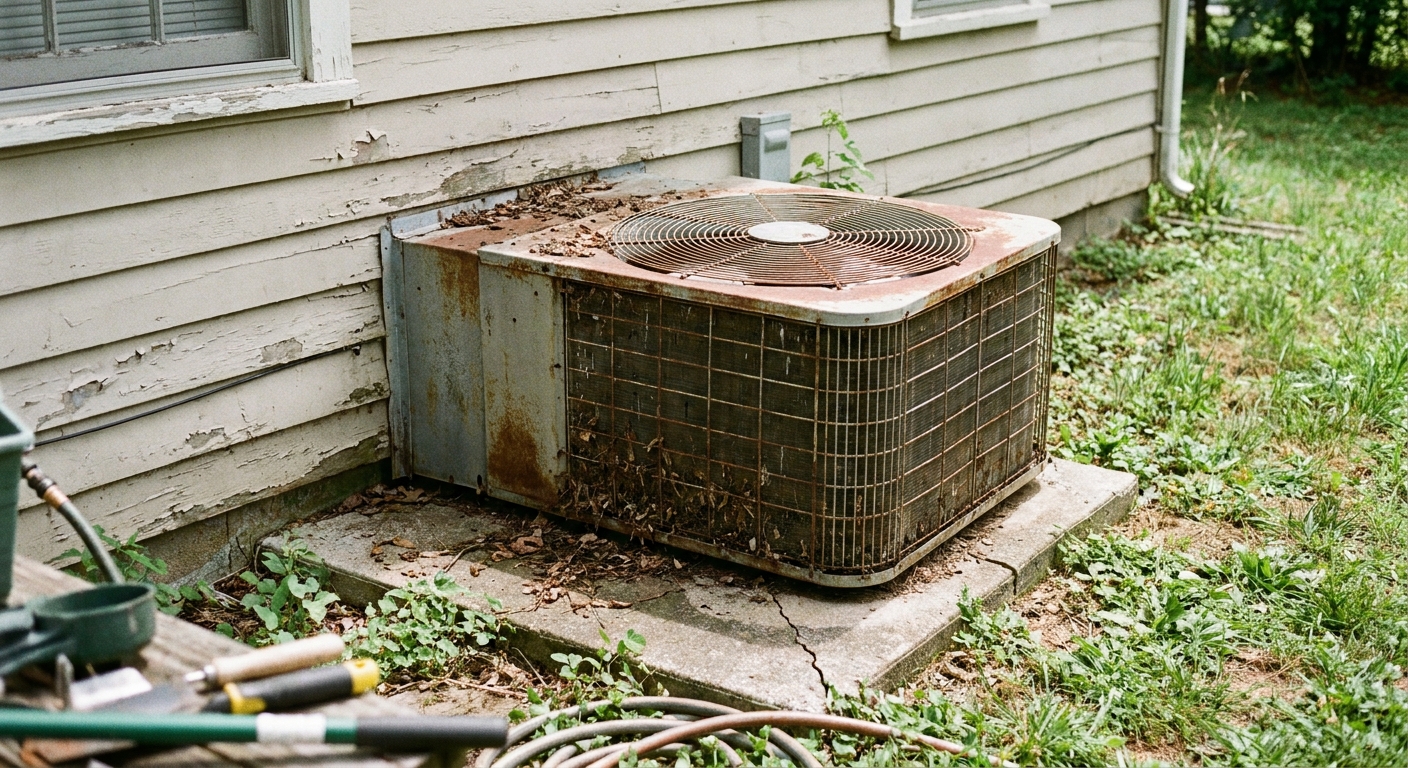
A targeted repair can make sense when the rest of your AC is in good condition. Replacement is worth comparing when failures recur, major parts are unavailable, or the written repair quote is difficult to justify against a new system. For Greater New Orleans homeowners, the decision starts with a diagnosis, warranty review, and written quotes, not age or a higher bill alone.
For homes in Kenner, Metairie, and the surrounding South Louisiana area, compare comfort and humidity control alongside upfront and operating costs. A new system still needs proper sizing and installation; replacing equipment alone does not solve every comfort problem.
The sections below explain repair cost examples, replacement scope, efficiency ratings, and questions to ask before approving work. Use the published ranges for planning; a diagnosis and current written quote establish the price for your home.
1. How to Tell If Your AC Needs a Fix or a Full Swap
Rattling, buzzing, or repeated shutdowns warrant a professional diagnosis. These symptoms can have several causes and do not identify a refrigerant leak or failed capacitor by themselves. Stop using a malfunctioning system and leave cabinet, electrical, and refrigerant checks to a qualified technician.
Next, check the age of the system. Most central air conditioners should be assessed by condition as well as age. At 12-15 years, review repair history, comfort, efficiency, and warranty coverage; age alone does not establish that a system is worn out or must be replaced.
A third clue is your energy bill itself. If you’ve noticed a steady climb in your monthly Entergy statement despite keeping the thermostat at the same temperature, compare electricity use in kWh, rates, and weather before attributing the increase to equipment wear. Higher-efficiency equipment may reduce cooling use, but the saving depends on the system being replaced, installation, and household use.
Lastly, review the repair history. Repeated failures are a reason to compare options, but review the type and cost of repairs rather than counting service calls alone. A new system still needs maintenance; compare its written warranty, installation scope, and expected operating costs with the proposed repair.
2. The True Cost of an AC Repair in Kenner and Metairie
Tegridy Air’s published dispatch fee for Greater New Orleans is $109. Repair pricing is quoted after diagnosis and before the repair proceeds.
From there, the cost of parts and labor varies by issue. Here’s a quick rundown of common repairs and their ballpark prices:
- Refrigerant leak fix: $400-$900, plus the cost of the refrigerant itself ($125-$225 per pound).
- Capacitor or relay replacement: $200-$450 for parts and labor.
- Compressor replacement: $1,800-$2,900, which is often a sign you might consider a full system swap.
- Fan motor repair: $450-$1,200, depending on the motor type — variable-speed ECM blower motors sit at the high end.
Repair pricing depends on the diagnosis, parts, access, and applicable warranty. We provide a quote before repairs proceed.
One hidden cost to watch out for is the need for additional diagnostics after a repair. If the first fix doesn’t solve the problem, you may have to go back for a second visit, which adds another service call fee. That’s why many locals opt for a comprehensive diagnostic before deciding on a repair path—especially if the unit is older and showing multiple symptoms.
3. What a New AC System Really Costs in South Louisiana
Free replacement estimates are separate from repair diagnostic visits. For planning information, see our 2026 Kenner AC replacement cost guide. Your final quote depends on the equipment and installation scope.
The quote depends on the required cooling capacity, equipment efficiency, installation scope, and optional features. Compare current equipment using its SEER2 rating and have the installer confirm applicable requirements. A load calculation should determine capacity; do not choose a 3-ton or 5-ton system from price or floor area alone.
Installation costs also include labor, permits, and any required upgrades to your electrical service. In older homes around Metairie, you might need a new 240-volt line or a dedicated circuit, which can add $500-$1,000 to the bill. If your ducts are leaky—a common issue in homes built before the 2000s—Tegridy Air can help seal or replace them for an additional $800-$2,000.
4. Efficiency Matters: SEER Ratings and Your Energy Bill
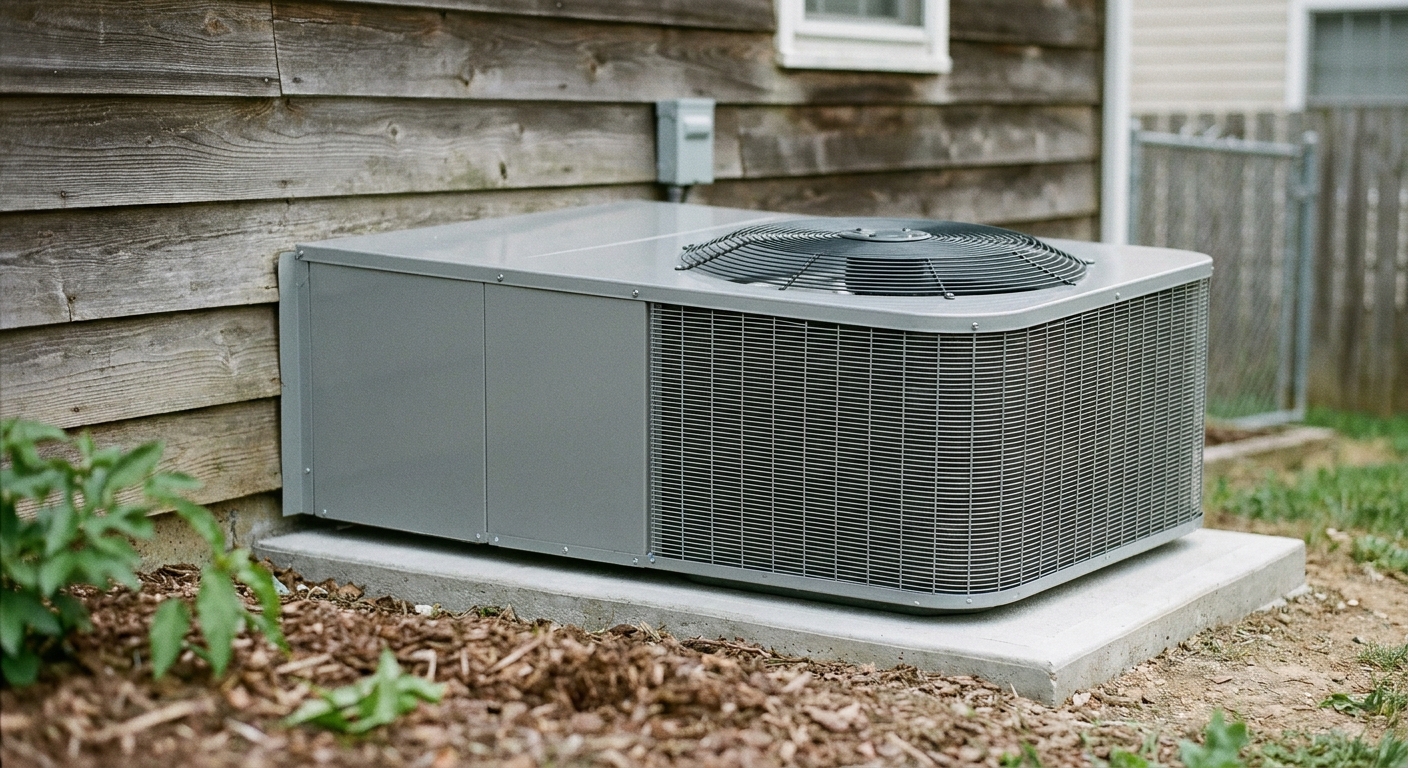
SEER stands for Seasonal Energy Efficiency Ratio: seasonal cooling output in BTUs divided by electricity use in watt-hours. Newer equipment uses SEER2, which has a different test procedure. Higher ratings indicate greater efficiency under the same test method; SEER and SEER2 numbers are not directly interchangeable.
The following are older SEER comparison ranges, not current installation requirements or promises of bill savings:
- 13-14 SEER: An older-system comparison range; use current SEER2 specifications when shopping for new equipment.
- 15-16 SEER: Higher rated efficiency than 13-14 SEER under the same test method; actual savings depend on the equipment being replaced.
- 17-20 SEER: Higher rated cooling efficiency under the same test method; this does not establish a percentage reduction in the whole electric bill.
The upfront price difference between a 14 SEER and an 18 SEER unit can be $1,000-$1,500, but the payback depends on actual cooling use, electricity rates, installation, and the systems being compared. Ask for the assumptions behind any savings estimate.
Beyond the SEER rating, look for features like variable-speed compressors and smart thermostats. Variable-speed units adjust their output in small increments, keeping the temperature steadier and the compressor from constantly cycling on and off. Pair that with a smart thermostat, and you can program setbacks for when you’re out of the house, further slashing unnecessary energy use.
5. Hidden Expenses That Can Surprise First-Time Buyers
When you get a shiny quote for a new AC, it’s easy to focus on the headline price and forget about the ancillary costs that pop up once the project gets underway. One common surprise is the need for a proper electrical upgrade. Have a qualified professional check the existing panel capacity and the proposed equipment’s circuit requirements before assuming an electrical upgrade is needed. Upgrading the panel can add $800-$1,200 to the total.
Another hidden cost is the condition of your existing ductwork. Leaky or undersized ducts can cripple even the most efficient system, leading to uneven cooling and higher bills. A comprehensive duct inspection may reveal the need for sealing, insulation, or even partial replacement—costs that range from $500 for basic sealing to $2,500 for a full duct overhaul.
Don’t overlook the potential need for a condensate pump. In a split central AC, cooling condensate collects at the indoor coil. A condensate pump may be needed when that water cannot drain by gravity to an approved location; the outdoor condenser pad does not determine this. Installation runs $200-$400, and while not a huge sum, it can catch you off guard if you weren’t expecting it.
Our maintenance plan is $25 per month or $300 per year and includes two service visits and a 15% discount on repairs. Repair discounts do not apply to system installations. Confirm the plan terms and any separately quoted work when booking.
6. Choosing the Right Partner: Why Local Matters
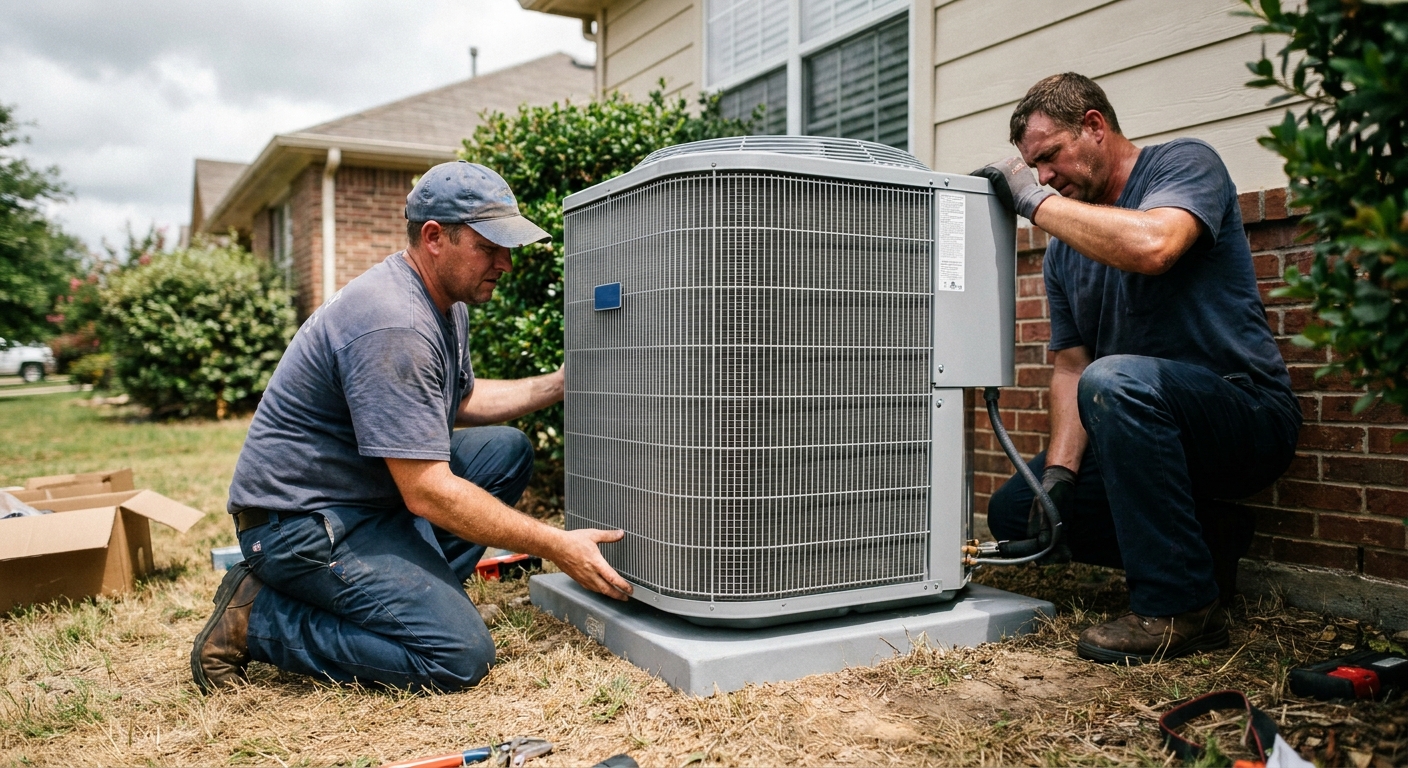
When you’re ready to move forward—whether with a repair, a replacement, or a maintenance plan—working with a local, family-run company makes a huge difference. We know the quirks of the Greater New Orleans climate, the quirks of the local building codes, and the best ways to keep your unit humming through a hurricane season.
Ask about current appointment availability and whether the needed parts are available. The diagnosis, equipment, and parts required determine the repair plan.
Transparency is another benefit of staying local. We’ll walk you through the diagnostic findings, show you the exact cost breakdown, and explain why a particular solution makes sense for your home’s size and your budget. No hidden fees, no pressure to upsell the most expensive unit on the lot—just honest advice.
Finally, supporting a local business means your money stays in the community, helping create jobs and keep the local economy humming. That’s something we’re proud of, and it’s why we treat every homeowner like a neighbor, not a sales target.
How to Maintain Your Heating and Air Conditioning System
Plan on professional cooling maintenance before the season and check safely accessible filters monthly. Replace disposable filters when dirty; clean only designated washable filters, following the manufacturer’s instructions. That care can help catch problems early, but it cannot prevent every breakdown.
A yearly tune-up should include cleaning the condenser coils, assessing refrigerant charge according to manufacturer procedures, tightening electrical connections, verifying airflow, and inspecting the blower motor. Book it in late winter or early spring, before the cooling season starts. Contractors have more availability then.
- Check a safely accessible filter monthly, especially with pets. Replace a dirty disposable filter; wash and dry only a designated reusable filter as its manufacturer directs.
- Keep the outdoor unit clear of grass clippings and leaves.
- Ask a technician about coil cleaning and coastal corrosion care. Do not open the cabinet or spray electrical components; follow the equipment manufacturer’s cleaning instructions.
- Watch your Entergy bill. Compare kWh use, weather, and electricity rates before treating a higher bill as an equipment fault.
Our maintenance plan is $25 per month or $300 per year and includes two service visits and a 15% discount on repairs. Repair discounts do not apply to system installations. Confirm the plan terms and any separately quoted work when booking.
When to Replace Your Heating and Air Conditioning System
A repair approaching half the replacement price, or repeated failures in a 12- to 15-year-old system, is a reason to compare options. Neither is an automatic replacement rule. Consider the diagnosis, overall condition, warranty, repair history, and expected operating costs.
Free replacement estimates are separate from repair diagnostic visits. For planning information, see our 2026 Kenner AC replacement cost guide. Your final quote depends on the equipment and installation scope.
Operating cost belongs in the comparison too. For equal cooling output under the same test method, moving from 13 to 16 SEER implies about 19 percent less cooling electricity. An estimate of $200 to $400 a year needs your actual cooling use and electricity rate. Repairs can also restore performance lost to a fault.
- The unit is past 15 years old.
- You have needed three or more major repairs in the last 12 months.
- Bills are climbing with no change in how you run the system.
- A technician identifies significant damage to the compressor, motor, or coils.
The indoor and outdoor equipment must be compatible. A contractor should verify an approved combination and its rated performance before replacing only one component. A compatible component repair may be possible; replacing both halves is not automatically required.
Right-Sizing and Humidity: Why the Manual J Calculation Matters
A Manual J calculation establishes the home’s heating and cooling loads. Manual S uses those loads and manufacturer performance data to select equipment. Ask the contractor to show both the load calculation and the equipment-selection basis rather than relying on square footage alone.
A Manual J accounts for square footage, ceiling height, insulation levels, window orientation, and local climate data. Two homes with the same floor area can need different capacities. Use the calculated load and equipment performance rather than a local tonnage rule of thumb.
In a humid climate, sizing must account for both temperature control and the energy needed to remove moisture, called the latent cooling load. An oversized unit may cycle off before removing enough moisture; an undersized one may struggle during peak conditions. Long operation alone does not prove a problem, especially with variable-speed equipment.
What Happens During a Replacement
The schedule depends on equipment, access, permits, and installation scope; confirm it in your written quote. Here is the general order of work.
First comes removal and preparation. The old refrigerant is recovered into a cylinder rather than vented, which EPA rules require. Then the old condenser and evaporator coil come out, the site gets prepped, and the existing ductwork is inspected for leaks or damage.
Next comes the new equipment. The condenser goes on a concrete pad, gets secured, and connects to the indoor coil through insulated refrigerant lines. The system is charged with the correct amount of refrigerant, using only the refrigerant specified by the manufacturer. Then the technician verifies airflow, checks the electrical connections, and runs the system through performance tests.
Before the crew leaves, they walk you through the controls, show you how to change the filter, and hand you a written warranty summary. It spells out what the manufacturer covers and what the installation warranty covers.
Refrigerant Costs, Rebates, and Financing
The HFC phasedown affects refrigerant supply, but an existing R-410A system can still be serviced. New equipment may use lower-GWP refrigerants such as R-454B, depending on its design. R-454B is not a refill option for R-410A equipment. Repeated recharges warrant diagnosis of the refrigerant loss; obtain current pricing in a written quote.
Duct leakage and missing insulation can waste cooling. ENERGY STAR estimates that typical duct systems lose about 20 to 30 percent of moving air through leaks, holes, and poor connections; missing insulation causes additional heat gain rather than air leakage. Have the duct system assessed alongside replacement equipment.
Local banks and credit unions offer payment plans, and we work with lenders on financing. Compare the total cost of financing against the energy savings before you sign. Utility and state rebate programs for high-efficiency equipment change often, so check which ones are active before you order equipment.
Want these numbers run for your own house? Call (504) 414-8655 for a free replacement estimate.
Final Thoughts
Deciding whether to repair or replace your AC is not a one-size-fits-all answer. It depends on the age of your system, the frequency and cost of repairs, your energy bill trends, and the specific climate challenges of South Louisiana. By understanding the true costs—both the upfront numbers and the hidden expenses—you can make a choice that protects your comfort without breaking the bank.
At Tegridy Air, we’re here to help you cut through the jargon and the hype. Whether you need a quick diagnostic, a reliable repair, a smart-thermostat upgrade, or a brand-new high-efficiency system, give us a call or request a free replacement estimate online. We’ll show up, explain the options in plain language, and let you decide what’s best for your home and your wallet.
Ready to take the next step? Call us today at 504-414-8655 or visit tegridyair.com to schedule your free replacement estimate, tune-up, or repair. Let’s keep your home cool, your bills low, and your comfort high—without any corporate nonsense.
Need honest HVAC help in Kenner, Metairie, or anywhere across the Greater New Orleans area? Call Tegridy Air at 504-414-8655 or request a free replacement estimate online – we’ll get you comfortable fast.
Related Reading
- AC Repair vs. Replacement: Which Is the Smarter Choice?
- Expert AC Repair Tips for Kenner Metairie Homeowners
- How Much Does AC Replacement Cost in Kenner, LA? (2026 Pricing Guide)
Frequently Asked Questions
How often should I have my AC inspected in New Orleans?
A professional inspection at least once a year, ideally in the spring before the cooling season, helps catch wear early and keeps your system running efficiently.
What SEER rating is best for the humidity in Kenner and Metairie?
Compare current equipment using SEER2 and ask the installer to confirm applicable requirements. Humidity control also depends on proper sizing, airflow, and controls; a higher efficiency rating alone does not guarantee comfort.
Can I finance a new AC installation with Tegridy Air?
Yes, we work with several local lenders to offer flexible financing options, so you can spread the cost over time while enjoying a more efficient system now.
Will a new AC lower my Entergy bill immediately?
A properly selected and installed system may lower cooling use. The change in your Entergy bill depends on the old system, weather, electricity rates, household use, and installation; no fixed percentage or immediate saving is guaranteed.