
By Scott Gieseler · Published · Updated
Yes, solar panels can supply electricity for an air conditioner. How much grid electricity they replace depends on your AC’s actual energy use and the solar system’s output. Bill savings and outage backup are different goals: a standard grid-connected solar system shuts down when the grid fails, and backup cooling requires equipment specifically designed and sized for it.
Start With Your AC Usage and Backup Goal
For a New Orleans-area home, review cooling-season electricity use alongside the proposed array’s monthly production estimate. Do not assume solar production and AC demand peak at the same hour: cooling can continue into the evening after solar output falls. Shade, roof direction, weather, and thermostat settings all affect the result.
Before accepting a quote, ask two questions: how will your utility credit electricity exported to the grid, and exactly which appliances will work during an outage? A battery is optional for ordinary grid-connected solar, and adding one does not automatically mean the AC is included in backup service.
This guide separates power in kilowatts (kW), energy in kilowatt-hours (kWh), and panel count. The numerical example below is an illustration with stated assumptions, not a design or production forecast for your roof.
What Does Solar-Powered Air Conditioning Mean?
A conventional air conditioner can use electricity from a home solar photovoltaic (PV) system without being a special “solar AC” model. The array supplies the home’s electrical system, so its output may serve the AC and other appliances at the same time.
Solar changes where electricity comes from; it does not by itself reduce the electricity your AC needs to provide cooling. Correct HVAC sizing, maintenance, insulation, and air sealing address that demand. Solar can then offset some of the electricity you would otherwise buy.
How Do Solar Panels Supply an AC Unit?
PV panels convert sunlight into direct-current electricity. An inverter converts that output into the alternating-current electricity used by conventional household equipment. The installed system also needs compatible wiring, protection, and controls.
While the utility grid is available, it can supply the difference when household demand exceeds solar output. Surplus solar may charge an installed battery or be exported, subject to the system design and utility agreement. A standard AC should not be connected directly to loose solar panels.
Can Solar Run an AC at Night or During an Outage?
At night, solar panels do not produce electricity. An AC can still run from the utility grid or from adequately sized stored energy in a compatible system. A battery must have enough usable energy for the desired runtime and enough output power to operate the selected loads.
During an outage, a standard grid-connected solar system stops supplying the home. Backup needs equipment that safely separates the home from the grid and supports the intended loads. Some specialized systems offer limited daytime backup without a battery, but that is not dependable overnight or all-weather cooling. Enphase’s Sunlight Backup guide, for example, limits that configuration to essential loads and available sunlight.
How Many Solar Panels Would an AC Need? A Worked Example
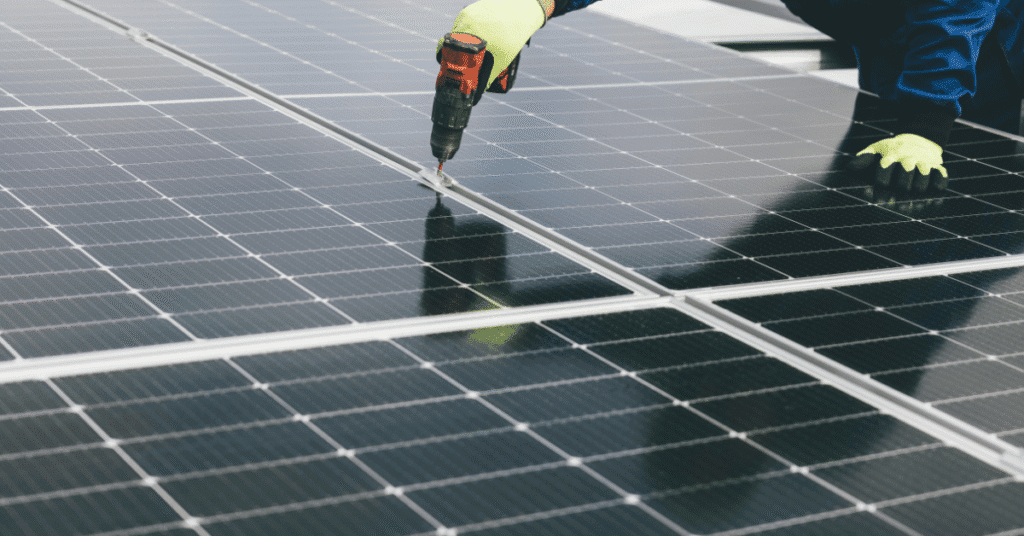
Start with daily AC energy use, not a universal panel count. For illustration only, assume an AC and its indoor blower together draw 3 kW for the equivalent of six full-power hours: 3 kW × 6 hours = 18 kWh per day. A variable-speed system’s draw changes, so measured energy use is better than assuming it runs at one power level all day.
Now assume four equivalent peak-sun hours per day and an overall delivered-energy factor of 0.80 for losses: 18 ÷ (4 × 0.80) = 5.625 kW of panel capacity. With hypothetical 400-watt panels, round up 5,625 ÷ 400 to 15 panels, or 6 kW DC. These are teaching assumptions, not typical New Orleans production or a promise of uninterrupted AC. Other household loads, battery charging losses, weather, and the actual roof design can change the requirement.
Power Versus Energy: What Numbers Should You Gather?
kW describes power at a moment; kWh describes energy used over time. Gather the AC model, its electrical specifications, and measured or professionally estimated cooling-season energy use. Include the indoor blower and other equipment that must run with it. Tons or BTU/h describe cooling capacity, so they cannot be treated as electrical watts.
Ask the solar installer for a location-specific production model with roof orientation, shading, and losses stated. A tool such as PVWatts estimates generation; it does not guarantee output at every hour or certify a backup design. Check both monthly energy totals and whether available power can meet loads when they occur.
Does a Smaller AC Need Fewer Panels?
A unit that uses less electricity generally needs less solar generation to offset its energy use. Compare actual input power and daily kWh, though: cooling capacity, equipment efficiency, weather, and operating time all affect demand. “Small AC” is not enough information for a panel count.
For backup planning, cooling one suitable room may require less energy than cooling the whole house. Have the installer verify the specific AC’s operating and starting requirements, the protected circuit, and the battery/inverter capability before relying on that plan.
Can Solar Run Central Air Conditioning?
Yes. The solar and electrical design must account for the central system’s compressor, indoor blower, and any other required components. For backup, the inverter and battery must support both normal operation and the equipment’s startup demand while other protected loads are running.
There is no dependable “10–20 panels” rule for every home. Central ac systems differ in electrical demand and runtime. Ask the installer to confirm in writing whether your central AC is on the backed-up circuits and the conditions under which it can operate.
Batteries, Inverters, and Grid Support: What Each Does
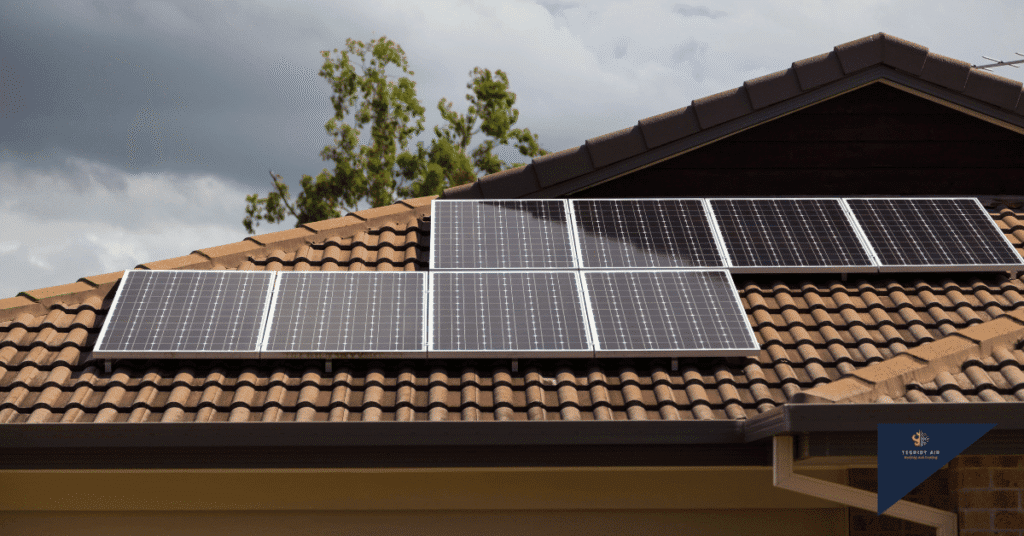
Panels generate electricity, the inverter makes it usable, and an optional battery stores energy for later. For a rough runtime illustration, 10 kWh of usable stored energy divided by a steady 3 kW AC load is about 3.3 hours before conversion losses and other loads. Actual runtime also depends on AC cycling and battery reserve settings. A battery’s kWh capacity does not establish its kW output rating; DOE explains the distinction between energy and power capacity.
A battery also needs backup-capable controls and an appropriate circuit design to supply loads when the grid is down. Tesla’s backup guidance illustrates why supported appliances and runtime depend on the installed configuration and household demand. Ask for an AC-specific load assessment rather than a general “whole-home backup” claim.
What to Check Before Installation
Have a qualified solar installer assess the roof, shading, electrical service, permits, and utility interconnection requirements. Review a written equipment list, production assumptions, warranties, and any backup-circuit plan. DOE’s installation checklist recommends reviewing electricity needs and roof suitability before installation.
Coordinate that design with the HVAC contractor: ac unit installation still requires correct sizing, airflow, refrigerant charge, and drainage. If you plan to replace the AC soon, give the solar installer the proposed model’s electrical requirements so the design reflects the equipment you will actually use.
Maintenance, Cleaning, and Repair
Monitor solar production and follow the equipment manufacturer’s maintenance guidance. Ask the solar provider to investigate unusual output drops or damaged equipment; do not climb onto the roof or handle PV wiring to troubleshoot it. For questions about the HVAC side of the system, contact Tegridy Air.
For the AC, clean or replace accessible filters as the manual directs and keep outdoor airflow clear. Arrange professional service for coils, drains, refrigerant leaks, and electrical faults. Maintenance can support efficiency and reliability, but it cannot make an undersized solar or backup system meet a larger load.
Is Solar Worth It for Air Conditioning?
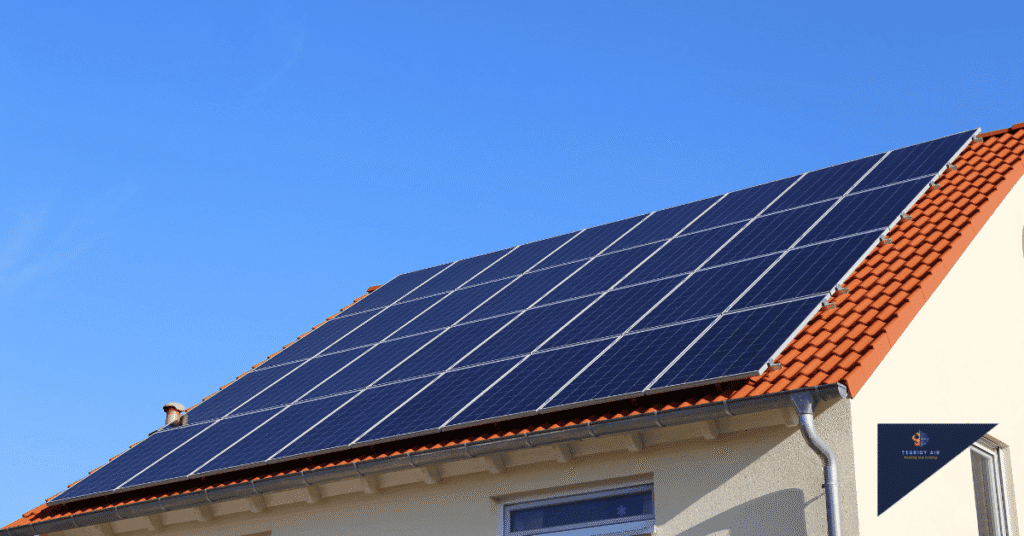
Solar may reduce purchased electricity, but savings and payback are specific to the home and contract. Compare the full installed cost, financing or lease payments, predicted production, electricity rates, export credits, maintenance, and future equipment replacement costs. Confirm current incentives separately rather than assuming a tax benefit applies.
Ask for a written savings estimate that shows both daytime self-use and exported electricity, plus the utility charges that remain. DOE’s homeowner guide explains why usage, roof conditions, system size, ownership arrangement, and utility rates affect the result. The useful next step is an HVAC load check and a roof-specific solar quote, with backup cooling priced as a separate requirement if you need it.